


Listen to the article
In a significant move toward rebuilding Gaza, the Palestinian Authority has unveiled an ambitious $67 billion reconstruction plan just days after a ceasefire agreement took effect. The comprehensive strategy, spanning five years, aims to restore critical infrastructure, address humanitarian needs, and rebuild governance structures in the devastated region.
Palestinian Prime Minister Mohammed Mustafa presented the multi-phase approach, emphasizing immediate humanitarian concerns as the top priority. The initial six-month phase carries a price tag of approximately $3.5 billion and will focus on restoring essential services and addressing urgent humanitarian requirements. Following this, a second phase estimated at $30 billion will extend over three years, with the final phase dedicated to comprehensive reconstruction efforts.
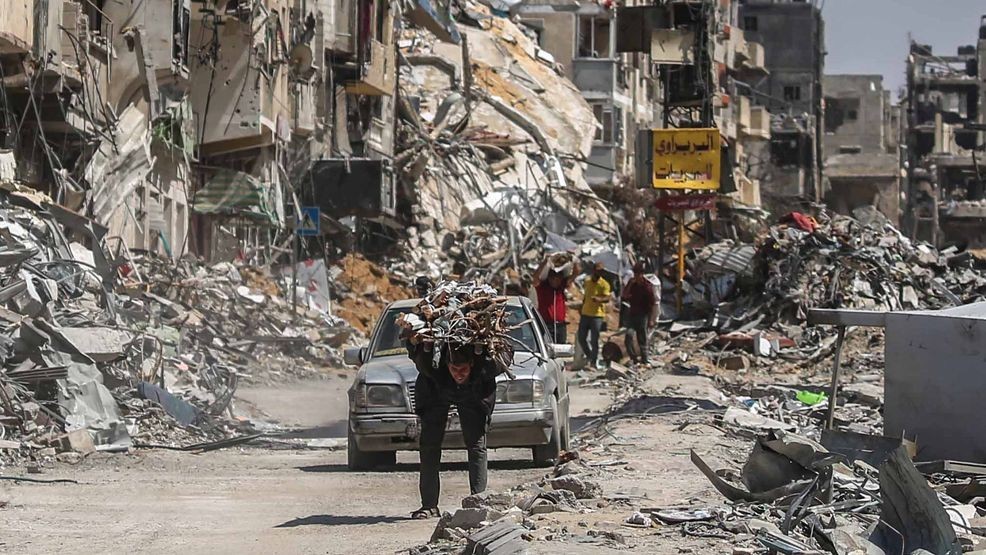
The scale of destruction in Gaza has been catastrophic, according to a recent United Nations assessment. UN satellite imagery reveals that more than 80 percent of structures have sustained significant damage, with approximately 81,000 housing units affected. Basic utilities including electricity networks and water systems require extensive repairs to restore functionality. The BBC’s fact-checking unit reports that clearing operations may need to remove over 60 million tons of debris before substantial rebuilding can begin.
“The physical devastation we’re seeing in Gaza represents one of the most concentrated destruction events in recent decades,” said a regional development expert familiar with the situation. “The challenges ahead involve not just rebuilding physical structures but restoring community cohesion and economic viability.”
The massive reconstruction effort draws inevitable comparisons to post-World War II rebuilding initiatives that transformed war-torn Europe and Japan. Following that global conflict, the United Kingdom alone constructed approximately one million new homes to address housing shortages. In Germany, where roughly 25 percent of housing stock had become uninhabitable, the collapse of infrastructure precipitated a severe economic crisis.
The United States played a pivotal role in postwar reconstruction through the Marshall Plan, a historic initiative that directed approximately $13 billion (equivalent to over $150 billion in today’s currency) toward European recovery. Similarly, American forces implemented critical reforms and invested roughly $2 billion in Japan, helping establish foundations for what would eventually become one of the world’s most robust economies.
International aid organizations and development experts note that Gaza’s rebuilding process faces additional complexities beyond those of historical reconstruction efforts. Political instability, ongoing security concerns, and supply chain challenges all present significant obstacles.
“Any successful rebuilding strategy must address not just physical reconstruction but also economic development, governance reform, and social reconciliation,” noted an economist specializing in post-conflict recovery. “The $67 billion figure represents not just buildings and roads, but the comprehensive cost of rebuilding a functioning society.”
Regional observers point out that effective implementation will require unprecedented cooperation between Palestinian authorities, neighboring countries, international donors, and humanitarian organizations. The reconstruction plan comes at a time when global attention is focused on multiple humanitarian crises, potentially creating competition for limited international aid resources.
As planning moves forward, questions remain about funding sources, implementation timelines, and coordination mechanisms. Development specialists emphasize that successful reconstruction will depend heavily on maintaining regional stability and ensuring transparent management of resources throughout the multi-year effort.
The Palestinian Authority’s announcement represents one of the most ambitious reconstruction initiatives in the Middle East in decades, with potential implications for regional stability and humanitarian conditions for Gaza’s population of over two million people.
Fact Checker
Verify the accuracy of this article using The Disinformation Commission analysis and real-time sources.

19 Comments
The scale of this reconstruction plan underscores the immense challenges faced by the people of Gaza. Sustained international support and cooperation will be vital to its success.
Ensuring transparency and accountability in the use of reconstruction funds will be crucial to maintaining public trust and confidence.
Rebuilding Gaza after years of conflict is a monumental task. Effective coordination between the Palestinian Authority, international donors, and local communities will be key.
Addressing the urgent humanitarian needs in Gaza is a critical first step. Ensuring aid is distributed effectively and reaches those most in need will be challenging.
Restoring critical infrastructure like housing, utilities, and public services is essential for improving living conditions in Gaza. This will be a complex, multi-year effort.
Rebuilding Gaza’s infrastructure and governance structures will be a complex, long-term process. Maintaining international support and funding commitments will be crucial.
Transparency and accountability in the use of reconstruction funds will be essential to building public trust and confidence in the process.
The focus on addressing urgent humanitarian needs first is a sensible approach. Ensuring aid reaches those most in need should be the top priority.
Rebuilding governance structures will be key to providing long-term stability and resilience for the people of Gaza.
The $67 billion price tag highlights the immense scale of the reconstruction effort needed in Gaza. Prioritizing humanitarian needs is the right first step.
Restoring basic services and utilities should be a top priority to improve living conditions for residents as quickly as possible.
A $67 billion plan is ambitious, but necessary given the level of devastation. Securing sufficient funding commitments from the international community will be crucial.
This will be a massive undertaking to rebuild Gaza’s critical infrastructure. Ensuring transparent and effective use of aid funds will be crucial to the success of this reconstruction effort.
Agreed, the scale of destruction is staggering. International cooperation and coordination will be essential to maximize the impact of reconstruction funds.
I’m curious to see how the Palestinian Authority will manage the different phases of this reconstruction plan. Maintaining momentum and consistent progress will be critical.
The $67 billion price tag highlights the immense challenge of restoring Gaza after years of conflict. Prioritizing humanitarian needs first is the right approach to address the most urgent issues.
Rebuilding governance structures alongside physical infrastructure is key to establishing long-term stability and resilience in the region.
Satellite imagery showing 80% of structures damaged is truly staggering. This highlights the sheer scale of the reconstruction effort required in Gaza.
Restoring basic utilities like electricity and water systems should be an immediate priority to improve living conditions for residents.