


Listen to the article
Gas Discount Card Scam Circulates on Social Media, Energy Department Warns
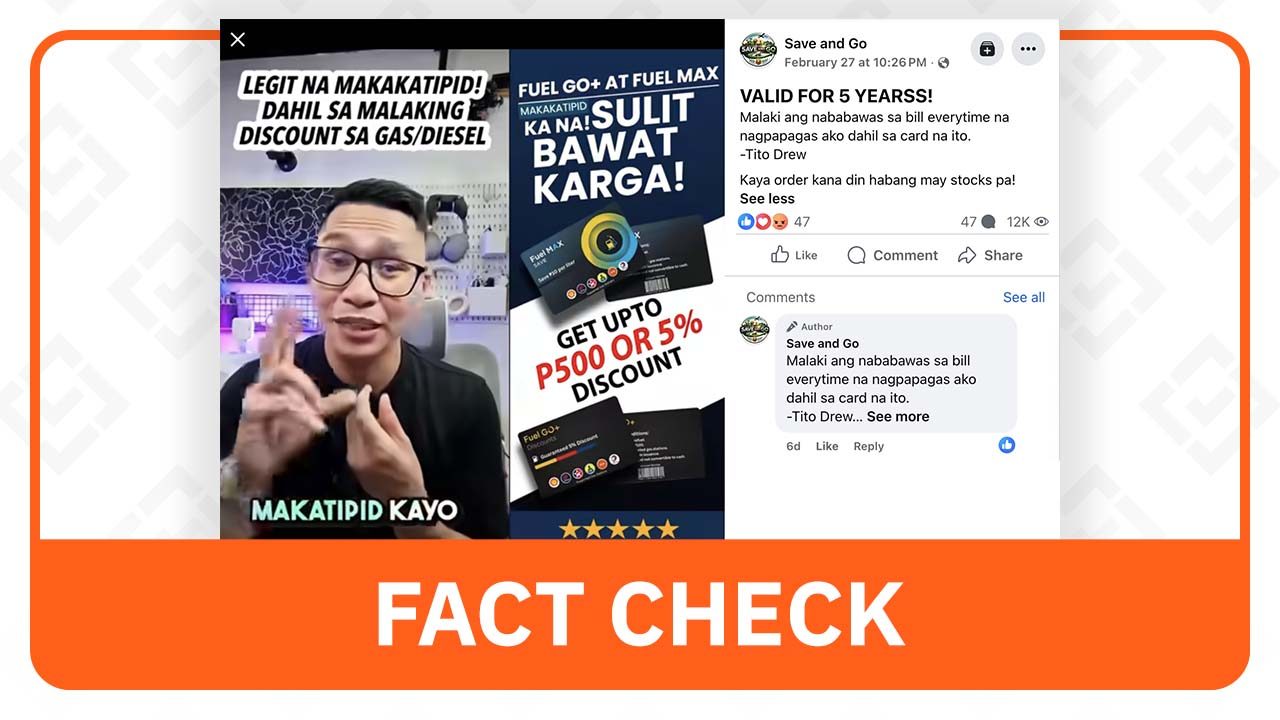
A fraudulent fuel discount card scheme promising significant savings at gas pumps nationwide has prompted warnings from the Department of Energy (DOE) and major petroleum companies. The scheme, which uses manipulated videos of social media influencers to appear legitimate, has already reached thousands of Filipino motorists through Facebook.
The video in question, which has garnered approximately 12,000 views since being posted on February 27, appears to show TikTok personality Tito Drew endorsing a “Fuel Max” discount card. In the manipulated footage, the influencer claims to receive substantial discounts on fuel purchases, citing a specific example where he supposedly saved P250 on a 25-liter purchase.
“For example, earlier I loaded 25 liters into my car. My total bill should have been P1,425, but I only paid P1,175. That’s a P250 discount. That’s a huge amount saved, right?” the altered video shows Tito Drew saying.
Digital forensic analysis has confirmed the video’s fraudulent nature. AI detection tools flagged the content as manipulated, with Hive Detect reporting the video is 42.4% likely to be AI-generated, while the speech component registered a 98.3% probability of being artificially created. Sightengine, another detection tool, rated the video as 83% likely to be AI-generated.
The DOE issued an explicit warning on January 6 about these counterfeit fuel discount cards, specifically naming “Fuel Max” and “Fuel Go+” as unauthorized products not recognized by any legitimate fuel retailer in the Philippines.
“The public is advised not to be swayed by fraudulent offers, not to provide personal information, and to avoid paying or registering for suspicious promotions,” the DOE stated in its advisory.
The scheme appears designed to capitalize on Filipino consumers’ sensitivity to fuel prices, which have fluctuated significantly in recent years due to global market dynamics and local tax adjustments. With many households already facing economic pressure from inflation, the promise of saving up to P500 or receiving a 5% discount on fuel purchases presents an attractive proposition for budget-conscious motorists.
Several major petroleum companies operating in the Philippines have independently issued warnings about the scam. Caltex, SEAOIL, and Petron Corporation have all confirmed that these discount cards are unauthorized and will not be honored at any of their service stations nationwide. The companies emphasized that their legitimate promotions are only communicated through official channels and verified social media accounts.
Digital security experts note that such scams often aim to collect personal information and payment details from unsuspecting consumers. The perpetrators typically request registration fees or personal data that can later be used for identity theft or unauthorized transactions.
The original video that was manipulated appears to be an unrelated clip where Tito Drew discusses tips for TikTok affiliates. Scammers altered this content to make it appear as though the influencer was endorsing the fraudulent fuel discount cards.
This incident highlights the growing sophistication of digital scams in the Philippines, where deepfake technology and AI-generated content are increasingly being deployed to create convincing but fraudulent endorsements from trusted public figures and social media personalities.
Authorities advise consumers to verify promotional offers directly with official company representatives or through legitimate company websites and social media accounts before providing any personal information or making payments.
Fact Checker
Verify the accuracy of this article using The Disinformation Commission analysis and real-time sources.

14 Comments
It’s disappointing to see scammers taking advantage of people’s desire to save money on fuel. Consumers need to be vigilant and only use reputable, verified discount programs.
Agreed. The fact that this scheme has already reached thousands of people in the Philippines is concerning. Spreading awareness is key to preventing further losses.
Concerning to see these fraudulent fuel discount schemes taking advantage of people. It’s important to be vigilant and only use legitimate fuel loyalty programs to save at the pump.
Agreed. Scams like this can be quite convincing, especially when they leverage influencers. Fact-checking and researching the source is crucial.
Fuel discount scams like this are a concerning trend. It’s crucial for consumers to be vigilant, research the legitimacy of any offers, and only use verified fuel loyalty programs to save money.
Agreed. Manipulated videos can be very convincing, but thorough fact-checking and digital forensic analysis are essential to exposing their fraudulent nature.
This is a good reminder that not everything on social media is as it seems. Verifying the source and legitimacy of any fuel or discount offer is crucial to avoid falling for scams.
Absolutely. Manipulated videos can be very convincing, but digital forensic analysis is crucial to exposing their fraudulent nature.
This is a good reminder to always be skeptical of online offers that seem too good to be true. Manipulated videos are a common tactic used by scammers these days.
Absolutely. Verifying the legitimacy of any fuel or discount program is essential to avoid falling victim to these types of fraudulent schemes.
Fraudulent fuel discount schemes can be quite damaging, both financially and in terms of eroding trust. Consumers must be extremely cautious and only use verified programs to save at the pump.
Absolutely. The fact that this scam has already reached thousands of people is concerning. Raising awareness and educating the public is key to preventing further losses.
Fuel discount scams like this can have real financial consequences for victims. It’s important for consumers to be vigilant and only use verified, legitimate fuel loyalty programs.
Agreed. Leveraging influencers is a common tactic used by scammers, so it’s crucial to always double-check the source and authenticity of any such offers.