


Listen to the article
Florida lawmakers recently passed a bill eliminating driver’s license exams in languages other than English, sparking intense debate about road safety and immigrant rights across the state.
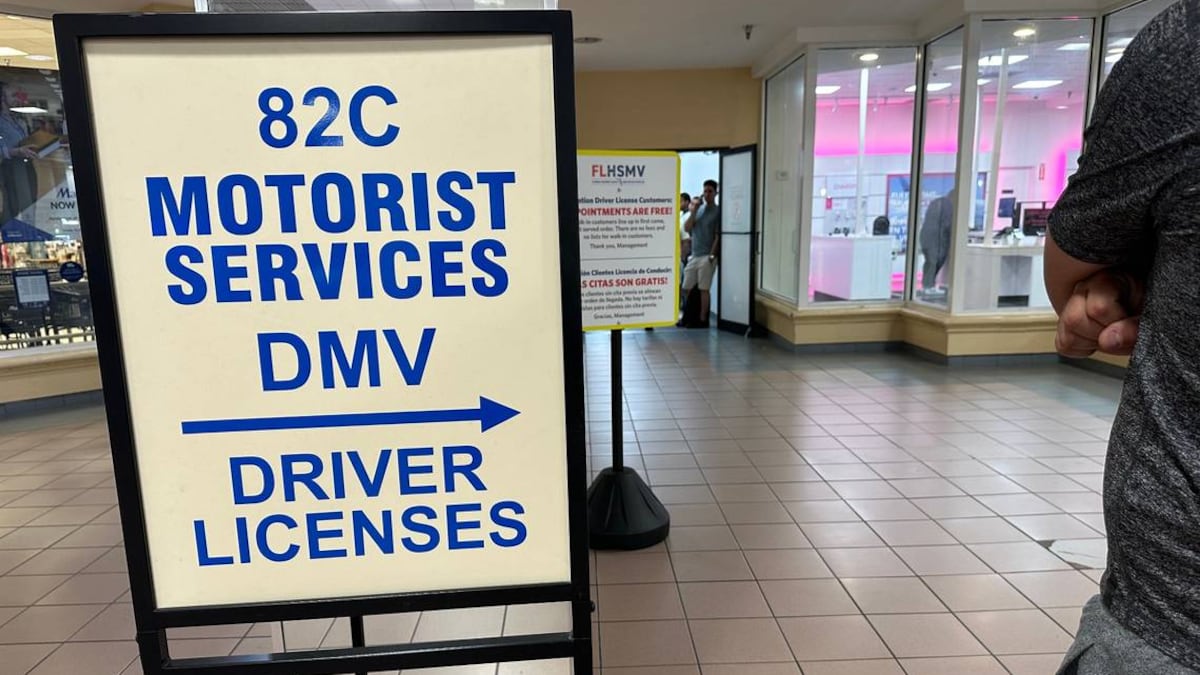
The legislation, which awaits Governor Ron DeSantis’s signature, would require all written driver’s license exams to be conducted exclusively in English. Currently, the Florida Department of Highway Safety and Motor Vehicles offers the exam in 12 languages, including Spanish, Haitian Creole, and Russian.
Supporters of the bill, including its sponsor Republican State Senator Jonathan Martin, frame the change as a safety measure. Martin argues that road signs in Florida are predominantly in English, and drivers should be able to comprehend them without translation. “If you’re going to drive on our roads, you need to be able to read the language that our road signs are in,” Martin stated during legislative proceedings.
However, transportation safety experts and immigrant advocates have raised serious concerns about the bill’s potential impact. They point out that no evidence exists suggesting non-English speakers pose a greater safety risk on roadways, and warn the change could actually decrease road safety by encouraging unlicensed driving.
Florida’s diverse population includes approximately 4.6 million residents who speak a language other than English at home, according to U.S. Census Bureau data. Of those, about 1.7 million report speaking English “less than very well,” representing a substantial portion of the state’s population who would be affected by this change.
Dr. Jennifer Lonneker, a transportation policy researcher at the University of South Florida, questions the safety justification behind the bill. “Traffic signs are intentionally designed to be universally understood through symbols, shapes, and colors precisely because they need to be quickly comprehended by all drivers, including those who may not be proficient in the local language,” Lonneker explained.
The International Organization for Standardization has established universal traffic sign standards specifically to overcome language barriers, with most critical road signs using pictograms rather than text-based instructions. This standardization allows travelers worldwide to navigate roads safely regardless of language proficiency.
Florida’s tourism industry, which welcomed over 137 million visitors in 2022, could also feel effects from this policy change. International tourists who rent vehicles while visiting the state would now face additional hurdles if they don’t speak English proficiently.
Critics of the bill, including Democratic State Representative Susan Valdes, argue it could create additional public safety risks. “If we implement this change, we’re not preventing non-English speakers from driving—we’re preventing them from being properly tested, insured, and licensed,” Valdes stated during floor debate.
Studies from states with similar restrictions have shown such policies often lead to increases in uninsured motorists rather than fewer non-English speakers on the road. The American Automobile Association notes that uninsured drivers represent a significant safety and financial risk to all road users.
The bill contains certain exemptions, including for commercial driver’s licenses, which would still be available in multiple languages to comply with federal regulations. Additionally, those with licenses from other states or countries would be permitted to transfer them without taking the English-only exam.
If signed into law, Florida would join fewer than 10 states requiring English-only driver exams. Most states offer tests in multiple languages, with California providing exams in 32 different languages to accommodate its diverse population.
Legal experts suggest the measure could face court challenges under federal civil rights laws if it disproportionately impacts certain ethnic groups. Previous attempts at similar restrictions in other states have sometimes been struck down on discrimination grounds.
The Florida Department of Highway Safety and Motor Vehicles declined to comment on the pending legislation but confirmed it would implement whatever requirements are ultimately signed into law.
As Governor DeSantis considers whether to sign the bill, both supporters and opponents continue to debate whether the change would achieve its stated goal of improving road safety or simply create new barriers for the state’s substantial immigrant and international visitor populations.
Fact Checker
Verify the accuracy of this article using The Disinformation Commission analysis and real-time sources.

9 Comments
This is an interesting debate around balancing driver safety and immigrant rights. While English proficiency is important for understanding road signs, denying exams in other languages could create access barriers for vulnerable groups. A nuanced approach may be needed to address any real safety concerns without unfairly penalizing non-English speakers.
That’s a fair point. Perhaps offering more comprehensive language supports, like bilingual road signs, could be a middle ground to improve safety without limiting access.
From a pure safety standpoint, I can see the argument that drivers should be able to comprehend road signs. But this legislation feels heavy-handed and could unfairly penalize immigrants who are already navigating a complex system. A more nuanced approach seems warranted.
As someone who relies on public transportation, I’m concerned this could make it harder for immigrant communities to access essential services and jobs. Driver’s licenses are crucial for many people’s livelihoods.
That’s a good point. Limiting access to driver’s licenses could have cascading economic and social impacts, especially for already marginalized groups.
Interesting that Florida currently offers the written exam in 12 languages. I wonder how that compares to other states and what the rationale was for providing those options. Seems like an important context to understand.
Good observation. Understanding the existing language access policies in other states could help evaluate whether Florida’s proposed change is an outlier or part of a broader trend.
I’m a bit skeptical of the safety claims here. Are there actually data showing non-English speakers pose greater risks on the roads? Seems like this could be more about politics than evidence-based policy.
Agreed, the proponents should back up their safety argument with solid statistics before making such a significant change.