


Listen to the article
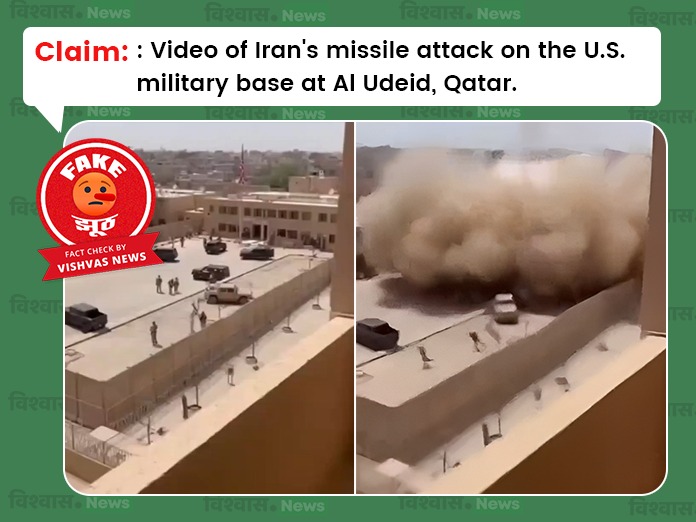
The dramatic video circulating on social media that purportedly shows an Iranian missile attack on the Al Udeid Air Base in Qatar has been conclusively determined to be AI-generated, according to an investigation by fact-checking organization Vishvas News.
The footage, which depicts people fleeing in panic after an apparent explosion, was posted on Instagram by user ‘thenewscartel’ on March 17, 2026, claiming it showed the aftermath of Iran’s attack on the largest U.S. military base in the Middle East. The post garnered approximately 1.5 million views before being flagged for verification.
Investigators identified several telltale signs of AI manipulation in the video, including individuals walking unnaturally, people disappearing and reappearing, and body shapes distorting as they moved—all classic indicators of artificially generated content.
Multiple AI detection tools corroborated these findings. Tencent’s ‘Zhuque AI’ analysis estimated an 80% probability the video was AI-generated, while Hive Moderation assessed a 57% likelihood. The most definitive result came from the Trusted Information Alliance’s Deepfakes Analysis Unit, which determined with 92% certainty that the footage was created using artificial intelligence tools.
The fabricated video emerges amid heightened tensions between the U.S.-Israel alliance and Iran. On March 4, 2026, the Qatar Ministry of Defence confirmed via its official X account that Iranian ballistic missiles had targeted the Al Udeid base, though they reported no casualties or damage. One missile was intercepted by Qatar’s air defense system, while another struck the base without causing significant harm.
Iran’s state media has meanwhile reported dozens of strikes targeting U.S. and Israeli assets throughout the Middle East, with the 57th wave of attacks allegedly occurring on March 17, 2026.
The situation has escalated to the point where U.S. President Donald Trump recently warned Iran that any further strikes on Qatar would result in the destruction of the South Pars gas field. This warning followed a significant Iranian strike on Qatar’s Ras Laffan Industrial City, which has already impacted global energy prices.
The spread of this AI-generated video underscores the growing challenge of misinformation during international conflicts. The Instagram account responsible for sharing the fake footage has amassed over 38,000 followers since being established in March 2025, highlighting how quickly false information can reach a substantial audience.
This incident serves as a reminder of the importance of verifying sources and examining visual content carefully during times of geopolitical tension. As AI technology becomes increasingly sophisticated, distinguishing between authentic and fabricated footage will likely become even more challenging for news consumers and media organizations alike.
Fact-checking organizations continue to play a crucial role in identifying and debunking such misinformation before it can further complicate an already volatile international situation.
Fact Checker
Verify the accuracy of this article using The Disinformation Commission analysis and real-time sources.

8 Comments
This is a concerning example of how AI-generated content can be weaponized to spread disinformation. The high view count before the video was flagged highlights how quickly these kinds of fakes can gain traction. Rigorous verification processes are essential to maintain trust in online information.
The manipulation techniques used in this video, like distorting body shapes and making people disappear, are really unsettling. It’s a stark reminder of the need for greater digital literacy and critical thinking when consuming information online. Fact-checking is crucial to combat the spread of misinformation.
While the video’s deceptive nature is troubling, I’m encouraged that the fact-checkers were able to swiftly identify it as AI-generated. This demonstrates the importance of having reliable processes in place to verify the authenticity of online content, especially around sensitive national security issues.
This is a concerning development, if a video depicting an attack on a U.S. military base has been fabricated using AI. It highlights the need for greater scrutiny of online content, especially around sensitive geopolitical issues. I wonder what the motivations were behind creating and spreading this false footage.
This seems like a clear case of disinformation intended to sow confusion and potentially escalate tensions. I’m glad the video was debunked, but it’s concerning that these kinds of AI-generated fakes are becoming more common. We need robust strategies to identify and counter such threats.
The high level of certainty in the AI detection findings is impressive. It’s a good thing this video was flagged and investigated before it could gain more traction. Maintaining vigilance against deepfakes will only become more critical as the technology continues to advance.
It’s good that fact-checkers were able to conclusively identify this video as AI-generated. The telltale signs they uncovered, like unnatural movements and distortions, demonstrate the sophisticated capabilities of deepfake technology. Vigilance is crucial to combat the spread of misinformation online.
Absolutely. The ability to create such convincing fake footage is alarming. Fact-checking and verification are essential to maintain trust in the information we consume online.