


Listen to the article
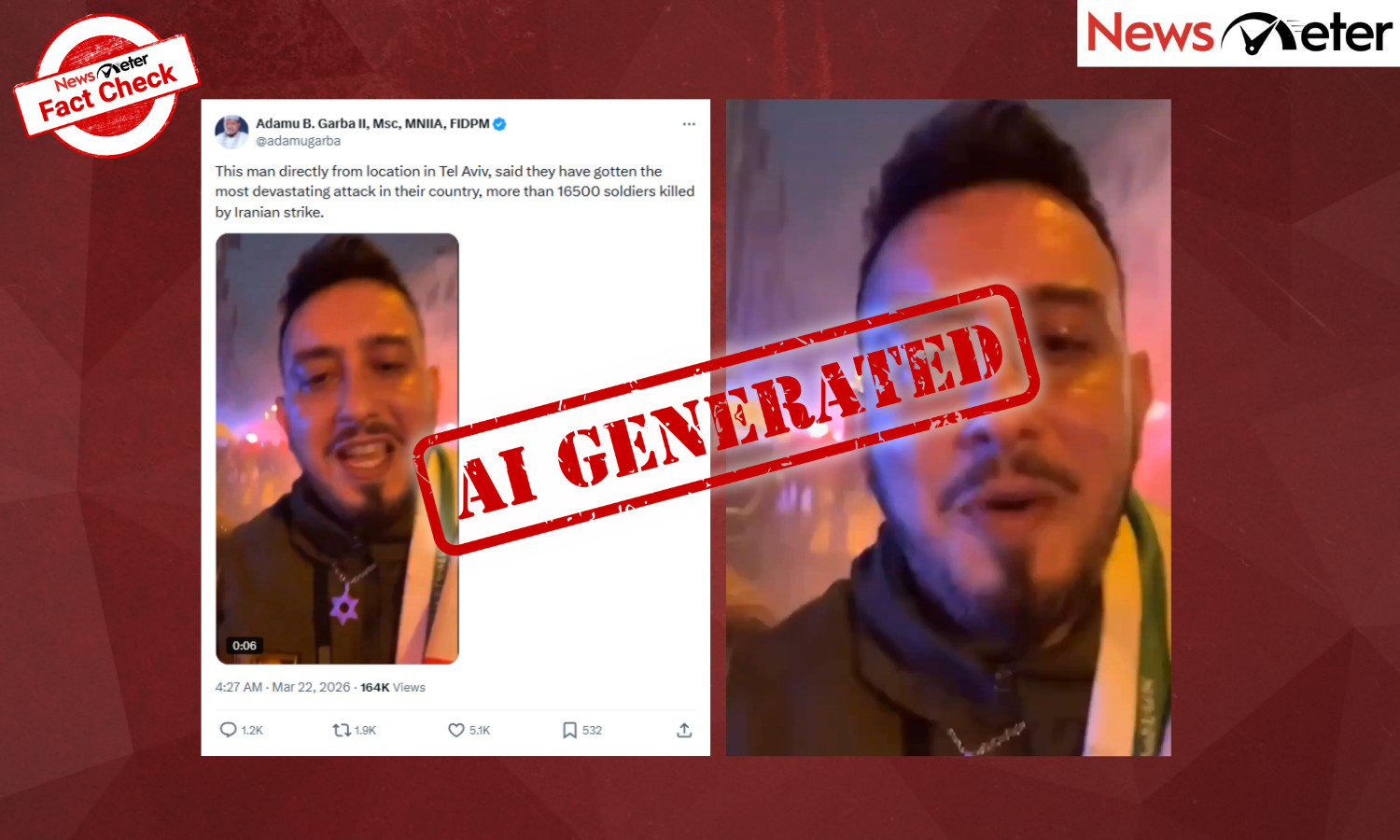
A viral video claiming to show an Israeli man reporting that 16,500 soldiers were killed in Iranian attacks has been debunked as an AI-generated fabrication, according to an investigation by NewsMeter.
The video, which has gained significant traction on social media platforms, shows a man seemingly recording himself while running in distress. In the clip, the man claims “They are doing… they are killing our people in the dark; 16,500 murdered,” with sirens blaring in the background. The footage has been widely shared amid the ongoing tensions between Iran and Israel.
One post sharing the video on X (formerly Twitter) garnered over 149,000 views and 4,700 likes with the caption: “This man directly from location in Tel Aviv, said they have gotten the most devastating attack in their country, more than 16500 soldiers killed by Iranian strike.”
However, close analysis by fact-checkers revealed several telltale signs of artificial generation. The investigation identified multiple visual anomalies characteristic of AI-generated content, including unnatural morphing of the man’s teeth during speech, a star pendant that flickers and loses its geometric shape, and background elements that lack consistency and appear to smear into surroundings.
To confirm these suspicions, NewsMeter submitted the video to multiple AI detection tools. The Hive AI content detection tool flagged several timeframes where the probability of AI generation exceeded 90 percent, with an overall detection probability of 59.7 percent. Another tool, Deepfake-O-Meter, similarly indicated strong signs of artificial creation.
Further investigation traced the video to its original source: an Instagram account belonging to Shai Friedman, who posted the content on January 19. Significantly, Friedman had labeled the post as AI-generated content, and confirmed this fact in response to a user comment questioning its authenticity. A review of Friedman’s profile shows he regularly creates and posts AI-generated content featuring himself in various scenarios.
The context of the original video has also been distorted. In Friedman’s original post, the AI-generated clip referenced 16,500 deaths in Iran, not Israel, and was accompanied by the caption “Free Iran!!! Where are you, world???”
Official reports contradict the claims made in the viral video. According to a Hindustan Times report dated March 22, the Israeli government has confirmed only 13 fatalities in the country related to recent hostilities, a stark contrast to the 16,500 deaths claimed in the manipulated content.
The spread of this fabricated video highlights the growing challenge of distinguishing between authentic and AI-generated content in conflict reporting. As tensions continue between Iran and Israel, misinformation appears to be proliferating across social media channels, potentially inflaming an already volatile situation.
This incident underscores the importance of critical evaluation of dramatic claims on social media, particularly those relating to casualties in conflict zones. Users are advised to verify information through credible news sources and remain vigilant about the potential for AI-generated content to spread false information during sensitive geopolitical events.
NewsMeter’s investigation conclusively determined that the viral video does not show actual events in Tel Aviv and the claim of 16,500 Israeli soldiers being killed in Iranian attacks is false.
Fact Checker
Verify the accuracy of this article using The Disinformation Commission analysis and real-time sources.

12 Comments
This is a concerning development. AI-generated disinformation can spread rapidly and sow confusion. It’s important to rely on trusted news sources and fact-checkers to verify claims, especially during times of heightened tensions.
Agreed. The use of AI to create fake videos is a worrying trend that can undermine public trust. Rigorous fact-checking is crucial to combat the spread of misinformation.
This is a timely reminder of the risks posed by AI-generated disinformation. We must be vigilant in verifying claims, especially those that seem emotionally charged or politically motivated. Fact-based journalism is essential for an informed public.
Well said. The spread of this false video shows how quickly misinformation can proliferate online. Rigorous fact-checking and media literacy education will be key to combating these threats.
AI-generated fake videos like this are deeply concerning. They have the potential to sow discord and undermine public trust in institutions. We must redouble our efforts to combat the spread of misinformation and promote digital literacy.
Absolutely. This is a wake-up call for all of us to be more critical consumers of online content. Relying on reputable news sources and fact-checkers is crucial to navigating the increasingly complex information landscape.
This is a sobering example of the potential for AI-generated misinformation to cause real harm. We must remain vigilant and rely on reputable, evidence-based journalism to separate fact from fiction, especially on sensitive geopolitical issues.
Absolutely. The spread of this false video underscores the need for greater public awareness and media literacy education to combat the growing threat of AI-driven disinformation.
It’s concerning to see how quickly misinformation can spread, even when it’s clearly fabricated. This highlights the importance of news outlets and fact-checkers in quickly debunking false claims before they gain traction.
Agreed. The ability of AI to create realistic-looking but entirely false content is a major challenge we’ll continue to grapple with. Maintaining trust in credible sources is crucial.
Fabricated videos like this highlight the importance of media literacy and critical thinking. We must be cautious about blindly accepting what we see online, especially when it aligns with existing biases or political narratives.
Well said. It’s a good reminder that even visually compelling content can be completely fabricated using AI tools. Fact-checking and verifying sources are essential in the digital age.