


Listen to the article
In a heated session of the Dáil last week, Social Democrats leader Holly Cairns sparked controversy with her comments regarding the impact of Ireland’s abortion laws on women facing pregnancies with fatal fetal anomalies. Pro-life groups swiftly condemned her statements, claiming they misrepresented the current legal framework and medical realities in Ireland.
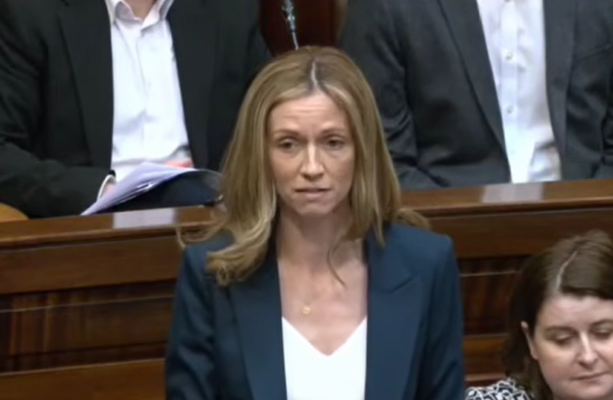
Cairns, during a passionate exchange with Taoiseach Simon Harris, asserted that women are still being forced to travel abroad to terminate pregnancies in cases of fatal fetal anomalies, despite the passage of the 2018 Health (Regulation of Termination of Pregnancy) Act. She cited specific cases where women reportedly faced barriers to accessing abortion services within Ireland.
“Women with wanted pregnancies who receive devastating diagnoses of fatal fetal anomaly are still being forced to travel to the UK,” Cairns stated, adding that the current law has failed to fully address these traumatic situations.
The Pro Life Campaign and other anti-abortion organizations immediately challenged these claims, arguing that Ireland’s legislation explicitly permits terminations in cases where the fetus has a condition likely to lead to death before or within 28 days of birth. They contend that Cairns’ statements unfairly characterized the healthcare system’s response to such diagnoses.
Medical experts interviewed for this analysis confirm that while the law does indeed permit terminations in cases of fatal fetal anomalies, the practical implementation has been more complicated. Dr. Aoife Murphy, an obstetrician at a major Dublin hospital who requested her real name be withheld, explained the nuances of the situation.
“The legislation requires certification by two medical practitioners that the condition is likely to lead to death within 28 days of birth. This creates a gray area for conditions where prognosis is difficult to establish with absolute certainty,” Dr. Murphy said. “Some physicians may be hesitant to certify a condition as ‘fatal’ if there’s any ambiguity about the timeframe.”
Data from the UK Department of Health shows that while the number of Irish women traveling to Britain for abortions has decreased significantly since 2018, several dozen women still make the journey annually, including some with diagnoses of fetal anomalies.
The Irish Family Planning Association (IFPA) confirmed that they continue to support women who face challenges accessing terminations in Ireland. Their 2022 report documented cases where women received diagnoses of severe fetal abnormalities but did not qualify under the strict interpretation of the 28-day provision.
Dr. Mary Ryan, a bioethicist at University College Dublin, points to the inherent difficulty in legislating for medical complexity. “Laws necessarily create boundaries, but human biology and medical prognoses rarely fit neatly into legal definitions. The 28-day cutoff, while providing some clarity, inevitably creates edge cases.”
The controversy also highlights ongoing issues with abortion service provision across Ireland. Currently, only 10 of the country’s 19 maternity units offer full termination services, with geographical disparities in access particularly affecting rural women.
Minister for Health Stephen Donnelly acknowledged these challenges during a recent review of the legislation, noting that “while significant progress has been made, we recognize that some women still face difficulties accessing services in certain circumstances.”
The dispute between Cairns and anti-abortion groups underscores the polarized nature of the abortion debate in Ireland, even five years after the constitutional amendment. Both sides continue to marshal evidence supporting their positions, often talking past each other on questions of implementation versus intent.
Legal experts suggest that the ongoing review of the 2018 Act may need to address these gray areas more explicitly, potentially refining the definition of fatal fetal anomalies to better reflect medical realities.
For women facing these devastating diagnoses, the political and legal debates often feel removed from their immediate personal tragedies. Support organizations report that regardless of legal provisions, the emotional and psychological impact of such diagnoses requires compassionate care that transcends political divides.
As the review of Ireland’s abortion legislation continues, these contested claims and counterclaims will likely influence any potential amendments to the current framework, highlighting the ongoing evolution of Ireland’s approach to reproductive healthcare.
Fact Checker
Verify the accuracy of this article using The Disinformation Commission analysis and real-time sources.

16 Comments
Abortion access is a highly charged topic, and I’m glad to see an attempt at impartial reporting on the specifics of this dispute. While people will have strong views, the focus should be on upholding the law and addressing any gaps in access to safe, legal services.
The abortion debate in Ireland remains highly contentious. While I don’t have strong personal views, I believe the focus should be on upholding the law, protecting vulnerable women, and making decisions based on medical evidence rather than political agendas.
This is a complex and emotive issue where I don’t have a strong personal stance. However, I believe the priority should be ensuring compassionate, evidence-based policies that respect the rights and wellbeing of all involved, including vulnerable women facing very difficult situations.
As a neutral observer, I’m curious to see how this dispute plays out. The claims on both sides seem sincere, so I hope an impartial investigation can shed light on the true impact of the 2018 law and identify any areas needing improvement.
Factual reporting on the legal and medical realities around abortion access is crucial. While the 2018 law aimed to address these issues, it seems more work is needed to ensure women receive the care they need during very difficult pregnancies.
You raise a fair point. The law’s intent was positive, but the implementation may be falling short. Ongoing dialogue and examination of the evidence is important to identify any gaps or needed improvements.
As an outside observer, I’m interested to see how this dispute plays out. Differing moral views on abortion are understandable, but policies should ultimately be guided by medical expertise and a commitment to protecting the health and rights of women.
Agreed. While people will have strongly held beliefs, the focus should be on upholding the law and identifying any gaps in access to safe, legal abortion services, especially for women facing tragic circumstances.
This is a complex and sensitive issue that deserves careful consideration. It’s good to see both sides engaging in the debate, though I hope they can find common ground and work towards solutions that respect the rights and wellbeing of all involved.
I agree, these are deeply personal and difficult decisions. Any policy changes should be guided by medical expertise and empathy for the women facing such traumatic situations.
This is a complex and sensitive issue that deserves careful, fact-based examination. I hope all sides can engage constructively to identify ways to uphold the law, protect vulnerable women, and make decisions based on medical evidence rather than political agendas.
Abortion is a highly contentious issue, and I appreciate the attempt at objective reporting on the specifics of this dispute. Ensuring access to safe, legal services is important, while also respecting differing moral and religious views on the topic.
This is a politically charged topic, but I appreciate the attempt to objectively examine the specific claims and counterclaims. Ensuring access to safe, legal abortion services is important, while also respecting differing moral and religious views on the issue.
Agreed, it’s a complex balance. Hopefully all sides can approach this constructively, putting the wellbeing of women first while also respecting the diverse perspectives in society.
These are deeply personal and emotive issues, so I appreciate the attempt at objective reporting. It’s important to hear all perspectives, while also ensuring that policy is guided by medical expertise and compassion for women facing incredibly difficult situations.
Well said. Finding the right balance between moral/religious views and practical, humane solutions is crucial. Ongoing dialogue and fact-finding will be key to making progress on this sensitive issue.