


Listen to the article
Trump’s Claims on Economy, Immigration, and International Affairs Face Scrutiny
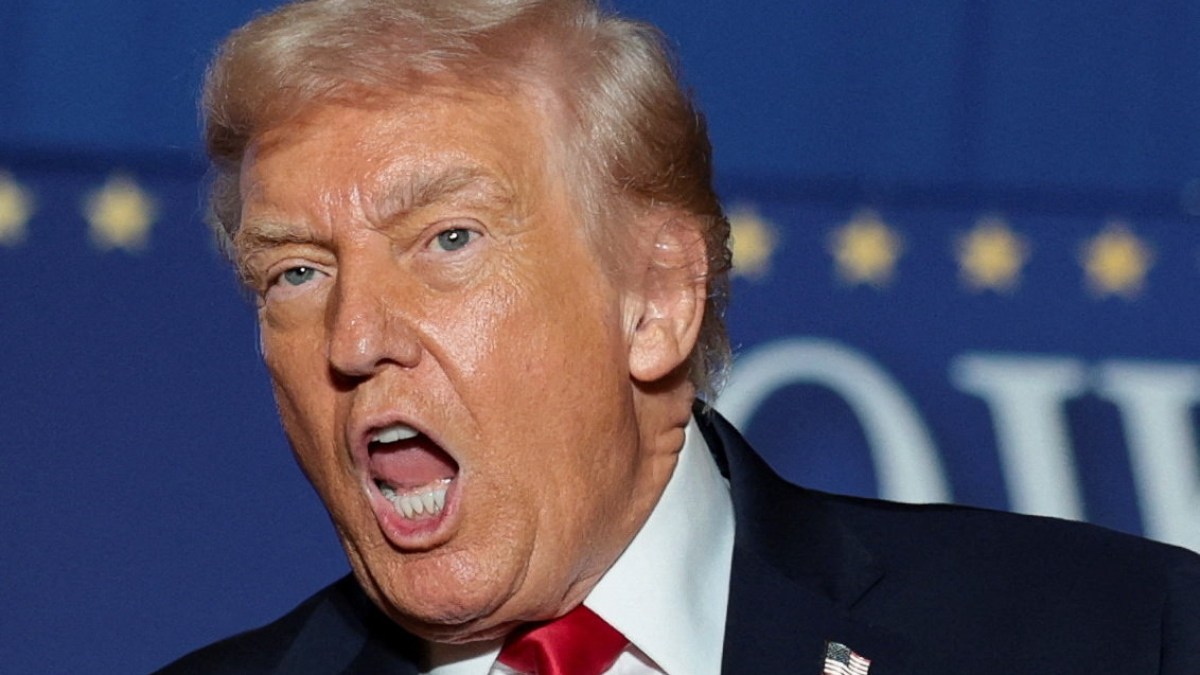
President Donald Trump made several bold statements during a White House interview with Politico on Monday and at a subsequent 90-minute rally in Pennsylvania, touching on the economy, immigration, and foreign policy. Many of these claims, however, have been challenged by fact-checkers and official data.
During his Pennsylvania appearance, Trump claimed he inherited the “worst inflation in history” from former President Joe Biden. “I inherited a mess. I inherited a total mess. Prices were at an all-time high when I came in,” Trump told Politico, adding that gasoline prices had reached “$4.50, almost $5.00” per gallon under Biden, with some states seeing prices as high as $6.00.
Fact-checkers at Philadelphia-based nonprofit Factcheck.org dispute this characterization. When Trump returned to office, the annualized inflation rate was below 3 percent during the preceding six months. While inflation did rise substantially during Biden’s term—peaking at 9.1 percent in June 2022—this was far from historical highs. After World War I, inflation reached 23.7 percent in June 1920, and in March 1980, it hit 14.8 percent.
Regarding current gasoline prices, the U.S. Energy Information Administration reports the national average at $3.05 per gallon as of November, with state averages ranging from $2.41 in Oklahoma to $4.53 in California in early December. Trump’s claim of $1.99 per gallon appears to reference isolated low-price stations rather than statewide averages.
The former president also launched a pointed attack on Representative Ilhan Omar, claiming the Minnesota Democrat is in the United States illegally and repeating unsubstantiated allegations that she “married her brother to get in.” These comments prompted rally attendees to chant “Send her back!”
Public records show Omar entered the U.S. legally as a refugee at age 12, fleeing Somalia’s civil war after four years in a Kenyan refugee camp. She became a naturalized U.S. citizen in 2000 at age 17. Marriage records document her relationships with Ahmed Abdisalan Hirsi and Ahmed Nur Said Elmi, but no evidence supports claims that either man is her brother—allegations Omar has consistently denied as “disgusting lies.”
Trump also made incorrect statements about Somalia, claiming it has no military, parliament, or police force. In fact, Somalia maintains all three institutions despite ongoing challenges with stability and governance.
Regarding Venezuela, Trump has repeatedly claimed that U.S. military strikes on Venezuelan boats in the Caribbean save “25,000 American lives each time” by preventing drug trafficking. Since September, U.S. forces have struck at least 21 Venezuelan vessels, reportedly killing more than 80 people.
The Trump administration has provided no evidence supporting the 25,000 lives saved claim, nor proven that targeted vessels were carrying drugs. According to the United Nations Office on Drugs and Crime, global cocaine production primarily originates in Colombia, Peru, and Bolivia—not Venezuela. The U.S. Drug Enforcement Administration’s 2024 report identifies Colombia as the source for about 84% of cocaine seized in the U.S., with no significant mention of Venezuela.
During his Pennsylvania rally, Trump also made provocative claims about transgender issues, stating Democrats want “transgender for every member in your family” and “If they’re not feeling well that night, let’s just change their sex.” No evidence suggests the Democratic Party has advocated for such policies.
On voter demographics, Trump claimed “Black people love Trump. I got the biggest vote with Black people.” While he did increase his share of Black voters to 20% in the 2024 election—up from 12% in 2020—this still represents a minority of the Black electorate, with Democrat Kamala Harris winning the majority of Black votes.
As Trump continues his second term, the contrast between his public statements and verifiable facts highlights ongoing concerns about accuracy in political discourse and the challenges facing fact-checkers in the current political environment.
Fact Checker
Verify the accuracy of this article using The Disinformation Commission analysis and real-time sources.

10 Comments
While Trump may have inherited some economic challenges, the article rightly points out that his characterization of “the worst inflation in history” is inaccurate. Fact-checking is crucial to cut through political spin.
Exactly, it’s important to separate political rhetoric from the actual economic data and historical context.
It’s refreshing to see a detailed, data-driven analysis of Trump’s economic claims. While inflation is certainly a concern, it’s important to maintain objectivity and avoid hyperbole.
Absolutely, nuance and context are crucial when evaluating the economic situation, rather than relying on partisan rhetoric.
Interesting fact-checking on Trump’s economic claims. Inflation is a complex issue, and it’s important to look at the full context and data rather than relying on partisan rhetoric.
Agreed, a nuanced analysis is needed here. Inflation has many causes beyond just the current administration.
The article’s deep dive into the inflation numbers and comparison to past highs provides valuable perspective. Discussions around the economy should be based on facts, not just partisan talking points.
Agreed, fact-checking helps us move beyond the political noise and have a more informed debate on economic policy.
The article’s look at historical inflation rates provides helpful context. It’s important to avoid overly partisan characterizations and instead focus on the facts and data when discussing economic issues.
Agreed, a fact-based approach is essential for meaningful dialogue on complex economic challenges.