


Listen to the article
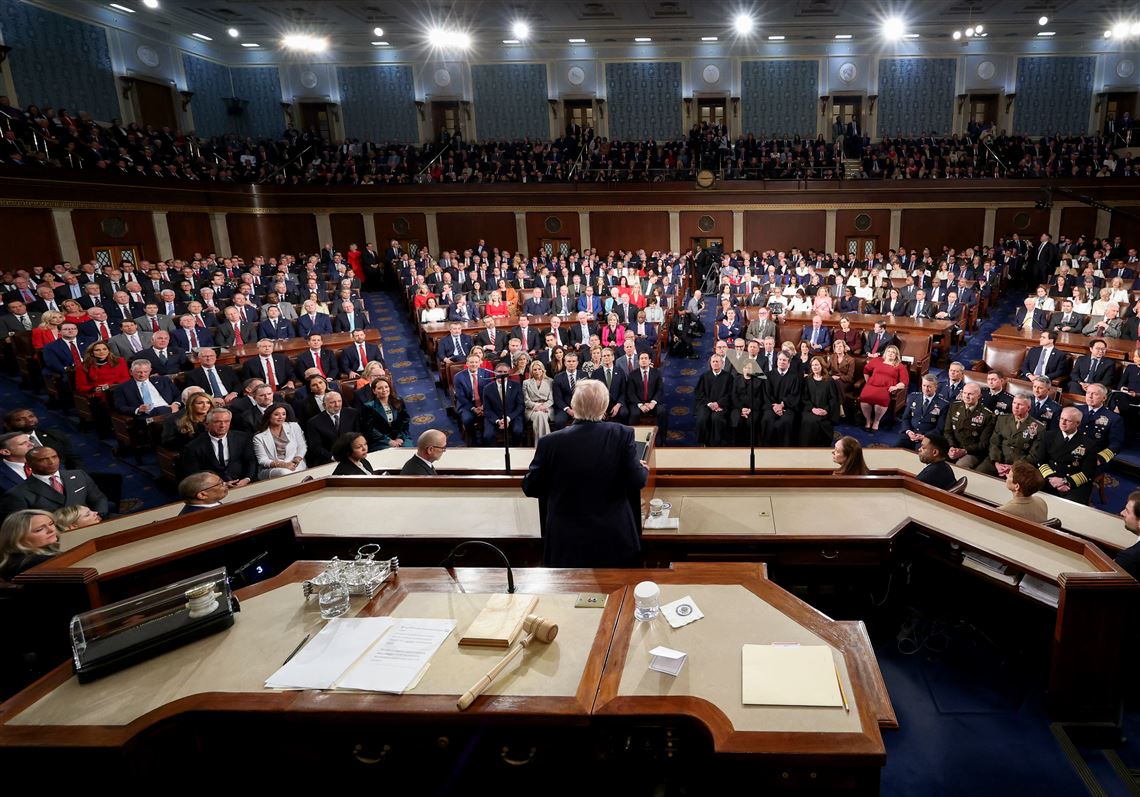
As President Donald Trump delivered his third State of the Union address to a joint session of Congress Tuesday night, he made numerous claims about the economy, immigration, healthcare and other issues facing the nation. While many of his assertions contained elements of truth, several statements required context or correction when examined against available data and expert analysis.
The president’s address, coming amid his impeachment trial and during an election year, emphasized economic achievements under his administration. Trump declared that the U.S. economy is experiencing a “blue-collar boom,” citing record-low unemployment rates and substantial job creation.
Indeed, the unemployment rate has fallen to 3.5 percent, a 50-year low, according to the Bureau of Labor Statistics. However, economists note that this continues a downward trend that began during the Obama administration, when unemployment peaked at 10 percent following the 2008 recession and then steadily declined over the subsequent six years.
Trump also claimed credit for creating 7 million new jobs since his election. While the economy has added approximately that number of jobs, the pace of job creation has actually slowed compared to the final three years of the Obama administration. Data shows monthly job growth averaged 223,000 in 2018, 175,000 in 2019, and 176,000 during Obama’s last three years in office.
On manufacturing, the president painted a picture of robust growth, stating that factories are “rushing back to America.” However, recent manufacturing data tells a more complicated story. The Institute for Supply Management’s manufacturing index showed contraction for five consecutive months in 2019, with only a slight recovery in January 2020. Manufacturing job growth has also slowed significantly, with just 46,000 manufacturing jobs added in 2019 compared to 264,000 in 2018.
The president highlighted his administration’s trade policies, particularly the recently signed “Phase One” agreement with China and the United States-Mexico-Canada Agreement (USMCA). While these deals represent significant diplomatic achievements, economic analysts caution that many tariffs remain in place, and the full economic impact of these agreements remains to be seen.
Regarding healthcare, Trump claimed his administration is protecting patients with pre-existing conditions. This assertion contradicts his administration’s ongoing legal efforts to invalidate the Affordable Care Act, which established those protections. The administration has not yet put forward a comprehensive replacement plan that would maintain the same level of protections.
The president made several claims about immigration, including that the border wall with Mexico is “rapidly being built.” While some barrier construction has occurred, most of this represents replacement of existing barriers rather than new wall construction. According to Customs and Border Protection, about 100 miles of barriers had been built or replaced as of January 2020, far short of the more than 400 miles Trump had promised to complete by the end of 2020.
On prescription drug prices, Trump stated that prices declined for the first time in 51 years. While some drug prices have fallen, the overall picture is more nuanced. The consumer price index for prescription drugs did fall by 0.6 percent in 2018, but rose again by 3 percent in 2019, according to Bureau of Labor Statistics data.
Energy production was another area of focus, with Trump claiming the United States is now energy independent. U.S. energy production has indeed increased significantly in recent years, but the country still imports approximately 9 million barrels of petroleum per day, according to the Energy Information Administration, though it also exports about 8.5 million barrels daily.
Throughout the address, the president highlighted several invited guests to illustrate policy points, including military families, a former prisoner who benefited from criminal justice reform, and a fourth-grade student from Philadelphia who received a scholarship.
As with any State of the Union address, Trump’s speech contained a mixture of accurate statistics, selective presentations of data, and some claims that lacked important context. Voters will ultimately weigh these statements against their own economic experiences as the 2020 election approaches.
Fact Checker
Verify the accuracy of this article using The Disinformation Commission analysis and real-time sources.

9 Comments
It’s important to fact-check political claims, even from the president. Providing context and expert analysis helps give a more complete picture of the economy’s performance under this administration.
Agreed. Examining data objectively is crucial to understanding the real state of the economy, beyond just the top-line numbers.
It’s good to see a thorough fact-check of the president’s State of the Union address. Separating political rhetoric from objective data is important for voters to make informed decisions.
Fact-checking is crucial, especially for high-profile political speeches. While the economy has improved, the trends started earlier and the president’s claims require context. Looking forward to more in-depth analysis.
Interesting to see how the president’s economic claims hold up to scrutiny. Unemployment has improved, but the trend started before his term. Careful analysis is needed to separate politics from facts.
Exactly. Digging into the data and getting expert perspectives is the best way to cut through the partisan rhetoric and understand the full economic picture.
Interesting to see how the president’s economic rhetoric compares to the actual data and expert analysis. Fact-checking is crucial to hold leaders accountable and inform voters.
Appreciate the effort to provide a balanced, data-driven assessment of the president’s economic claims. Cutting through the partisan spin to understand the full picture is vital for citizens.
Absolutely. Objective analysis that looks beyond the headlines is essential for an informed public discourse, especially in an election year.