


Listen to the article
Social media users have misattributed comments about U.S. military bases in Europe to official NATO or European Union representatives, according to a Reuters fact check released on January 16.
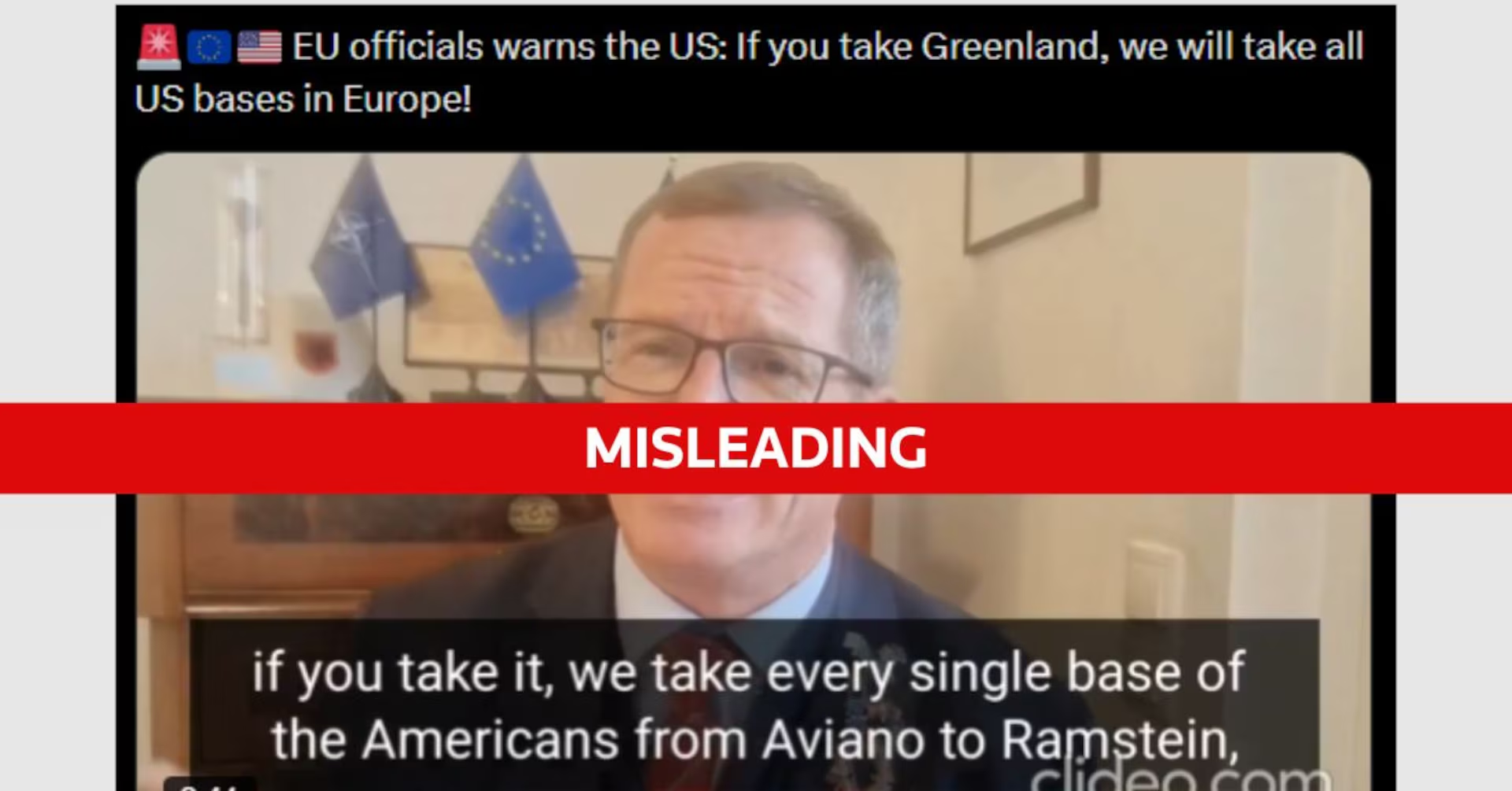
The controversy stems from remarks made by Gunther Fehlinger-Jahn in a video posted to X (formerly Twitter) on January 5. In the footage, Fehlinger-Jahn warned: “If you take it, we take every single base of the Americans from Aviano to Rammstein, from Romania to all the other military bases, will be confiscated and you will lose it.” The statement appeared to be referring to potential U.S. action regarding Greenland.
While Fehlinger-Jahn never claimed to represent NATO or the EU in the video, numerous social media posts subsequently mischaracterized his remarks as coming from official sources. One widely circulated post on X declared: “EU officials warns the US: If you take Greenland, we will take all US bases in Europe!” Other posts on Facebook falsely attributed the statement to Antonio Costa, president of the European Council.
Several online articles inaccurately described Fehlinger-Jahn as a “NATO chief,” further muddying the waters about his actual role and authority.
In reality, Fehlinger-Jahn has no official connection to either NATO or EU institutions. A NATO spokesperson confirmed on January 9 that “He is not a NATO employee. His views and opinions are his own and do not reflect those of the Alliance.” The spokesperson added that despite its name, the “European Committee for NATO Enlargement” that Fehlinger-Jahn leads “is not a NATO committee or body.”
Austria’s foreign ministry also clarified that Fehlinger-Jahn holds no position with the government or its NATO mission, which manages Vienna’s relations with the alliance as a non-member state. Officials from the European Council, Council of the EU, European Parliament, and European Commission all confirmed to Reuters that Fehlinger-Jahn does not work for or speak on behalf of any of these institutions.
According to his website, Fehlinger-Jahn is an economist, management consultant and development worker who currently promotes economic cooperation between Austria and Albania. In the early 2000s, he served as secretary general of the SME Union of the European People’s Party, which advocates for small and medium-sized businesses.
This is not the first time his statements have been misrepresented. In 2023, Fehlinger-Jahn called on Armenia to join NATO, prompting Vahan Kostanyan, Armenia’s then-deputy foreign minister, to clarify that this was not an official invitation and that Fehlinger-Jahn merely led “a non-governmental organisation whose name contains the word NATO.”
The confusion highlights the ease with which statements from private individuals can be misattributed to official institutions on social media, especially when those individuals head organizations with names that suggest official connections. Despite multiple attempts, Reuters reported that Fehlinger-Jahn did not respond to requests for comment on this latest incident.
No credible news sources have reported any warning from actual EU officials to the United States regarding Greenland or American military bases in Europe.
Fact Checker
Verify the accuracy of this article using The Disinformation Commission analysis and real-time sources.

7 Comments
The misattribution of Fehlinger-Jahn’s comments to NATO and EU officials is a prime example of how social media can be used to spread misinformation. It’s a good reminder to always double-check the source and context of claims before accepting them as fact.
The confusion around the origin of these comments highlights the challenges of navigating the modern information landscape. It’s a good reminder to be skeptical of claims, especially those that seem sensational or politically charged, and to always seek out reliable, fact-based sources.
Absolutely. Maintaining a healthy skepticism and fact-checking claims is crucial in an era where misinformation can spread so rapidly. This case shows how important it is to verify information before sharing or accepting it as truth.
This highlights the importance of verifying claims and sources, especially when it comes to sensitive geopolitical issues. It’s worrying how quickly misinformation can spread online, even when the original statements were never made by official representatives.
Absolutely. We need to be vigilant and critically evaluate the information we encounter, rather than just passively consuming and sharing it. Fact-checking efforts play a vital role in maintaining the integrity of public discourse.
This fact check serves as a cautionary tale about the need for critical thinking and media literacy. It’s concerning how easily misinformation can take hold and spread, especially on social media platforms. Fact-checking is essential to combat the proliferation of false narratives.
Interesting fact check on the misattribution of comments about US military bases in Europe. It’s concerning how social media posts can so easily distort the original message and source. Fact-checking is crucial to combat the spread of misinformation.