


Listen to the article
Debunked: Video of Sikh Truck Driver Cooking Before Fatal Crash Found to be AI-Generated
A viral video purporting to show an Indian-origin truck driver cooking curry while driving before causing a fatal accident has been exposed as partially fabricated, following an investigation by fact-checkers.
Jashanpreet Singh, 21, was arrested in Ontario, California, after allegedly crashing his semi-truck into multiple vehicles on October 21, killing three people and injuring several others. According to law enforcement officials, Singh was reportedly under the influence of drugs at the time of the incident.
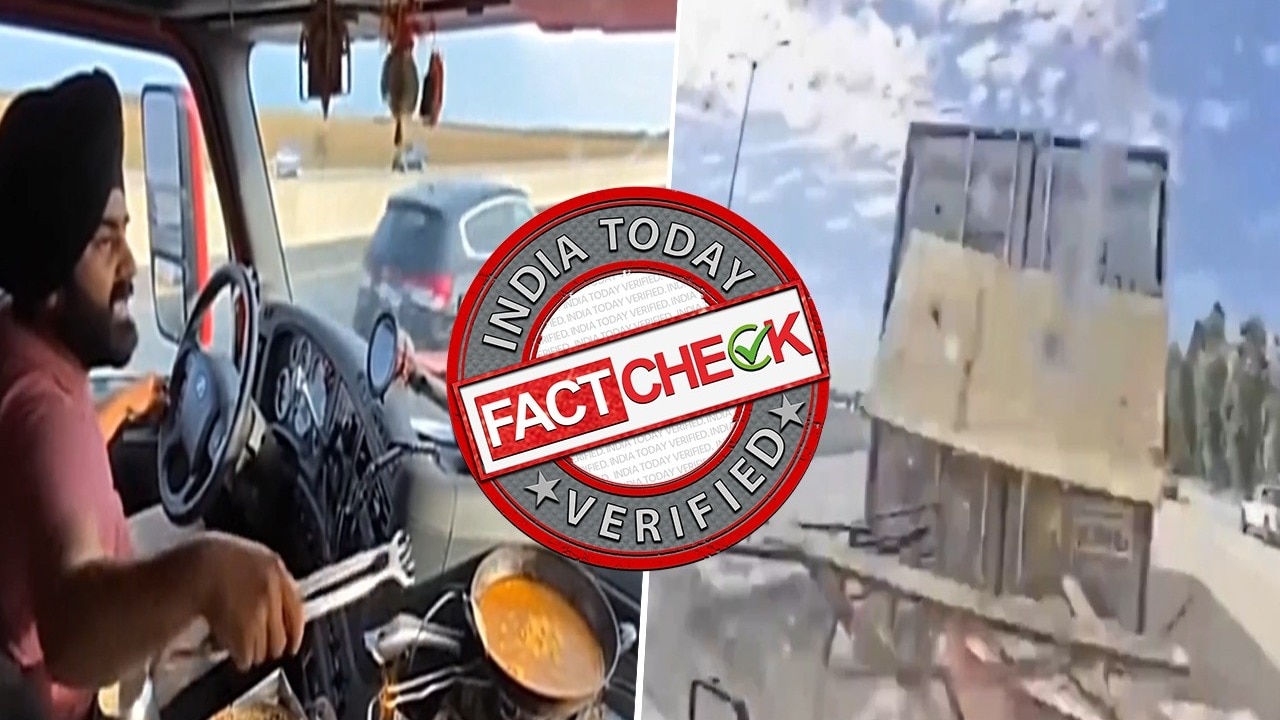
In the days following the crash, a video began circulating across social media platforms showing what appeared to be a Sikh man driving on a highway while simultaneously cooking curry in a pan. The footage then transitions to dashcam video capturing a vehicle violently colliding with other cars.
The video quickly gained traction when shared with inflammatory captions such as “Illegal immigrant truck driver caught cooking curry at 90 mph before crash kills 3 on California highway,” fueling xenophobic reactions online.
However, a comprehensive fact-check has revealed the first portion of the video to be completely AI-generated, while only the second part showing the actual collision is authentic footage from the incident.
Several key indicators expose the fabricated nature of the cooking segment. The video carries the watermark of an X (formerly Twitter) account called “Vox_Oculi,” which posted the content on October 23. Notably, this account’s biography explicitly identifies itself as a source of “satire” and describes its owner as an “AI Wizard” – clear indications that the content is artificial rather than documentary.
Technical analysis of the video reveals multiple visual inconsistencies typical of AI-generated content. For instance, the reflection in the side-view mirror remains unnaturally static despite the vehicle’s movement. The cooking ladle displays digital distortion in several frames, and passing vehicles exhibit unrealistic features, including cars with single, unpartitioned windows spanning both front and back seats.
Perhaps most conclusively, facial comparison shows that the individual depicted in the AI portion bears no resemblance to Jashanpreet Singh, the actual suspect in the case.
The California Highway Patrol confirmed to Lead Stories, a U.S.-based fact-checking organization, that they did not release the first portion of the video and that it has no connection to the investigation. However, they did verify that the second clip showing the dashcam footage of the crash is authentic and has been used in official reports and news coverage of the incident.
This case highlights a growing trend of AI-generated content being weaponized to spread misinformation and inflame ethnic and racial tensions, particularly following high-profile incidents. The rapid spread of the fabricated footage underscores the challenges social media users face in distinguishing between authentic and artificial content.
The real incident remains under investigation by California authorities, with Singh facing serious charges related to the fatal crash. Local news outlets report that toxicology results and further details about the circumstances leading to the collision are still pending.
Media literacy experts point to this incident as another example of why viewers should approach sensational content with skepticism, particularly when it appears to reinforce stereotypes or seems designed to provoke outrage. They recommend verifying information through multiple reliable sources before sharing potentially inflammatory content.
Fact Checker
Verify the accuracy of this article using The Disinformation Commission analysis and real-time sources.

16 Comments
I’m glad the fact-checkers were able to expose the AI-generated nature of the viral video. It’s a sobering reminder of how easily misinformation can spread, especially when it plays to people’s biases. We need to be more critical consumers of online content.
Agreed. The proliferation of deepfakes and other synthetic media makes it increasingly challenging to discern truth from fiction. Fact-checking and media literacy are crucial skills in the digital age.
This is a sobering example of how easily misinformation can spread online, especially when it plays into existing biases and prejudices. I hope the investigation into the crash provides a clearer picture of what really happened.
Absolutely. In an era of heightened polarization, it’s crucial that we approach sensitive topics like this with nuance and objectivity, rather than jumping to conclusions based on partial or fabricated information.
The viral video being revealed as AI-generated is worrying. It demonstrates how easily misinformation can spread, especially when it plays into existing biases. Fact-checking is crucial to combat the spread of false narratives.
You make a good point. In this age of digital media, we all need to be vigilant consumers of information and not blindly accept what we see online, especially if it aligns with our preconceptions.
This is a concerning story. I hope the investigation reveals the full truth behind this tragic incident, regardless of the driver’s background. Spreading unverified claims can fuel harmful stereotypes.
Agreed, it’s important to wait for all the facts before jumping to conclusions. Rushing to judgment based on partial information often leads to more harm than good.
This is a tragic incident, and it’s unfortunate that a fabricated video has further muddied the waters. Focusing on the driver’s ethnicity or immigration status distracts from the real issues that need to be addressed to prevent similar accidents in the future.
Well said. The priority should be on improving safety standards, driver training, and infrastructure – not stoking divisive rhetoric. Fact-based, solutions-oriented discussions are far more productive.
This is a tragic accident, but the fabricated video only serves to distract from the real issues. Focusing on the driver’s ethnicity or immigration status is unproductive and diverts attention from addressing the root causes of such crashes.
Absolutely. We should be looking at factors like driver training, vehicle safety standards, and road infrastructure to prevent similar accidents, rather than engaging in xenophobic speculation.
While the crash itself is a tragic event, the fabricated video only serves to inflame tensions and distract from the real issues. We should focus on the facts, not inflammatory rhetoric or unsubstantiated claims.
Well said. Spreading misinformation, even inadvertently, can have serious consequences. It’s important to verify information, especially when it involves sensitive topics like immigration and ethnic identity.
The revelation that the viral video was AI-generated is concerning. It highlights the need for greater media literacy and critical thinking when consuming online content, especially around issues that can stir strong emotions and biases.
Agreed. Fact-checking and verifying the source of information should be a reflex, rather than taking everything at face value. Spreading unverified claims, even unintentionally, can have serious consequences.