


Listen to the article
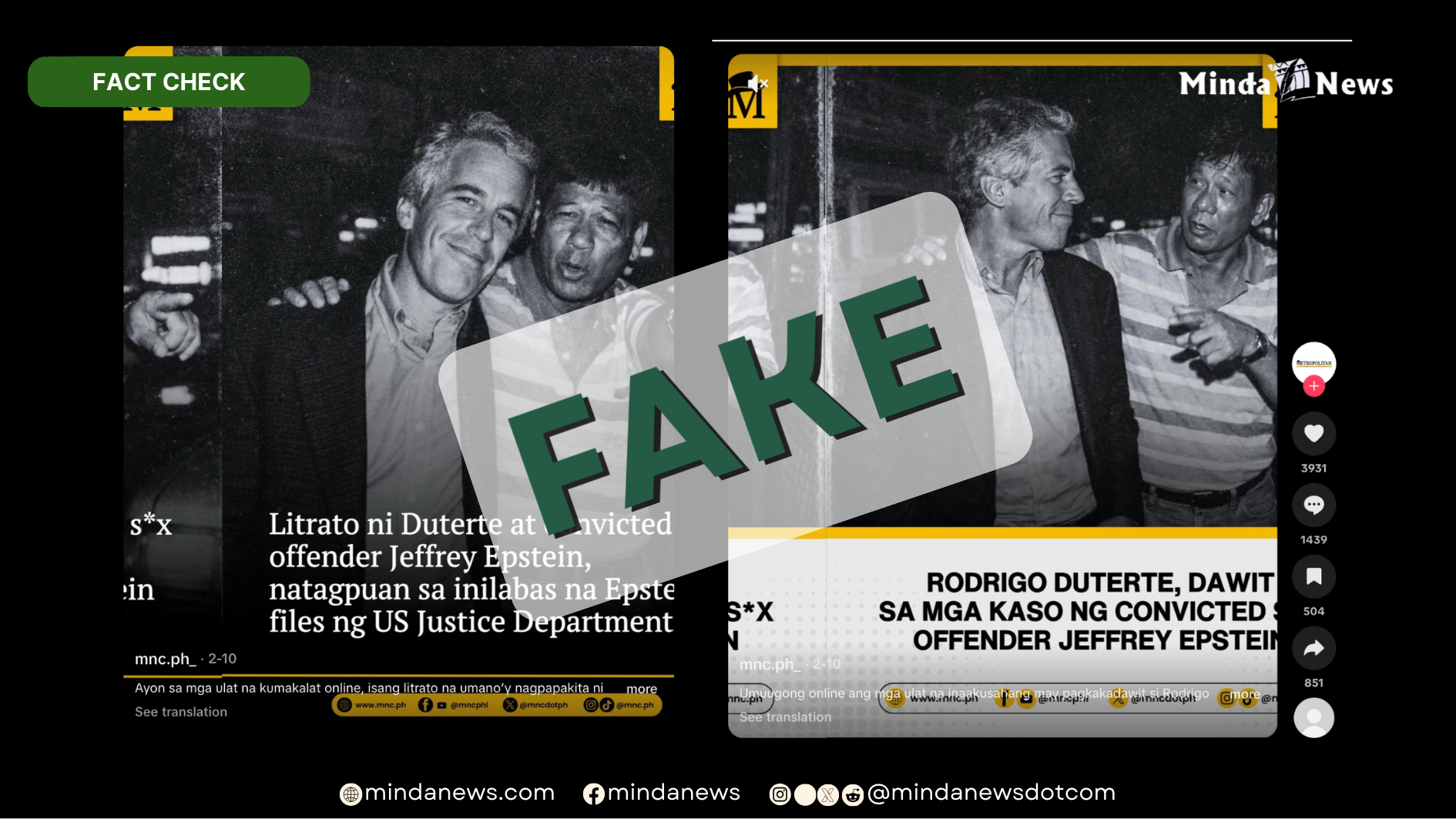
The spread of AI-generated images purporting to show former Philippine President Rodrigo Duterte with convicted sex offender Jeffrey Epstein has sparked widespread confusion on social media, with thousands of users engaging with and sharing the fabricated content.
The manipulated photos, which first appeared on TikTok in February, have collectively garnered over half a million views and thousands of shares across multiple platforms. The account “Metropolitan News Channel,” which claims to provide “critical and in-depth analysis of the issues shaping the Philippine nation,” published the first image on February 10.
The post featured a photo of Duterte beside Epstein with Filipino text claiming the image was discovered in files released by the U.S. Justice Department. A second image, posted the following day, made more explicit allegations, suggesting Duterte was implicated in Epstein’s criminal cases.
Many social media users appeared to accept the images as authentic, with comments indicating belief in a genuine connection between the two men. “Birds of the same feathers flock together,” wrote one commenter, while another suggested Duterte should be questioned about the supposed relationship.
A fact-check by MindaNews revealed multiple indicators of digital manipulation. A reverse image search showed that the Epstein figure had been extracted from a well-documented 1997 photograph of Epstein with Donald Trump at Mar-a-Lago in Florida, originally published by Getty Images. In the fabricated versions, Trump had been digitally replaced with an artificially generated image of Duterte.
Further investigation revealed that elements of Duterte’s appearance in the doctored photos appear to have been sourced from an archival Reuters photograph taken by Davao-based photojournalist Rene B. Lumawag in the early 1990s, when Duterte was still mayor of Davao City.
The manipulated images contain several telltale signs of AI generation, including anatomical impossibilities such as Duterte having six fingers in one of the images. His hairstyle also changes inconsistently between the fabricated photos, shifting from an uncharacteristic bowl cut to a more layered style.
The timing of these fabricated images coincided with the U.S. Justice Department’s release of additional documents related to the Epstein investigation. Epstein died in 2019 while in custody awaiting trial on charges of trafficking underage girls. Previous document releases have detailed Epstein’s connections to numerous high-profile figures in business, entertainment, and politics.
However, there is no credible evidence that Duterte appears in any authentic photograph with Epstein or that he is mentioned in any of the released files. The fabricated images represent a concerning example of how AI technology can be misused to create convincing disinformation that can rapidly spread through social media ecosystems.
The viral posts, which continue to circulate months after their initial publication, demonstrate the challenges of content moderation in the age of increasingly sophisticated AI image generation tools. By presenting these fabricated images as revelations from official documents, the posts risk misleading the public and contributing to the spread of unverified allegations.
Digital literacy experts note that such instances of AI-generated disinformation targeting political figures are becoming increasingly common globally, requiring heightened vigilance from both media consumers and platform operators to identify and flag misleading content.
Fact Checker
Verify the accuracy of this article using The Disinformation Commission analysis and real-time sources.
