


Listen to the article
Iran’s Alleged Capture of U.S. Delta Force Proven to be AI-Generated Hoax
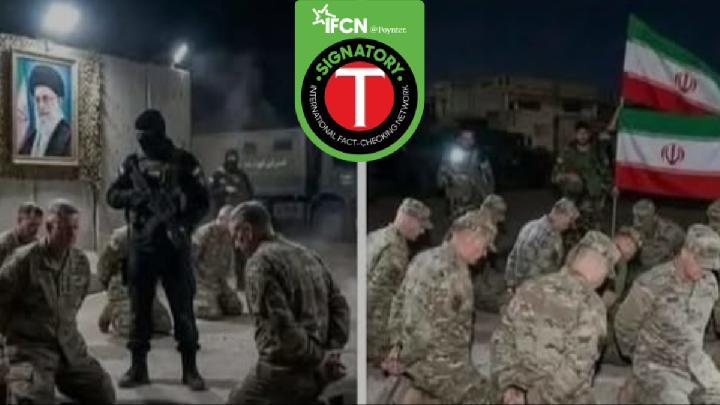
Viral images purporting to show captured American special forces soldiers in Iranian custody have been definitively exposed as artificial intelligence creations, according to an investigation by Tempo.
The fabricated photos, which began circulating on social media platforms on March 6, 2026, depicted several men in combat uniforms being escorted by masked soldiers and kneeling near a portrait of former Ayatollah Ali Khamenei alongside the Iranian flag. The accompanying caption claimed: “US terrorists are now in safe hands. Delta Force operation fails! Many US soldiers captured by Iran.”
By the time fact-checkers intervened, the false content had already garnered significant engagement, with one Facebook post alone receiving 4,500 likes and more than 850 comments—demonstrating the viral potential of AI-generated disinformation amid heightened Middle East tensions.
Tempo’s verification team employed multiple methods to analyze the images, including visual inspection, AI detection tools, and comparison with credible sources. Their investigation revealed tell-tale signs of artificial generation, most notably Google’s Gemini AI chatbot watermark visible in the lower right corner of all three photos.
A more complete version of the images was traced to an X (formerly Twitter) account that posted the content on March 6. Further analysis using Google’s SynthID Detector—a specialized tool designed to identify AI-generated content—confirmed that all three photos were fabricated using artificial intelligence technology.
The fabrication extends beyond the images themselves to the broader geopolitical context. While regional tensions remain high, there is no credible evidence supporting claims of U.S. special forces operating within Iranian territory. Reuters fact-checkers attempted to obtain confirmation from Iranian authorities but received no response, further undermining the claim’s credibility.
The images emerge against a backdrop of complex U.S.-Iranian relations. Earlier this year, Delta Force reportedly conducted an operation in Venezuela involving President Nicolas Maduro, but there have been no verified operations inside Iran. According to reporting from Al Jazeera, though U.S. officials including Defense Secretary Pete Hegseth and Secretary of State Marco Rubio have made statements about ensuring Iran’s nuclear ambitions are contained, these statements fall well short of confirming any boots-on-the-ground operations.
This incident highlights the growing sophistication of AI-generated misinformation and its potential to inflame international tensions. Despite improvements in detection capabilities, such as Google’s SynthID, convincing forgeries can rapidly spread across social platforms before verification processes can catch up.
Media literacy experts warn that as AI image generation technology becomes more advanced and accessible, distinguishing between authentic and fabricated visual evidence will become increasingly challenging for the average consumer of news content.
The case also underscores the critical role of professional fact-checking organizations in an era where digital manipulation can be executed with unprecedented ease. As tensions between the United States and Iran continue to fluctuate, accurately distinguishing between genuine developments and fabricated provocations remains essential to preventing unnecessary escalation based on false information.
Tempo’s fact-check team has invited readers with additional information or claims requiring verification to contact their chatbot or submit feedback via email—an increasingly common practice among news organizations working to combat the spread of misinformation.
Fact Checker
Verify the accuracy of this article using The Disinformation Commission analysis and real-time sources.

9 Comments
Kudos to the fact-checkers who were able to quickly identify this as an AI-generated hoax. With geopolitical tensions high, it’s crucial that we remain vigilant against the spread of disinformation that could potentially escalate conflicts.
This is a prime example of why we need robust fact-checking and verification processes, especially for claims around military/security incidents. Unverified social media posts can be easily manipulated to sow discord and confusion.
Disturbing to see how quickly this AI-generated hoax spread on social media. It’s a stark reminder that we must be extremely cautious about the sources and credibility of any claims, especially when they involve military/security matters.
This is a concerning report on the rise of AI-generated disinformation. It’s crucial that we remain vigilant and fact-check claims, especially around sensitive geopolitical issues. Fabricated imagery can be very convincing, so we must be cautious.
This report underscores the importance of media literacy and critical thinking when it comes to evaluating online content, especially around sensitive national security issues. Fact-checking is a vital safeguard against the dangers of synthetic media.
Agreed. As AI capabilities advance, the potential for malicious actors to create convincing yet fabricated content will only increase. Developing robust verification methods is crucial to maintain trust in information.
The growing use of AI to generate fake images and content is a worrying trend. I hope this incident serves as a wake-up call for people to be more discerning consumers of online information and to always cross-reference claims with credible sources.
Glad to see this misinformation was debunked quickly. Viral hoaxes on social media can spread like wildfire, so it’s reassuring when fact-checkers are able to expose the AI-generated origins of these kinds of fabricated claims.
Absolutely. Combating the proliferation of synthetic media and AI-powered disinfo is an ongoing challenge that requires concerted efforts from media, platforms, and the public.