


Listen to the article
Viral Video of Venezuelans Celebrating Maduro’s Arrest Proven to be AI-Generated Fake
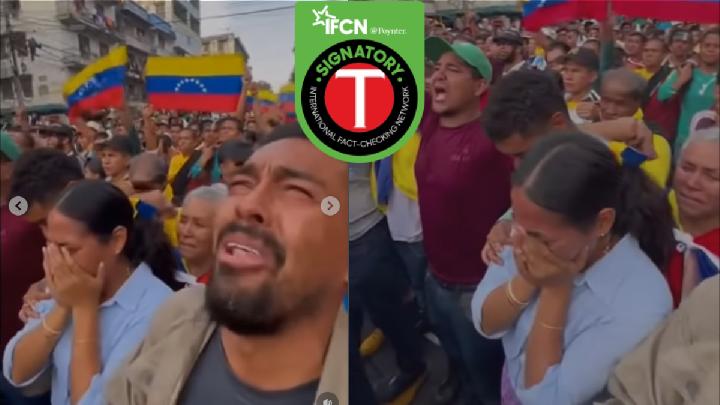
A sophisticated AI-generated video falsely depicting Venezuelans celebrating the alleged arrest of President Nicolas Maduro by the United States has been debunked by Tempo’s fact-checking team. The video, which circulated widely on Instagram earlier this month, portrayed crowds of demonstrators waving Venezuelan flags and chanting for freedom.
The misleading content claimed to show public celebrations following Maduro’s supposed detention by U.S. authorities, suggesting widespread public support for the Venezuelan leader’s removal. The video quickly gained traction across social media platforms, particularly among Venezuelan diaspora communities.
Through meticulous verification, Tempo’s investigation revealed numerous telltale signs of artificial manipulation. A reverse image search traced the video’s origin to a TikTok account that had reposted content from an Instagram account named “ia.comediante.” The Portuguese-language account explicitly identifies itself as an “Artificial Comedian” that produces AI-generated humor, with its bio stating: “Comedy generated by AI. Script, voice, and embarrassment: all artificial.”
Visual analysis of the footage exposed several inconsistencies typical of AI-generated content. Most notably, the Venezuelan flag depicted in the demonstration changed from having seven stars to eight stars within seconds – a glaring continuity error. Additional visual anomalies were identified in the rendering of protesters’ hands and fingers, consistent with AI’s current limitations in accurately depicting human anatomy.
To confirm these findings, Tempo employed multiple AI detection tools, including Hive Moderation and Image Whisperer. Both systems conclusively identified the video as artificially generated, with Hive Moderation assigning it a 99.8% probability of being AI-created. The Hiya Deepfake Voice Detector further assessed the audio authenticity at only 28 out of 100, strongly indicating synthetic voice generation.
The fabricated nature of the video stands in stark contrast to reliable reports of the actual situation in Venezuela. While some members of the Venezuelan diaspora abroad have expressed opposition to Maduro’s 13-year authoritarian leadership, credible news organizations including PolitiFact, Fortune, and the Associated Press have documented a notably subdued atmosphere within Venezuela itself. Fortune specifically reported that the streets of Caracas remained largely deserted in the aftermath of the purported U.S. operation.
The international diplomatic response to the alleged U.S. action has been predominantly critical. Russia, Iran, and Colombia, among other nations, have condemned what they describe as an infringement of Venezuelan sovereignty. Colombian President Gustavo Petro went so far as to call for an emergency meeting of the UN Security Council, characterizing the U.S. operation as “an act of aggression against Venezuelan and Latin American sovereignty.”
This incident highlights the growing sophistication of AI-generated disinformation and the challenges it presents to media literacy worldwide. As deepfake technology becomes more accessible and convincing, the ability to distinguish between authentic and fabricated content increasingly requires specialized tools and expertise.
The case underscores the critical importance of rigorous fact-checking methodologies that combine traditional verification techniques with emerging AI detection tools. It also serves as a reminder for media consumers to approach viral content with healthy skepticism, particularly when it depicts politically charged or geopolitically significant events.
Fact Checker
Verify the accuracy of this article using The Disinformation Commission analysis and real-time sources.

6 Comments
I’m curious to know more about the technical details behind this AI-generated video. What kind of algorithms and tools were used to create it? And what are the broader implications of this technology for the spread of disinformation in the digital age?
It’s alarming to see how easily misinformation can spread online, even when it’s generated by AI. I’m glad the fact-checkers were able to expose this particular instance, but it’s a sobering reminder of the need for constant vigilance and critical thinking when consuming digital content.
This is a timely reminder of the importance of fact-checking and critical thinking when it comes to online content. It’s worrying to see how convincingly AI can be used to create fake videos, but I’m glad the truth was ultimately uncovered.
Interesting that the video was confirmed to be AI-generated. It’s concerning how advanced these deepfake technologies have become, capable of deceiving people on such a large scale. I’m glad the fact-checkers were able to uncover the truth behind this misleading content.
This is a good example of why it’s crucial to verify information, especially when it comes to politically charged issues. Spreading unverified content, even if it aligns with one’s views, can contribute to the spread of misinformation. I commend the fact-checking team for their diligence.
It’s concerning to see how easily misinformation can spread online, especially through the use of advanced AI technology. I’m glad the fact-checkers were able to expose this particular instance of a deepfake video. We need to remain vigilant and critical consumers of online content.