


Listen to the article
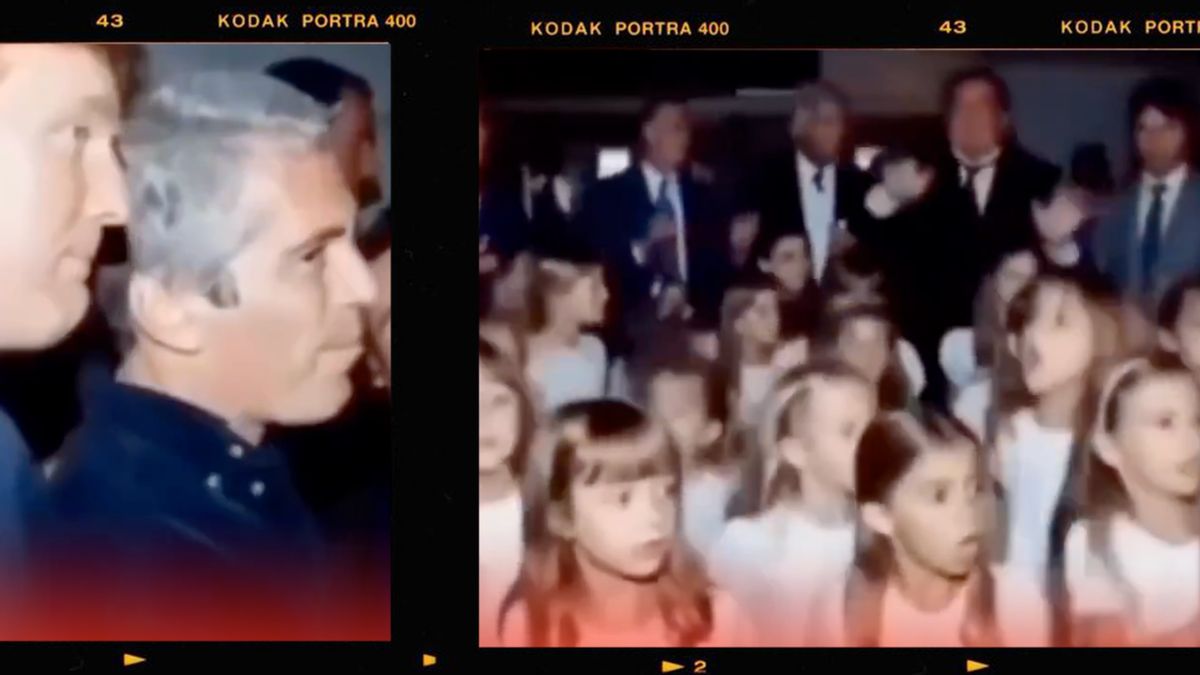
In a concerning development that highlights the growing challenge of AI-generated misinformation, a fabricated video purporting to show former U.S. President Donald Trump and convicted sex offender Jeffrey Epstein at a social gathering with young girls has resurfaced and spread widely across social media platforms.
The deceptive footage began recirculating in March 2026 amid renewed public interest following the Department of Justice’s release of millions of pages of documents from the Epstein case under the Epstein Files Transparency Act. The video appeared on multiple platforms including Instagram, Facebook, X (formerly Twitter), YouTube, and Threads, often with captions suggesting it represented authentic evidence of a connection between Trump and Epstein involving minors.
Fact-checkers have definitively determined the video is fake. The fabricated footage was created by manipulating a genuine photograph from 1997 that shows Trump, Epstein, and Belgian model Ingrid Seynhaeve attending a Victoria’s Secret party in New York City. The original image contained no children.
The legitimate photograph likely originated from the 2017 book “Filthy Rich: The Shocking True Story of Jeffrey Epstein – The Billionaire’s Sex Scandal.” On page 222 of the publication, the image appears with the caption: “Jeffrey Epstein, Donald Trump, and (newly signed Trump Model) Ingrid Seynhaeve, attending the Victoria’s Secret Angels party at Laura Belle club in New York City on April 8, 1997.”
Digital forensics experts point to several telltale signs of AI manipulation in the video, including unnaturally smooth skin textures, unrealistic facial expressions, and awkward movements typical of algorithms that transform still images into simulated video footage. The fake video also inserted completely fabricated imagery of underage girls who were not present in the original photograph.
Independent fact-checking organizations, including Open.Online and BBC Verify, conducted their own analyses and reached the same conclusion – the footage was generated using artificial intelligence tools designed to create synthetic media.
This incident represents part of a troubling pattern. In July 2025, fact-checkers debunked a similar AI-generated video allegedly showing Trump pointing at a young girl while standing with Ghislaine Maxwell, Epstein’s former associate who was convicted for her role in his sex trafficking operation.
The Trump-Epstein relationship has been the subject of intense speculation and numerous rumors over the years, particularly since Epstein’s 2019 suicide in jail while awaiting trial on federal sex-trafficking charges. While the two did have documented social connections in the 1990s and early 2000s, manipulated media like this video complicates public understanding of the factual record.
Getty Images archives contain several authentic photographs from the same 1997 Victoria’s Secret event showing Trump and Seynhaeve wearing identical outfits to those seen in the image that was later manipulated to create the fake video.
The circulation of such convincing deepfakes presents growing challenges for social media platforms, journalists, and the public as AI technology becomes more sophisticated and accessible. Media literacy experts warn that the proliferation of synthetic media threatens to erode trust in legitimate visual evidence and complicate efforts to establish historical truth about public figures.
This case underscores the importance of critical evaluation of sensational content, particularly when it appears to show inflammatory or criminal behavior by prominent individuals. As synthetic media technology advances, the ability to distinguish between authentic and manipulated content becomes increasingly vital for maintaining factual discourse in the public sphere.
Fact Checker
Verify the accuracy of this article using The Disinformation Commission analysis and real-time sources.

12 Comments
The release of the Epstein Files is an important development, but we must be cautious about how the information is presented and interpreted. Fact-based reporting is essential.
Absolutely. We should focus on the verified facts rather than sensationalized or fabricated content.
It’s disheartening to see how easily AI-generated content can be used to mislead the public. We must continue to educate ourselves and others on spotting and reporting such deception.
Agreed. Fact-checking and media literacy should be prioritized to combat the rise of misinformation.
This is a concerning case of AI-generated misinformation. It’s crucial that we rely on authoritative and verified sources when it comes to sensitive topics like this.
Agreed. Fact-checking is essential to combat the spread of deceptive content online.
This case highlights the need for stronger regulations and enforcement around the creation and distribution of AI-generated content. Accountability is crucial.
I agree. Policymakers must address this issue to protect the public from the dangers of misinformation.
While the original photograph may have been legitimate, the manipulation of it to create a false narrative is unacceptable. We must hold those responsible accountable.
I share your concern. Spreading misinformation, even inadvertently, can have serious consequences.
The fabricated video highlights the importance of critical thinking and media literacy. We must be vigilant in identifying manipulated content and not contribute to its further spread.
Absolutely. Verifying information before sharing is the responsible thing to do.