


Listen to the article
In a week of escalating tensions and misinformation, false claims about religious violence in Nigeria have spread rapidly across social media platforms, further complicating international relations and religious discourse in West Africa.
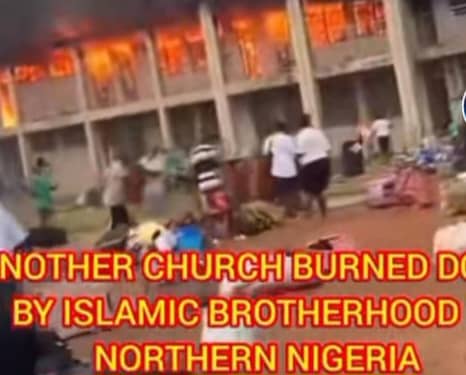
A viral TikTok video claiming to show a church being razed by “Islamic brotherhood” militants in northern Nigeria has been debunked as entirely fabricated. The video, which garnered over 1,000 likes and 160 shares since its November 2 posting by user @WakaWakaplanet, showed distressed students in uniforms crying amid a building fire.
The post, captioned “#christianpersecution hits an all time high in Nigeria,” overlaid text claiming the footage depicted “another Church burned down by the islamic brotherhood in northern Nigeria.” The timing of the post appeared calculated, coming shortly after reports that former US President Donald Trump had allegedly called for “possible action” against Islamic terrorists in Nigeria.
Fact-checking efforts by CableCheck revealed the video actually documented a fire at Kwapong Nursing Training College in Ghana’s Ahafo region, specifically in the Asunafo South district. The incident had been widely reported by Ghanaian media outlets including TV3 Ghana since October 31, with no connection whatsoever to religious violence or Nigeria.
Multiple reputable Ghanaian news sources confirmed the nursing school fire, with none mentioning religious motives or terrorist involvement. The misrepresentation transforms a routine (though unfortunate) building fire in Ghana into fabricated evidence of religious persecution in a different country entirely.
This false narrative emerges amid complex religious dynamics in Nigeria, where religious tensions do exist in some regions. Nigeria’s population of over 200 million is roughly evenly divided between Muslims and Christians, with Muslims predominant in the north and Christians more concentrated in the south. While religious violence has occurred in specific contexts, experts consistently warn against oversimplified narratives that mischaracterize the complex socio-economic, political, and ethnic factors at play.
The viral misinformation also references Trump’s alleged “redesignation” of Nigeria as a “country of particular concern” regarding religious freedom. While the U.S. State Department does maintain such designations, the claim appears to conflate current policy with previous actions during the Trump administration, when Nigeria was briefly designated as such before the designation was removed in 2021.
Media analysts note that religiously-charged misinformation about Nigeria frequently spikes during periods of heightened global attention or domestic political transitions. Such content can generate significant engagement on platforms like TikTok, where emotional religious content often achieves virality regardless of accuracy.
International organizations monitoring religious freedom emphasize the damage such misinformation causes. “False claims about religious persecution undermine legitimate human rights monitoring and can incite actual violence,” noted one regional expert who requested anonymity due to security concerns.
Social media platforms have faced ongoing criticism for their handling of geographically-specific misinformation, particularly in regions where content moderators may lack relevant linguistic and cultural expertise to quickly identify false information.
The incident highlights the continuing challenge of cross-border misinformation and the responsibility of users to verify emotional claims before sharing content that could inflame tensions in sensitive regions.
Fact Checker
Verify the accuracy of this article using The Disinformation Commission analysis and real-time sources.

13 Comments
Misinformation can have serious consequences, especially when it involves sensitive religious and political issues. It’s crucial that we all remain vigilant and rely on verified, fact-based information to avoid further escalation of tensions.
Absolutely. Fact-checking and debunking efforts are essential, but platforms and policymakers must also take a more proactive approach to limiting the spread of misinformation. Addressing the root causes is key to a long-term solution.
This is a clear example of the dangers of misinformation and how it can be weaponized to inflame religious and political tensions. Fact-checking efforts are critical to expose such falsehoods and prevent their further spread.
Agreed. Platforms and media outlets must be vigilant in verifying information, especially when it involves potentially volatile topics. Responsible reporting and digital literacy education are key to combating the spread of misinformation.
The video appears to be a clear case of misinformation, depicting a school fire in Ghana rather than a church attack in Nigeria. Social media platforms need better systems to detect and curb the spread of such false content.
Absolutely. Fact-checking and debunking efforts are crucial, but the platforms themselves must take more proactive steps to limit the virality of verified false claims. Addressing the root causes of misinformation is key.
It’s concerning to see how quickly misinformation can spread, especially around sensitive geopolitical and religious issues. Rigorous verification and responsible reporting are essential to maintain accurate information and prevent further escalation of tensions.
The timing of this false post, coming after reports of potential US action against Islamic militants in Nigeria, is particularly concerning. Fact-checkers play a vital role in exposing such deliberate attempts to manipulate public discourse.
The swift debunking of this false claim is encouraging, but the fact that it gained traction in the first place is concerning. More robust systems are needed to detect and curb the spread of misinformation, especially on issues with the potential to inflame tensions.
You’re right. While fact-checking is important, the platforms themselves need to take a more proactive role in limiting the virality of verified false claims. Addressing the underlying drivers of misinformation is key to a more sustainable solution.
This is a troubling example of how false narratives can spread rapidly on social media, even around sensitive topics like religious violence. Rigorous verification and responsible reporting are critical to maintaining accurate information and preventing further escalation.
Troubling to see false claims spreading so rapidly on social media, especially around sensitive religious and political issues. Fact-checking is crucial to prevent further escalation of tensions in West Africa.
Agreed. It’s important to verify information, especially when it involves potentially inflammatory religious or political narratives. Responsible reporting and digital literacy are key to combating the spread of misinformation.