


Listen to the article
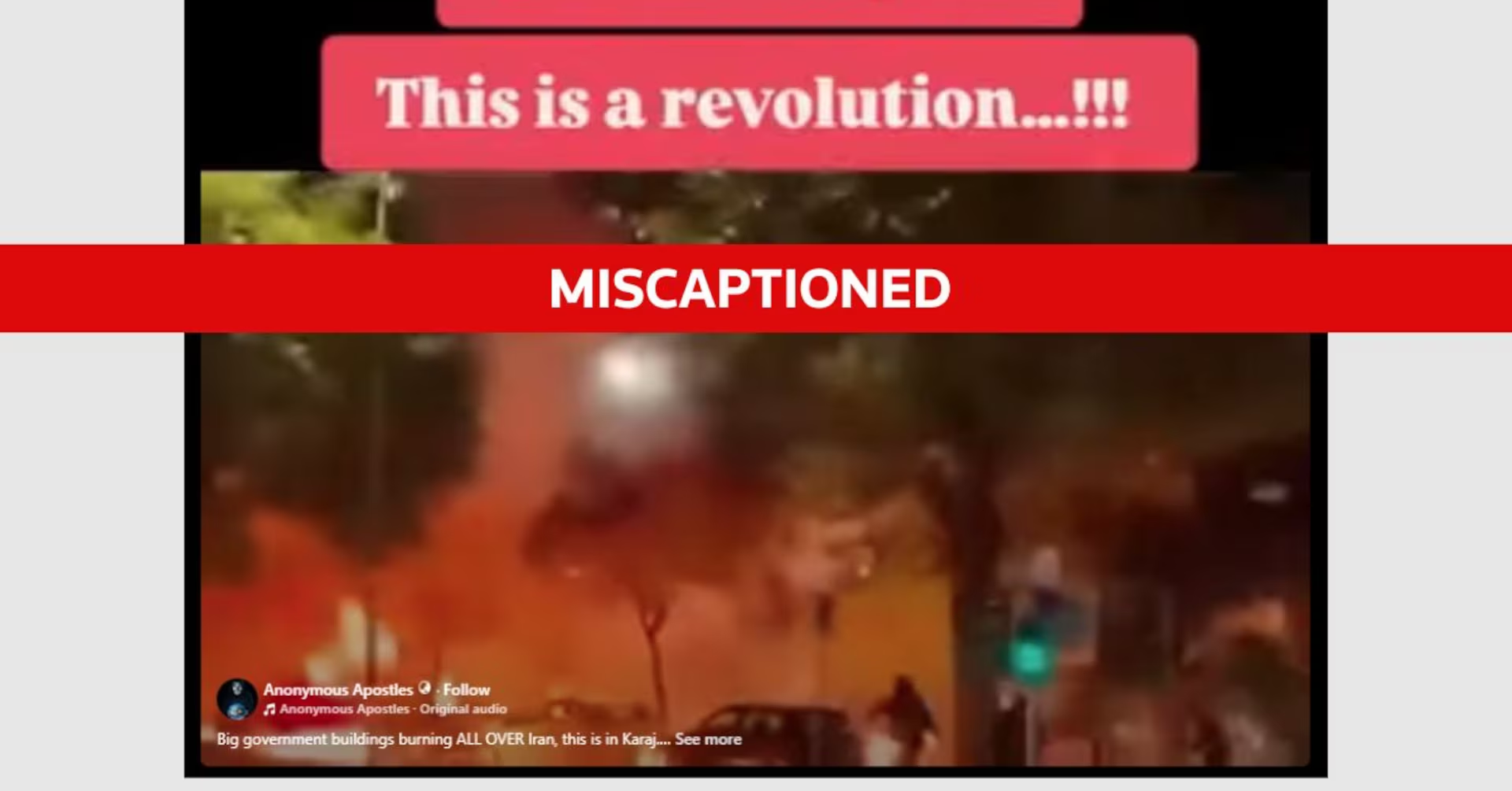
A video circulating on social media that allegedly shows government buildings burning in Iran has been debunked as footage from Greece taken months before the Iranian protests began.
The misleading content, shared on Facebook in mid-January, claimed to depict “Big government buildings burning ALL OVER Iran, this is in Karaj,” referencing a city west of Tehran that experienced significant unrest during recent protests. The video gained traction amid coverage of Iran’s nationwide anti-government demonstrations, which began in late December and evolved into the country’s worst domestic crisis since the 1979 Islamic Revolution.
However, a Reuters fact-check has confirmed the footage was actually captured in Thessaloniki, Greece, near the Turkish consulate in early November 2023 – well before the Iranian protests erupted.
Through digital forensic analysis, Reuters identified a higher quality version of the same video posted to Instagram on November 2, 2023. Using Google Street View imagery, investigators determined the incident took place approximately 144 meters (473 feet) from the Turkish consulate in Greece’s second-largest city.
Local Greek media reported that the disturbance occurred overnight on November 1-2, when people leaving a concert nearby attacked police officers stationed at the Turkish consulate. According to Greek state media, authorities detained 18 individuals in connection with the incident.
The mischaracterization of the video highlights the challenges of verifying information during major international events. The Iranian protests have been particularly susceptible to misinformation, as genuine footage from the demonstrations circulates alongside misrepresented content from unrelated incidents.
The Iranian unrest, which began in December 2023, has been exceptionally violent. One Iranian official acknowledged authorities had verified at least 5,000 deaths, including approximately 500 security personnel. Independent verification of casualties has been difficult due to restrictions on reporting within Iran.
Karaj, the city falsely associated with the video, did indeed experience severe violence during the protests. Located approximately 20 miles west of Tehran, the industrial city became a flashpoint for demonstrations against the government.
The miscaptioned video is part of a broader pattern of misinformation surrounding the Iranian protests. Social media platforms have been flooded with both authentic footage from the demonstrations and misattributed content from unrelated events, making it challenging for users to distinguish fact from fiction.
For those seeking verified information about the Iranian protests, Reuters has published authenticated videos in its coverage of the ongoing unrest. These verified materials provide a more accurate picture of events on the ground.
The Instagram user who originally posted the higher quality version of the Thessaloniki incident did not respond to Reuters’ request for comment. Similarly, the Thessaloniki police and Greek fire service did not immediately reply to inquiries about the November incident.
This fact-check was conducted by Reuters Fact Check team as part of their ongoing efforts to identify and correct misinformation circulating online. The spread of miscaptioned videos underscores the importance of critical media consumption, particularly during periods of significant international unrest when the volume of potentially misleading content tends to increase.
Fact Checker
Verify the accuracy of this article using The Disinformation Commission analysis and real-time sources.

13 Comments
This is a good example of the importance of verifying the source and context of online content. Spreading unverified information, even inadvertently, can contribute to the spread of misinformation. It’s crucial to be diligent in fact-checking before sharing potentially misleading content.
Agreed. The ability to quickly verify the origin and accuracy of viral videos is a critical skill in the digital age. Fact-checking takes time, but it’s worth it to avoid amplifying false narratives.
It’s concerning to see how quickly unverified footage can gain traction online. This incident is a good reminder that not everything we see is what it appears to be. Kudos to the fact-checkers for taking the time to thoroughly investigate the origins of this video.
This is a good reminder that not everything we see online is what it appears to be. Digital forensics can be a powerful tool in identifying the true origins of viral content. I’m glad to see fact-checkers taking the time to thoroughly investigate these claims.
This is a sobering example of how social media can be used to spread misinformation. While the initial video may have seemed compelling, it’s crucial to always approach such content with a critical eye and verify the source and context. Responsible digital citizenship is essential.
Well said. The speed at which false narratives can spread online underscores the need for all of us to be more discerning consumers of digital content. Fact-checking is a shared responsibility that we must all take seriously.
It’s concerning to see how quickly unverified footage can gain traction, especially around sensitive geopolitical issues. This incident highlights the need for increased media literacy and a more cautious approach to sharing content online.
Absolutely. Responsible reporting and social media use are essential to prevent the spread of misinformation, which can have real-world consequences. Fact-checking should be a reflex, not an afterthought.
This is a good example of how social media can be used to amplify false narratives. It’s a sobering reminder of the importance of media literacy and the need to carefully verify information before sharing it. Kudos to the fact-checkers for setting the record straight.
While the initial video may have seemed compelling, it’s important to always approach such content with a critical eye. Verifying the source and context is crucial, especially when it comes to sensitive political issues. Kudos to the fact-checkers for their diligence.
Well said. The speed at which misinformation can spread online underscores the need for all of us to be more discerning consumers of digital content. Fact-checking is a responsibility we all share.
The ability to quickly verify the origin and accuracy of online content is a critical skill in the digital age. This incident highlights the need for increased media literacy and a more cautious approach to sharing content, especially around sensitive geopolitical issues.
Absolutely. Responsible reporting and social media use are essential to prevent the spread of misinformation, which can have real-world consequences. Fact-checking should be a reflex, not an afterthought.