


Listen to the article
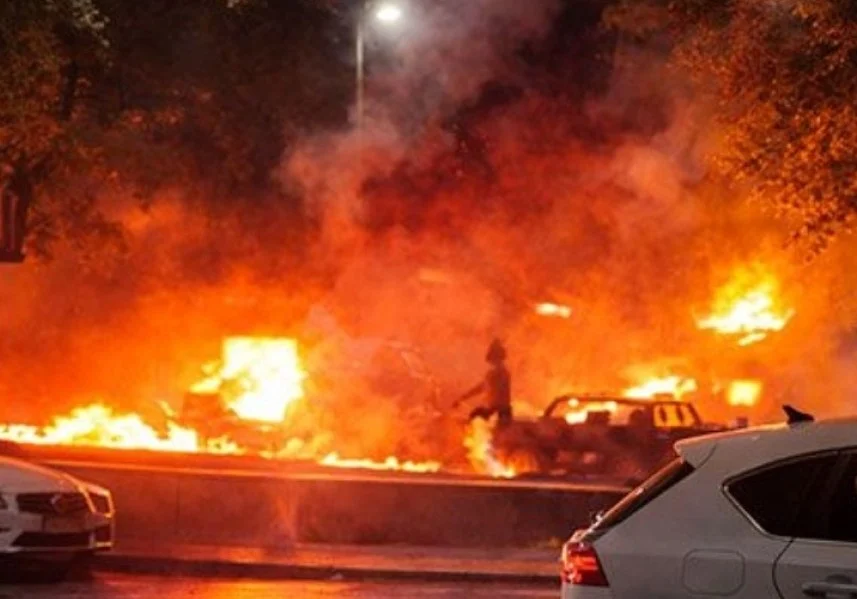
Reuters fact-checkers have revealed that a video circulating on social media purportedly showing government buildings burning in Iran during recent unrest was actually filmed in Thessaloniki, Greece, near the Turkish consulate.
The footage, which was shared on Facebook in mid-January with captions claiming it showed burning government buildings “all over Iran, this is in Karaj,” has been definitively debunked. Karaj, a city west of Tehran, was indeed a hotspot during Iran’s recent protests, but the video in question has no connection to those events.
Through careful analysis of Google Street View imagery, Reuters determined that the video was captured approximately 144 meters from the Turkish consulate in Thessaloniki. A higher-quality version of the same footage had been posted to Instagram on November 2, 2022, predating the Iranian protests by several weeks.
Greek local media reported that the incident occurred overnight between November 1-2, when people leaving a concert by a Greek rapper attacked police officers stationed at the Turkish consulate. According to Greek state media, authorities detained 18 people following the confrontation.
The widespread unrest in Iran, which began in late December, has been described as the worst domestic turmoil since the 1979 Islamic Revolution. An Iranian official confirmed that authorities had verified at least 5,000 fatalities during the protests, including approximately 500 security personnel. Reuters has previously reported that Karaj experienced some of the most violent confrontations during these demonstrations.
This case highlights the increasing challenge of information verification in the digital age. Misleading content can rapidly spread across platforms, particularly during significant international events when public interest is high and the demand for visual evidence outpaces verification.
The misinformation reached beyond social media when Greek state broadcaster ERT reportedly used the same Thessaloniki footage in a news bulletin about Iran on January 11, according to multiple media sources including Kathimerini, a prominent Greek newspaper. This incident demonstrates how even established news organizations can sometimes fail to properly verify content during breaking news situations.
Social media platforms have implemented various measures to combat misinformation, but the rapid sharing of visual content often outpaces fact-checking efforts. Users encountering dramatic footage, particularly during unfolding crises, are encouraged to verify sources and context before sharing.
The mistaken attribution of the Thessaloniki video to Iran’s protests serves as a reminder of how geographical context can be easily lost in the global sharing of content. Visual elements that might clearly identify a location to local residents can be completely missed by international audiences unfamiliar with those settings.
Reuters reached out to the Instagram user who posted the original higher-quality version of the video but received no immediate response. The news agency continues to verify content related to the Iranian protests as part of its ongoing fact-checking efforts to combat misinformation during major global events.
The incident underscores the importance of media literacy and critical assessment of viral content, particularly during periods of international unrest when the potential for misinformation is heightened.
Fact Checker
Verify the accuracy of this article using The Disinformation Commission analysis and real-time sources.
