


Listen to the article
Viral Video Falsely Linked to Anti-UGC Protests Was Actually Congress Demonstration in Chhattisgarh
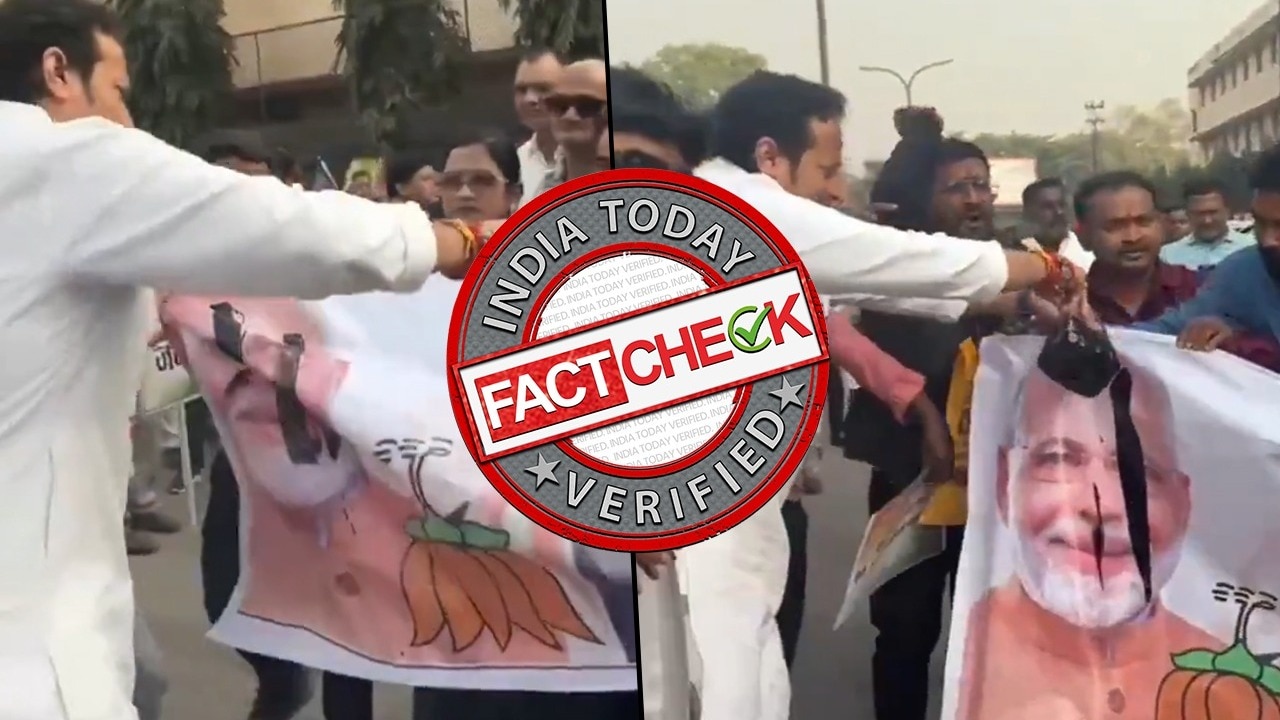
A misleading video circulating on social media platforms purportedly showing protests against the University Grants Commission’s (UGC) new regulations on caste-based discrimination has been debunked as unrelated to the current controversy.
The viral clip, which shows protesters applying black ink to posters of Prime Minister Narendra Modi and Home Minister Amit Shah while chanting “Murdabad” slogans, is actually from December 2025 and depicts Congress party workers protesting in Chhattisgarh over the National Herald case.
Fact-checking efforts have conclusively established that the footage predates the UGC’s new “Promotion of Equity in Higher Education Institutions Regulations, 2026,” which were only notified on January 13, 2026. The regulations, aimed at preventing caste discrimination in universities and colleges, have indeed sparked controversy and protests across India, particularly among groups from upper castes.
The misattributed video was shared widely on social media platforms with captions suggesting it represented current anti-UGC protests. One user on X (formerly Twitter) posted the clip with the comment, “Even though I condemn this act. BJP has left us with no choice. Show more Silence, we will revolt even stronger. #UGC_Roll_Back #ShameOnUGC.”
However, reverse image searches of keyframes from the video revealed that it was originally posted by an Instagram user named “Khabr Wali” on December 17, 2025, months before the UGC regulations became a point of contention. Another Instagram user, Vikas Upadhyay, who appears to be affiliated with the Congress party, had shared similar images on the same date.
Regional news outlet Dainik Bhaskar had previously reported on the December 2025 incident, clarifying that the demonstration was organized by the National Students’ Union of India (NSUI) – the Congress party’s student wing – and other Congress workers. Their protest centered on the National Herald case, which Congress leaders have long characterized as politically motivated.
The report also mentioned that former Chhattisgarh Chief Minister Bhupesh Baghel participated in the demonstration, where protesters questioned the role of investigating agencies in the case.
The UGC’s new regulations on equity in higher education have become a flashpoint for debate in recent weeks. The guidelines aim to address caste-based discrimination in academic institutions through various preventive and corrective measures. While supporters view these regulations as necessary steps toward ensuring equal educational opportunities, critics have expressed concerns about implementation and potential unintended consequences.
The circulation of misleading content regarding these protests highlights the growing challenge of verifying information in the digital age, particularly during periods of social and political tension. As discussions around the UGC regulations continue to evolve, maintaining factual accuracy in public discourse remains crucial for meaningful engagement with the underlying issues.
Educational policy experts note that while the debate around equity measures in higher education is important, it should be grounded in accurate representations of public response rather than misattributed or misleading content.
Social media platforms have seen an increase in content related to the UGC regulations since their notification, reflecting widespread public interest in educational policy and its intersection with social equality concerns. However, this incident serves as a reminder of the importance of verifying sources and contextual information before sharing content online.
Fact Checker
Verify the accuracy of this article using The Disinformation Commission analysis and real-time sources.

13 Comments
Interesting that this video was falsely attributed to the current UGC protests. It’s important to verify the source and context of viral videos before sharing them, to avoid spreading misinformation.
Yes, fact-checking is crucial in the age of social media. We should be cautious about unverified claims, even if they align with our views or preconceptions.
While the UGC’s new regulations may be controversial, it’s important that we address the real issues at hand rather than getting sidetracked by unrelated footage. Fact-checking is a vital tool for maintaining the integrity of public discourse.
This is a good reminder that we need to be cautious about making assumptions or jumping to conclusions, even when a video or story seems to align with our preconceptions. Verifying the facts should always be the priority.
Absolutely. It’s easy to get caught up in the momentum of social media, but taking the time to fact-check can make all the difference in ensuring we have an accurate understanding of important issues.
The new UGC regulations on caste discrimination in higher education have certainly sparked controversy, but it’s important to separate real protests from old or unrelated footage. Responsible reporting is key.
Absolutely. Fact-checking takes time and effort, but it’s the only way to ensure we’re not inadvertently amplifying misinformation. Kudos to the fact-checkers for setting the record straight.
The UGC’s new regulations on caste discrimination are clearly a contentious topic, and it’s understandable that there would be strong reactions and protests. However, it’s crucial that we rely on credible sources and verified information when discussing these issues.
Well said. Maintaining objectivity and fact-based discourse is essential, even on polarizing topics. Rushing to share unverified content only serves to inflame tensions further.
It’s concerning to see how quickly misinformation can spread on social media, even when it’s clearly debunked. We all have a responsibility to be more discerning consumers of online content and to prioritize accuracy over sensationalism.
The new UGC regulations are certainly a complex and sensitive issue, but we shouldn’t let that complexity be used as an excuse to spread falsehoods. Rigorous fact-checking is the only way to ensure we have an informed, nuanced understanding of these developments.
Agreed. It’s crucial that we rely on authoritative, fact-based sources when discussing issues like this, rather than falling victim to the temptation of sensational or misleading content.
This is a good reminder that we need to be vigilant about verifying the authenticity of online content, especially when it’s related to sensitive political issues. Spreading misinformation, even unintentionally, can have real consequences.