


Listen to the article
Viral Video of U.S. Aircraft Carrier Under “Bee Attack” Revealed as AI-Generated Hoax
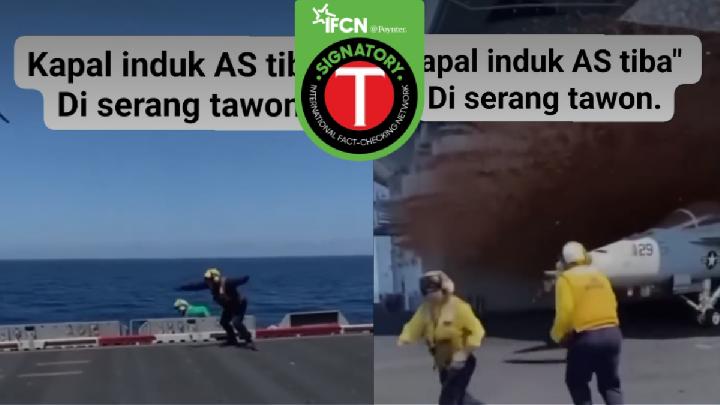
A video claiming to show a U.S. aircraft carrier being attacked by bees has been circulating widely across social media platforms in recent days. The 12-second clip depicts fighter jet pilots on the ship’s deck in apparent panic, running and falling as they attempt to evade what appears to be a swarm of bees. The video has gained significant traction amid heightened tensions between Iran, the United States, and Israel.
The footage, which has spread across Instagram, TikTok, and YouTube, specifically claims the incident occurred on March 9, 2026. In versions circulating in Indonesia, text overlays assert that a “U.S. aircraft carrier was suddenly attacked by wasps.”
However, a thorough investigation by Tempo’s fact-checking team has conclusively determined that the video is AI-generated and entirely fabricated.
Upon closer examination of the original footage, Tempo identified a “Gem” watermark floating at the top of the video—a standard label required by Google for all content created using its Gemini AI model. In the Indonesian version of the video, this revealing watermark was partially obscured by added text describing the purported wasp attack.
The fact-checking team employed multiple AI detection tools to verify their findings. Analysis using the Hive Moderation tool indicated a 96.5 percent probability that the content was artificially generated. Similarly, the Zhuque AI Detector Assistant returned a 76.27 percent likelihood that the video was created using artificial intelligence technology.
Further investigation revealed that the video had appeared earlier on social media before being repurposed with different narratives. The Facebook account “The Military Power Hub” posted an English-language version of the same footage on March 5, 2026, predating many of the viral shares.
The emergence of this fabricated content comes at a particularly sensitive moment in international relations. Tensions between Iran and Western powers have escalated in recent months, creating fertile ground for misinformation and fabricated narratives to gain traction online.
This incident highlights the growing sophistication of AI-generated content and the challenges it presents for information verification. Despite increasingly realistic visual effects, telltale signs such as watermarks and inconsistencies remain detectable through careful analysis and specialized tools.
Social media platforms have struggled to contain the spread of such synthetic content, particularly when it plays into existing geopolitical anxieties. The rapid spread of this video across multiple platforms demonstrates how quickly misinformation can proliferate in today’s digital ecosystem.
Military analysts note that actual incidents involving U.S. aircraft carriers receive extensive coverage through official channels and reputable news organizations. The U.S. Navy maintains strict protocols regarding media access and information release about its carrier operations, making unverified social media accounts unlikely primary sources for breaking military news.
Cybersecurity experts have warned about an increase in AI-generated disinformation related to military operations, particularly as AI tools become more accessible to the general public. Such content can potentially influence public perception and elevate tensions during already volatile international situations.
Tempo’s investigation concludes unequivocally that the claim of a U.S. aircraft carrier being attacked by bees or wasps is false. The video represents a sophisticated but identifiable example of synthetic media being used to spread misinformation in a tense geopolitical context.
Users encountering similar content are encouraged to verify information through official sources and to look for signs of AI generation, including watermarks, unnatural movements, or inconsistencies in lighting and physics.
Fact Checker
Verify the accuracy of this article using The Disinformation Commission analysis and real-time sources.

8 Comments
Fascinating how quickly misinformation can spread online these days. Good to see this ‘bee attack’ video was quickly debunked as AI-generated. Fact-checking is so important to combat the spread of fabricated content.
I agree, it’s crucial to verify the authenticity of viral videos and images before sharing them. Kudos to the fact-checkers for catching this hoax.
This fabricated ‘bee attack’ video is a good reminder to always be skeptical of sensational claims, especially those related to military or national security events. Fact-checking is essential to separate truth from fiction.
Interesting that this ‘bee attack’ video specifically targeted an aircraft carrier incident. I wonder if there were any geopolitical motives behind the creation of this fabricated content. Fact-checking is clearly essential to identify and counter such disinformation.
It’s concerning how realistic AI-generated content can appear these days. This ‘bee attack’ video is a prime example of the need for heightened digital media literacy. Glad the truth was uncovered.
Absolutely. The use of AI to create convincing misinformation is a growing challenge that requires vigilance from both media consumers and publishers.
Kudos to the fact-checking team for their thorough investigation. Identifying the Gemini AI watermark was a clever way to expose this ‘bee attack’ video as completely fabricated. We need more of this rigorous debunking work.
Agreed. Exposing the origins of AI-generated misinformation is crucial to maintaining trust in online content and media.