


Listen to the article
AI-Generated Dragon Video Sparks Social Media Frenzy, Highlights Growing Sophistication of Fake Footage
A video allegedly showing a white dragon at a “secret government facility” in China went viral across social media platforms in January 2026, but has been confirmed as a sophisticated AI creation rather than evidence of mythical creatures.
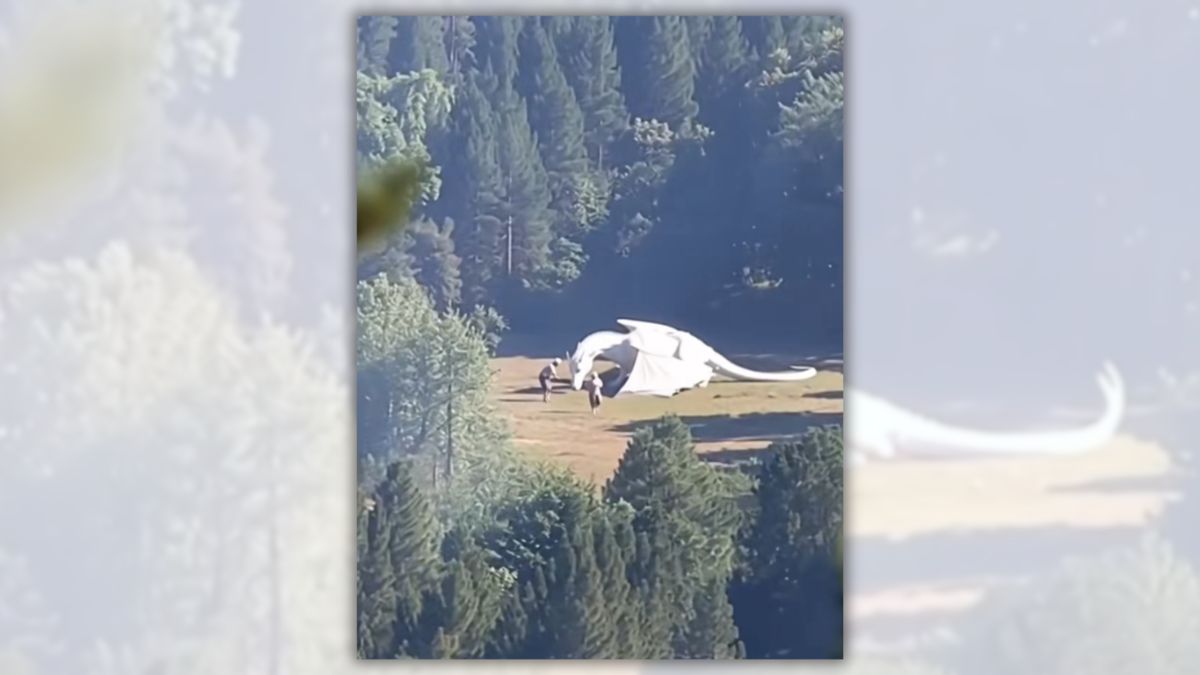
The footage, which shows people interacting with a European-style white dragon in a grassy clearing, was widely shared on X, Instagram, and Facebook with captions claiming it was authentic footage captured in China. One popular post on X stated: “NEW: White Dragon spotted in China,” while the video itself featured overlaid text claiming it was “Shocking Video of a White Dragon captured at a secret Government Facility in China.”
The three-part video shows one or two individuals interacting with the dragon in what appears to be a forest clearing. However, investigation reveals the footage originated from a TikTok account called faunavision7, which clearly labeled the content as containing “AI-generated media” in its original January 7 post.
The account’s Facebook bio explicitly states its purpose: “AI-generated visualizations of unique creatures and fauna. Entertainment and imagination.” The TikTok creator regularly posts similar AI-generated content featuring mythical creatures like kitsune and hydras.
Close examination of the video reveals numerous inconsistencies that betray its artificial origin. The dragon’s physical features change dramatically between cuts—spines running along its neck appear and disappear, while its tail transforms from having a forked tip to ending with what looks like a tuft of fur.
Even more telling are the unnatural movements and anatomical impossibilities. During walking sequences, the dragon’s legs move in physically impossible ways, with limbs disappearing or multiplying. At one point, the creature appears to have two or three right legs with an unnaturally placed additional leg beneath a wing.
The original creator posed the footage as part of a fictional narrative, writing in Indonesian: “Is this legend of the grandmother who raised a dragon real? In remote parts of China, an old story circulates about a white dragon living in hiding, guarded by an unknown grandmother in the middle of the forest. In Chinese history, white dragons are believed to be sacred creatures that maintain the balance of nature and are harbingers of great change.”
This case highlights a growing trend of AI-generated content being stripped of its original context and reshared as “evidence” of extraordinary phenomena. As AI tools become more sophisticated and accessible, distinguishing between genuine and fabricated footage grows increasingly challenging for social media users.
Digital misinformation experts have noted a significant uptick in AI-generated mythical creature content over the past year. The dragon video represents one of the more convincing examples, particularly when viewed on small mobile screens where visual inconsistencies are less apparent.
This isn’t the first time fabricated dragon evidence has circulated online. Previous viral hoaxes have included purported dragon fossils, alleged dragon carcasses, and various “sightings” around the world. However, the technological sophistication of these hoaxes continues to advance rapidly.
Social media platforms have implemented various measures to flag AI-generated content, but these systems rely heavily on creator disclosure. When content is downloaded and reshared without attribution or proper labeling, these safeguards become ineffective.
For consumers of online content, this case serves as a reminder to approach extraordinary claims with appropriate skepticism, especially when they lack scientific verification or come from unverified sources.
Fact Checker
Verify the accuracy of this article using The Disinformation Commission analysis and real-time sources.

10 Comments
The video is quite impressive, but I’m glad to see it was properly identified as AI-generated rather than trying to pass it off as real footage. It’s a good example of how we need to be cautious about online content and verify claims, even when they seem fantastical.
Absolutely. With the increasing sophistication of AI, it’s more important than ever to approach viral videos and claims with a critical eye. Transparency from creators is crucial to avoid the spread of misinformation.
Fascinating how advanced AI-generated visuals have become. While it’s cool to see a digital dragon, I appreciate the transparency from the creators in labeling this as an artificial creation rather than misleading people. Responsible use of emerging tech is key.
While the AI-generated dragon video is undoubtedly eye-catching, I’m glad the sources confirmed its artificial origins. In today’s digital landscape, it’s crucial that we approach viral content with a critical eye and verify claims before sharing or believing them.
The digital dragon looks incredibly lifelike, but I appreciate the creators being upfront that this is an AI-generated visualization rather than actual footage. It’s important to maintain that distinction, especially when dealing with fantastical or sensational claims online.
The video is certainly eye-catching, but I’m glad the sources confirmed it was AI-generated rather than a real discovery. Mythical creatures are fun to imagine, but it’s important to separate fantasy from fact, especially online.
While the AI-generated dragon video is visually striking, I’m glad the sources were upfront about its origins. It’s a good reminder that we need to be vigilant about fact-checking, especially when it comes to sensational or fantastical online content.
You make a good point. It’s easy for misinformation to spread rapidly on social media, so it’s important that creators are transparent about the nature of their content. Kudos to this team for being responsible with their AI technology.
Impressive visual effects, but I’m glad the video was properly identified as AI-generated rather than trying to pass it off as real. It’s a good example of how we need to be careful about verifying the authenticity of online content, even when it seems extraordinary.
Wow, that’s some impressive AI tech! Looks like the video creators did a great job making the dragon look realistic. Still, it’s good they were upfront about it being digitally generated rather than trying to pass it off as real footage.