


Listen to the article
In an unusual diplomatic episode that captured global headlines in 2019, then-President Donald Trump expressed interest in purchasing Greenland from Denmark, sparking international bewilderment and a firm rebuke from Danish officials. The proposal, initially reported by The Wall Street Journal and later confirmed by Trump himself, was quickly dismissed by Danish Prime Minister Mette Frederiksen as “absurd.”
While many viewed the episode as merely another unconventional moment in Trump’s presidency, geopolitical experts point to substantial strategic reasoning behind the interest in the world’s largest island.
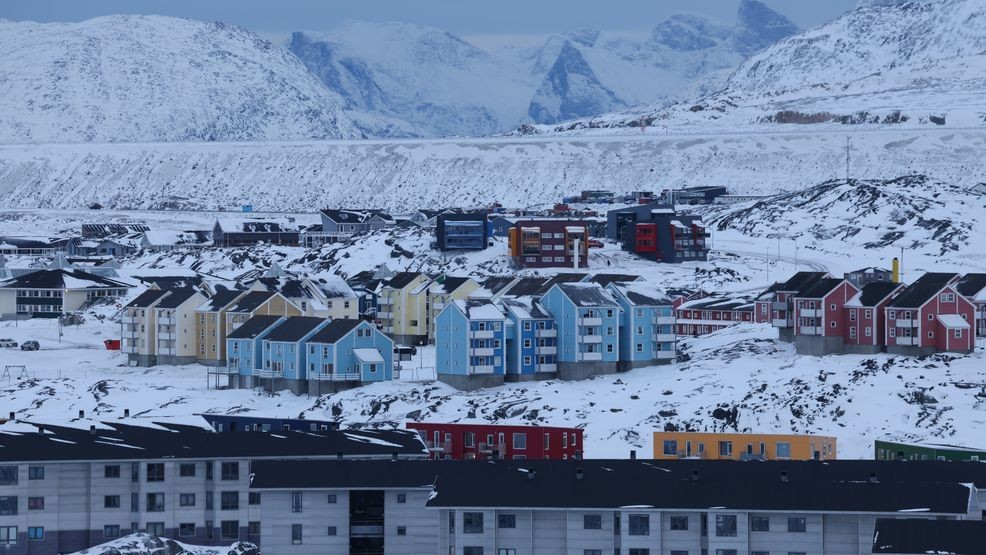
Greenland holds significant economic and military value that extends far beyond its sparse population of approximately 56,000 residents. The island’s location in the Arctic region positions it as a crucial strategic outpost amid increasing great power competition between the United States, Russia, and China.
“Trump’s interest, while unorthodox in execution, reflects a genuine national security calculation,” explains Dr. Elizabeth Hanson, professor of international relations at Georgetown University. “Greenland sits at the intersection of emerging shipping routes and contains vast untapped resources that become increasingly accessible as climate change accelerates Arctic ice melt.”
The U.S. military already maintains a substantial presence in Greenland through Thule Air Base, America’s northernmost military installation. Established during the Cold War, this base provides early missile warning, space surveillance, and strategic positioning that remains vital to North American defense systems.
Beyond military considerations, Greenland possesses enormous mineral wealth. Geological surveys indicate the island contains substantial deposits of rare earth elements, zinc, copper, uranium, and an estimated 13% of the world’s undiscovered oil reserves. These resources have attracted growing interest from global powers, particularly China, which has already made investment overtures toward Greenland’s mining sector.
“The Chinese have been strategically investing in rare earth mining globally, and their interest in Greenland is part of that pattern,” notes Marcus Peterson, senior fellow at the Atlantic Council. “Trump’s proposal, while diplomatically clumsy, recognized the importance of preventing Chinese dominance in these critical supply chains.”
The United States has historical precedent for such territorial acquisitions. In 1917, the U.S. purchased the Danish West Indies from Denmark for $25 million, creating what is now the U.S. Virgin Islands. Alaska, arguably America’s most comparable territorial purchase, was acquired from Russia in 1867 for $7.2 million—a transaction initially ridiculed as “Seward’s Folly” before proving immensely valuable.
Climate change adds another dimension to Greenland’s strategic importance. As Arctic ice recedes, new shipping routes become navigable, potentially transforming global trade patterns. The Northwest Passage, which runs through the Canadian Arctic near Greenland, could reduce shipping distances between Asia and Europe by up to 4,000 nautical miles compared to traditional routes through the Panama Canal.
Denmark’s reaction to Trump’s proposal was unequivocal. Prime Minister Frederiksen stated plainly: “Greenland is not for sale. Greenland is not Danish. Greenland belongs to Greenland.” Her comments reflected both Danish sovereignty and the island’s semi-autonomous status, as Greenland maintains significant self-governance while Denmark controls foreign affairs and defense policy.
The controversy prompted Trump to cancel a scheduled state visit to Denmark, further straining relations between the longtime allies. However, subsequent diplomatic efforts have largely repaired this temporary rift.
The episode reveals larger truths about evolving Arctic geopolitics. As climate change transforms the region, the Arctic has become a theater for strategic competition, with Russia expanding its military presence and China declaring itself a “near-Arctic state” despite having no territorial claims in the region.
“What appeared at first as a diplomatic oddity actually exposed very real tensions over Arctic resources and positioning,” says Dr. Jonathan Markham, Arctic security specialist at the Wilson Center. “These issues will only grow more pronounced in coming decades as the region becomes more accessible and economically viable.”
While Greenland remains firmly under Danish sovereignty with no realistic prospect of changing hands, the strategic calculations that prompted Trump’s interest continue to shape Arctic policy discussions across multiple administrations and underscore the region’s growing importance in global affairs.
Fact Checker
Verify the accuracy of this article using The Disinformation Commission analysis and real-time sources.

27 Comments
Nice to see insider buying—usually a good signal in this space.
Good point. Watching costs and grades closely.
The cost guidance is better than expected. If they deliver, the stock could rerate.
Good point. Watching costs and grades closely.
Good point. Watching costs and grades closely.
Exploration results look promising, but permitting will be the key risk.
Production mix shifting toward Fact Check might help margins if metals stay firm.
Good point. Watching costs and grades closely.
If AISC keeps dropping, this becomes investable for me.
Silver leverage is strong here; beta cuts both ways though.
Good point. Watching costs and grades closely.
Good point. Watching costs and grades closely.
Uranium names keep pushing higher—supply still tight into 2026.
Good point. Watching costs and grades closely.
Good point. Watching costs and grades closely.
Silver leverage is strong here; beta cuts both ways though.
Good point. Watching costs and grades closely.
Good point. Watching costs and grades closely.
Interesting update on Fact Check: Understanding Trump’s Interest in Purchasing Greenland. Curious how the grades will trend next quarter.
Good point. Watching costs and grades closely.
Production mix shifting toward Fact Check might help margins if metals stay firm.
Good point. Watching costs and grades closely.
If AISC keeps dropping, this becomes investable for me.
Good point. Watching costs and grades closely.
I like the balance sheet here—less leverage than peers.
Uranium names keep pushing higher—supply still tight into 2026.
Good point. Watching costs and grades closely.