


Listen to the article
In a striking revival of a debunked claim, former President Donald Trump has once again asserted that Americans need identification to purchase groceries—a statement that continues to puzzle voters and retail experts alike.
During a breakfast meeting with Republican senators on Wednesday, Trump declared, “All we want is voter ID. You go to a grocery store, you have to give ID. You go to a gas station, you give ID.” The comment came amid his broader criticism of election results following Republican defeats in various state and local contests held the previous day.
This marks at least the fourth time since 2018 that Trump has made this false assertion. When first challenged on the claim during his presidency, then-White House Press Secretary Sarah Sanders suggested he might have been referring specifically to alcohol or tobacco purchases, which do require identification.
However, Trump subsequently clarified he was indeed talking about everyday food items. In later iterations of the claim, he specifically mentioned “a box of cereal” in 2019 and “a loaf of bread” in 2023—items for which Americans routinely complete purchases without showing any form of identification.
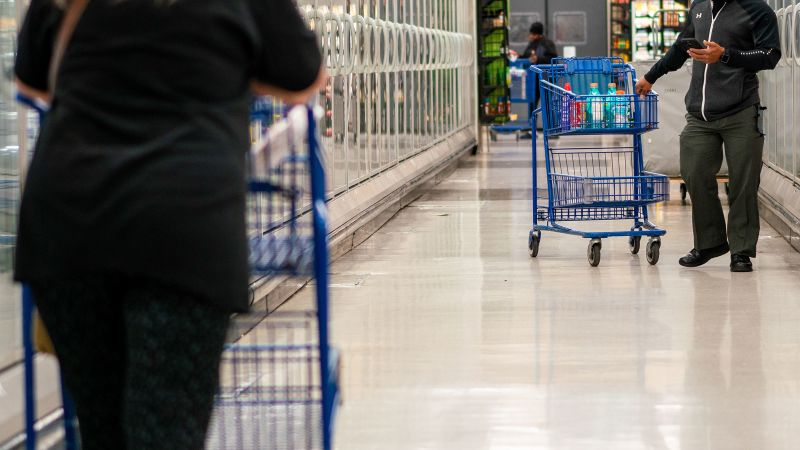
Retail industry experts confirm that grocery stores only request identification in specific circumstances: when purchasing age-restricted products like alcohol and tobacco, when buying certain medications, or when paying by personal check—a payment method that has declined significantly in popularity. The vast majority of grocery transactions occur without any identification verification.
Similarly, gas purchases rarely require ID. Many consumers pay at the pump with credit or debit cards without any human interaction whatsoever.
Trump’s grocery claim emerged during a broader set of statements questioning election integrity. He repeated his assertion that mail-in voting is “automatically corrupt”—a claim that has been thoroughly debunked by election security experts.
While mail-in ballots do statistically show marginally higher fraud rates than in-person voting, experts consistently point out that overall fraud remains exceedingly rare in U.S. elections across all voting methods. There is no evidence suggesting Tuesday’s elections were anything but free and fair.
The former president also mischaracterized findings from a commission co-chaired by former President Jimmy Carter. Trump claimed the commission stated that “if there is mail-in ballots, there will definitely be corruption.” This is a significant distortion of the commission’s actual conclusions.
While the 2005 report did identify absentee ballots as a potential vulnerability, it never claimed corruption was inevitable. In fact, the commission specifically highlighted Oregon’s mail-only election system as an example where proper safeguards successfully protected ballot integrity.
The report also offered recommendations for securing mail-in voting and called for further research on the practice. Carter himself, who passed away in 2024, explicitly stated in 2020: “I approve the use of absentee ballots and have been using them for more than five years.”
Trump’s persistent repetition of debunked claims about grocery shopping and election integrity comes as Republicans analyze recent electoral losses and prepare strategies for upcoming contests. Political analysts note that such messaging may resonate with a portion of his base but risks alienating swing voters concerned with factual accuracy in political discourse.
As election officials across the country continue implementing security measures for all voting methods, the debate over identification requirements remains a contentious political issue that extends well beyond the grocery store checkout line.
Fact Checker
Verify the accuracy of this article using The Disinformation Commission analysis and real-time sources.

16 Comments
While I appreciate the former president’s perspective, this statement about needing ID to buy groceries doesn’t align with my personal experiences or what I understand about typical retail practices. I’m curious to learn more about the rationale behind this claim.
You make a fair point. Verifying the accuracy of such claims is important, especially when they seem to contradict common consumer experiences. Fact-checking can help provide a clearer picture.
This is an interesting assertion by Trump, but it doesn’t seem to match the reality of how most Americans purchase everyday grocery items. I wonder if there are specific situations or locations where this requirement exists, or if this is more of a generalized claim. Fact-checking would be helpful to understand the context.
Agreed, this claim appears to be at odds with the typical grocery shopping process. It would be valuable to see credible evidence supporting this statement, as it doesn’t align with my own experiences or understanding of common retail practices.
Interesting claim by Trump, though it doesn’t seem to align with regular grocery purchasing experiences. I wonder what data or anecdotes he’s basing this on. It would be helpful to understand the rationale behind this statement.
You’re right, this claim doesn’t match the typical grocery shopping process. It would be good to see some credible evidence to support it before drawing any conclusions.
While I appreciate the former president’s perspective, this statement about needing ID to buy groceries doesn’t reflect my personal experiences or my understanding of standard retail practices. I’m curious to learn more about the specific data or anecdotes that may have informed this claim.
That’s a fair point. Verifying the accuracy of such claims is important, especially when they seem to contradict common consumer experiences. Fact-checking could provide valuable insight into the context and reasoning behind this statement.
This is an interesting assertion by Trump, but it doesn’t align with the grocery shopping experiences of most Americans that I’m aware of. I wonder if there are specific situations or locations where this ID requirement exists, or if this is more of a generalized claim. Fact-checking would be helpful to understand the context and potential evidence behind this statement.
You make a valid observation. This claim appears to be at odds with typical retail practices for basic food purchases. It would be useful to see credible evidence supporting this assertion, as it doesn’t match my own understanding of common grocery shopping procedures.
This is an interesting claim by Trump, but it doesn’t seem to align with the grocery shopping experiences of most Americans. I wonder if there are specific situations or locations where this ID requirement exists, or if this is more of a generalized statement. It would be helpful to see some credible evidence to support this assertion.
You make a valid observation. This claim appears to be at odds with typical retail practices for basic food purchases. Fact-checking would be useful to understand the context and reasoning behind this statement, as it doesn’t match my own understanding of common grocery shopping procedures.
This is a bit of a puzzling statement from the former president. Requiring ID to buy basic food items like cereal or bread doesn’t seem to reflect the reality of how most Americans shop for groceries. Fact-checking is important to ensure accurate information.
Agreed, this claim seems quite disconnected from the grocery shopping experience of the average consumer. It would be helpful to understand the specific context or reasoning behind this statement.
While I respect the former president’s perspective, this statement about needing ID to buy groceries doesn’t reflect my own experiences or what I understand about standard purchasing procedures for basic food items. I’m curious to learn more about the reasoning and potential evidence behind this claim.
That’s a fair point. Verifying the accuracy of such claims is important, especially when they seem to contradict common consumer experiences. Fact-checking could help provide more clarity on the context and rationale for this statement.