


Listen to the article
Manipulated Polaroid Images Falsely Show Trump, Epstein with Young Women
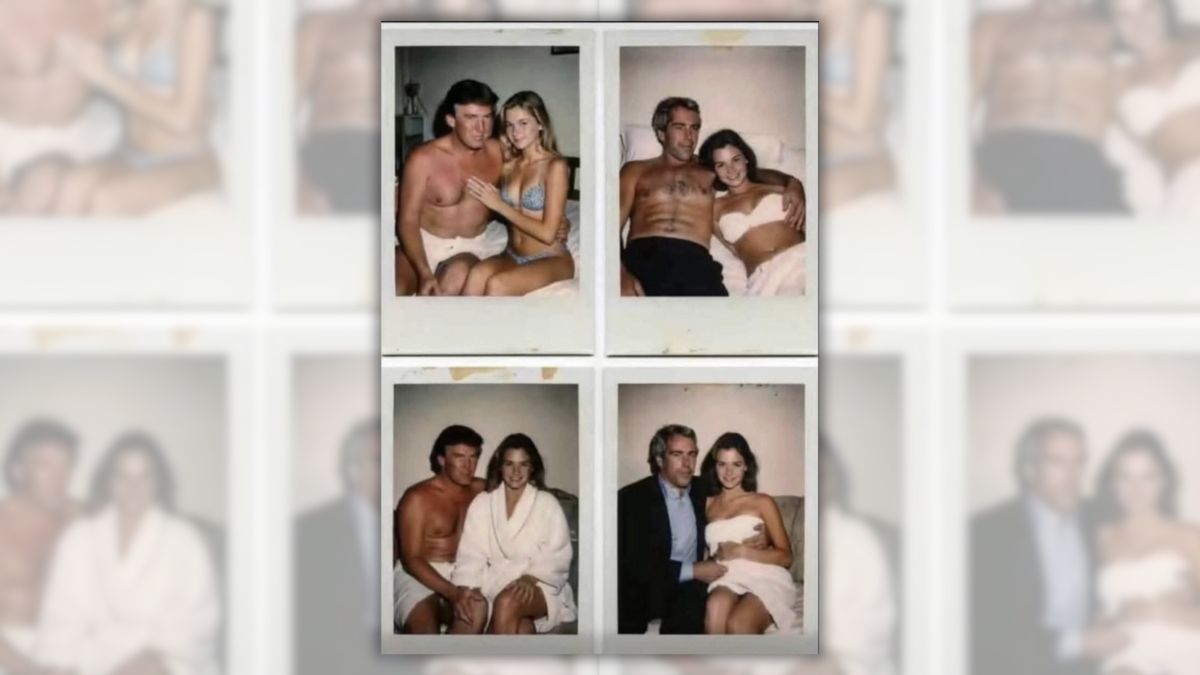
Digitally altered images purporting to show former U.S. President Donald Trump and convicted sex offender Jeffrey Epstein with young women have been spreading across social media platforms, prompting fact-checkers to issue warnings about their authenticity.
The manipulated photos, designed to resemble Polaroid snapshots, began circulating on Facebook, Threads, and X in December 2025, coinciding with an announcement from Democrats on the House Committee on Oversight and Government Reform that they had received thousands of photographs from the Epstein estate.
Multiple telltale signs indicate these images were generated using artificial intelligence technology rather than being genuine photographs. Close examination reveals significant distortions and anatomical impossibilities that are common hallmarks of AI-generated content.
Among the most obvious flaws are facial deformities affecting both Trump and Epstein. In one image, Trump appears to be missing part of his chin, while Epstein is depicted with only one eye. Other anatomical anomalies include a hand with six fingers in one photo and a completely missing hand in another – errors typical of current AI generation systems that often struggle with accurately rendering human appendages.
Digital forensics experts point out that these inconsistencies are characteristic of images created by generative AI programs, which can produce convincing but imperfect simulations of photographic content.
“These kinds of anatomical errors are red flags that something isn’t genuine,” said Dr. Eleanor Rigby, a digital media authentication specialist not affiliated with the investigation. “Current AI systems still struggle with certain human features, particularly hands and facial details in complex scenes.”
Further undermining the images’ credibility, a reverse-image search conducted via Google found no instances of these photographs appearing on legitimate news sources or official government channels – only on social media platforms. Given the explosive nature such evidence would represent, legitimate photos of this nature would have generated substantial coverage from established media outlets.
Some social media posts falsely claimed the images came directly from Epstein emails released by House Oversight Democrats. However, this claim contradicts established protocols, as the House Oversight Committee explicitly stated in a December 12 news release that they are “committed to protecting the identities of the survivors.” Any genuine release of such sensitive materials would include appropriate redactions to protect victims’ privacy.
While these specific images have been debunked, the relationship between Trump and Epstein has been well-documented through legitimate photographs and public records. The two men moved in similar social circles during the 1990s and early 2000s, with verified images showing them together at various events, including a 1997 photograph at Trump’s Mar-a-Lago property in Palm Beach, Florida.
Epstein, who died in jail in 2019 while awaiting trial on sex trafficking charges, maintained connections with numerous high-profile individuals across business and political spheres. The House Oversight Committee’s announcement regarding the receipt of 95,000 photographs from the Epstein estate has intensified public interest in these connections.
This incident highlights the growing challenge of distinguishing between authentic and manipulated visual content in an era where AI-generated imagery continues to become more sophisticated. Social media platforms are struggling to contain the spread of such content, which can quickly reach millions of users before being identified as fake.
Media literacy experts advise users to be particularly skeptical of sensational images that emerge around politically charged topics, especially when such images appear exclusively on social media rather than through established news channels.
Fact Checker
Verify the accuracy of this article using The Disinformation Commission analysis and real-time sources.

16 Comments
Given the sensitive nature of the subject matter, it’s understandable that people would want to verify the authenticity of these images. I appreciate the thorough fact-checking approach to debunking these forgeries.
Fact-checking is crucial in today’s digital landscape, where misinformation can spread rapidly. This level of scrutiny helps maintain trust in the information we consume.
The clear signs of AI-generated content, such as the facial deformities and anatomical impossibilities, make it evident that these images are not genuine. It’s good to see this disinformation being addressed.
Absolutely, the detailed analysis provided in the fact check leaves no doubt that these images are fabricated fakes, not real photographs.
It’s disheartening to see such brazen attempts to spread misinformation, but I’m glad to see a reputable source taking the time to carefully debunk these forged images. Fact-checking is essential for maintaining trust in the information we consume.
Well said. The level of detail and analysis provided in this fact check is a testament to the importance of rigorous investigation and verification, especially when it comes to sensitive political content.
The anatomical anomalies and distortions highlighted in the fact check are clear signs that these images were fabricated using AI technology. It’s concerning to see the spread of such blatantly false content.
Absolutely, the details provided in the fact check make it evident that these images are digitally manipulated fakes, not genuine photographs.
Fact-checking is essential in today’s digital landscape, where misinformation can spread rapidly. This level of scrutiny and attention to detail helps ensure that the truth prevails, even in the face of such blatantly manipulated content.
Absolutely, the thorough investigation and clear evidence presented in this fact check are crucial for combating the spread of disinformation online.
The manipulated nature of these images is concerning, but I’m glad to see a thorough fact-checking process that exposes the flaws and deceptions. Maintaining the integrity of information is crucial, especially around high-profile figures and events.
Agreed, the detailed analysis provided in the fact check leaves no doubt that these images are fabricated fakes, not genuine photographs.
Interesting, it’s good to see fact-checking on these types of manipulated images. It’s crucial to be vigilant about verifying the authenticity of online content, especially when it comes to sensitive political topics.
Agreed, it’s important to rely on trusted, reputable sources when assessing the credibility of such claims.
In an age of widespread misinformation, it’s crucial that we rely on authoritative and fact-based sources when evaluating the authenticity of online content. This fact check provides a clear and convincing debunking of these manipulated images.
Well said. Fact-checking is essential to maintaining trust in the information we consume, especially on sensitive political topics.