


Listen to the article
In a notable clash over electoral policy, the Trump administration is facing criticism for misrepresenting former President Jimmy Carter’s views on mail-in voting to bolster support for new federal voting legislation. The dispute centers on the administration’s use of a nearly two-decade-old report to advocate for stringent new voting requirements ahead of the midterm elections.
President Donald Trump and White House Press Secretary Karoline Leavitt have repeatedly cited the 2005 Commission on Federal Election Reform report—co-chaired by Carter and former Secretary of State James Baker—to justify the proposed Safeguard American Voter Eligibility (SAVE America) Act. The legislation would implement new proof-of-citizenship and photo ID requirements for voters nationwide.
During a Republican Members Issues Conference on Monday, Trump claimed, “Jimmy Carter, the best thing he ever did, he headed a commission after he was president… And he did a thing on mail-in ballots. He said mail-in ballots should not be allowed because they are inherently dishonest.”
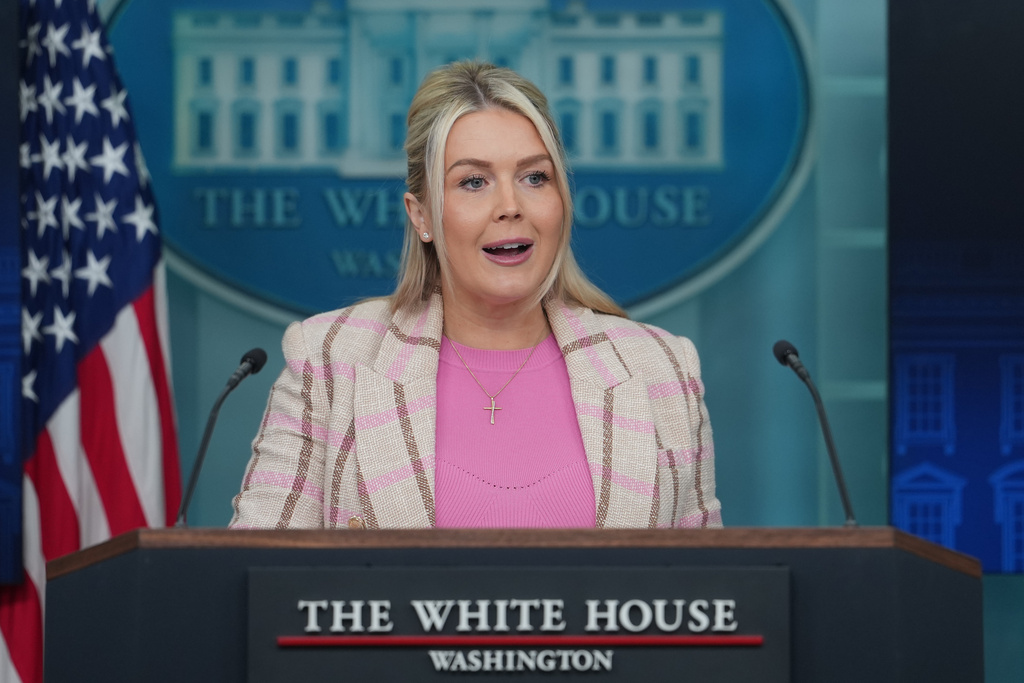
Leavitt echoed this sentiment the following day at a White House press briefing, stating the 2005 bipartisan report “concluded that, quote, ‘absentee ballots remain the largest source of potential voter fraud.'”
However, statements from Carter himself, his family, and The Carter Center directly contradict the administration’s characterization. Jason Carter, the late president’s grandson and chair of The Carter Center’s board of trustees, told The Associated Press, “My grandfather supported mail-in voting—so much so that he used it himself. Any claim to the contrary unnecessarily sows doubt in election integrity.”
Before his death in 2024, President Carter had publicly endorsed mail-in voting on multiple occasions. In May 2020, amid pandemic concerns, he urged political leaders to “expand vote-by-mail and other measures” to protect Americans’ right to vote. Four months later, he clarified, “I approve the use of absentee ballots and have been using them for more than five years.”
The 2005 Commission report, while noting that “absentee ballots remain the largest source of potential voter fraud,” did not advocate eliminating mail-in voting. Instead, it offered recommendations to reduce fraud risks, including limiting who could handle ballots and implementing better safeguards for ballot integrity. The report even acknowledged that Oregon, which had been using vote-by-mail for seven years at that time, showed “little evidence of fraud.”
“The administration’s claims about President Carter’s views on mail-in voting are not true,” The Carter Center stated this week, adding that the claims fail to “consider the rest of the report’s findings or President Carter’s acknowledgment of the safeguards that have emerged in the 20+ years since this report came out.”
Election security experts note that mail-in and absentee voting has evolved significantly since 2005. “There’s no evidence that mail-in voting fraud was rampant then, and it’s not rampant now,” explained Mark Lindeman, policy and strategy director at Verified Voting. “Mail voting has become more common and more mature. States have learned from each other—best practices for not only avoiding fraud, but just generally administering mail balloting well.”
The proportion of Americans voting by mail has more than doubled since 2004, reaching nearly one-third of all ballots cast in recent elections. Technological advancements like ballot tracking and improved methods for identifying duplicate registrations have enhanced security.
Trump’s own stance on mail-in voting has shifted over time. While criticizing the practice before the 2020 election, he simultaneously encouraged Florida voters to use mail-in ballots. During the 2024 campaign, which resulted in his victory, Trump and other Republicans actively promoted mail-in voting as a strategic necessity in a tight race.
When questioned about the apparent discrepancy, White House spokeswoman Abigail Jackson defended Trump and Leavitt’s statements, insisting they were “completely right” and that Carter’s 2020 endorsement of mail-in voting “does not invalidate the findings” of the 2005 report.
The dispute highlights ongoing tensions over voting access and election security as the country prepares for another major electoral cycle.
Fact Checker
Verify the accuracy of this article using The Disinformation Commission analysis and real-time sources.

8 Comments
While I can understand the desire for secure and reliable voting processes, I’m concerned about any efforts to impose new barriers that could restrict access to the ballot box. Protecting voting rights should be the top priority.
Allegations of misrepresenting past election reports to justify new voting legislation are concerning. I hope both sides can engage in good-faith discussions and rely on factual, impartial analyses of the issues.
Interesting to see the debate around mail-in ballots and the Trump administration’s claims about Jimmy Carter’s views. I’ll have to look into the details of that 2005 report to understand the nuances better.
The dispute seems to center on how the administration is interpreting and representing Carter’s position. I agree it’s important to examine the full context and conclusions of that earlier report.
This is an interesting case study in how political actors can selectively interpret and present information to support their current agendas. I’ll be interested to see how the debate around these voting proposals unfolds.
The dispute over mail-in ballots and the Trump administration’s claims about Jimmy Carter’s views highlights the importance of carefully examining the sources and context behind political rhetoric around voting policies.
I’m curious to learn more about the specifics of the voting legislation being proposed and how it aligns or differs from the recommendations in the 2005 bipartisan report. Voting policies can be complex, so I want to understand the details.
It’s good to see fact-checking on claims about past election reports and policies. Clear, objective information is important when it comes to voting laws and processes.