


Listen to the article
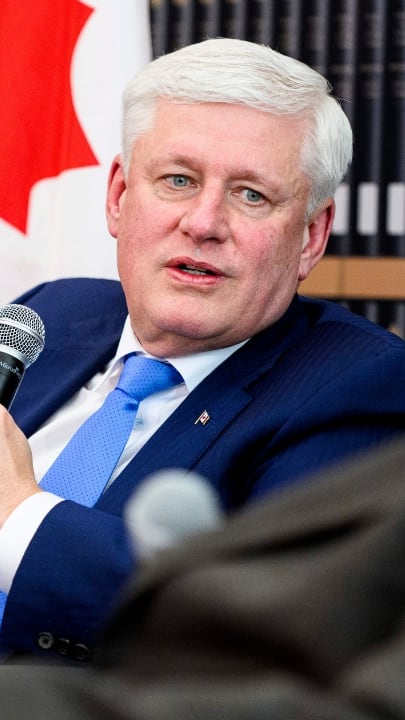
A widely shared claim on social media suggesting former Canadian Prime Minister Stephen Harper appears in court files related to Jeffrey Epstein is false, according to multiple fact-checking organizations and court records.
The unfounded rumor began circulating shortly after a U.S. court unsealed documents in early January connected to a 2015 defamation lawsuit filed by Virginia Giuffre against Ghislaine Maxwell, Epstein’s former associate. Maxwell was convicted in 2021 of helping Epstein recruit and sexually abuse underage girls and is currently serving a 20-year prison sentence.
The unsealed documents—nearly 1,000 pages of depositions, emails, and legal filings—named numerous high-profile individuals who had various connections to Epstein, the disgraced financier who died by suicide in 2019 while awaiting trial on sex trafficking charges. While the files mentioned celebrities, politicians, and business leaders, Stephen Harper is not among them.
“We reviewed the court documents, and Harper’s name does not appear in any of them,” said Elizabeth Thompson, a senior political reporter who examined the files. “This appears to be misinformation spreading through unchecked social media channels.”
The false claim gained traction particularly on X (formerly Twitter) and Facebook, where posts alleged Harper was implicated in the scandal. Several posts included manipulated images or misattributed quotes supposedly linking the former Conservative leader to Epstein’s inner circle.
The Prime Minister’s Office for current Canadian leader Justin Trudeau declined to comment on the matter, referring questions about the former prime minister to Harper’s office. Representatives for Harper called the allegations “completely fabricated” and “an irresponsible attempt to damage Mr. Harper’s reputation.”
Harper served as Canada’s prime minister from 2006 to 2015, leading the Conservative Party through nearly a decade in power. Since leaving office, he has maintained a relatively low public profile, occasionally commenting on policy matters and serving on corporate boards.
Legal experts note that the circulation of such false claims highlights the dangers of misinformation surrounding high-profile court cases. “When documents like these are released, there’s often a rush to draw conclusions or make unfounded accusations before the content is properly reviewed,” said Daniel Michaels, a media law professor at the University of Toronto.
The Epstein files have generated significant public interest due to the financier’s connections to powerful figures, including former U.S. presidents Bill Clinton and Donald Trump, Britain’s Prince Andrew, and numerous celebrities. While many individuals named in the documents had legitimate business or social relationships with Epstein with no connection to illegal activities, the case has spawned numerous conspiracy theories.
Social media platforms have struggled to contain the spread of misinformation related to the case. Meta, the parent company of Facebook, said it has implemented fact-checking measures to identify and reduce the spread of false information about the Epstein files, though critics argue these efforts have been insufficient.
“This pattern of false accusations demonstrates how quickly misinformation can spread in the digital age,” said Claire Bennett of the Canadian Media Research Institute. “Once these claims gain momentum, they can be extremely difficult to correct in the public consciousness.”
Canadian media literacy advocates have used this incident to highlight the importance of verifying information before sharing it online. The Canadian Association for Media Education has called for greater emphasis on digital literacy in schools to help citizens better evaluate online claims.
The Epstein case continues to generate headlines as investigations into his network of enablers and associates remain ongoing, even after his death. Maxwell’s conviction represented a significant development in the pursuit of justice for Epstein’s victims, many of whom have spoken publicly about the abuse they suffered.
Authorities continue to emphasize that individuals should rely on court documents and legitimate news sources rather than social media posts when seeking information about high-profile legal cases.
Fact Checker
Verify the accuracy of this article using The Disinformation Commission analysis and real-time sources.

10 Comments
This fact check helps clarify the facts around the alleged connection between Stephen Harper and the Epstein files. It’s important to verify claims before spreading misinformation on social media.
You’re right, fact-checking is crucial to prevent the spread of false information. It’s good to see the details examined objectively.
The article highlights the importance of critical thinking when it comes to online claims. It’s a good reminder to always verify information, especially when it involves high-profile individuals.
Well said. Fact-checking is essential to prevent the spread of misinformation, which can have serious consequences. This report sets a good example.
The article provides a helpful overview of the misinformation surrounding Harper’s alleged Epstein connection. It’s a good reminder to be cautious about unsubstantiated claims, especially on social media.
Definitely, we need more rigorous fact-checking to counter the proliferation of misinformation online. This report sets a good example.
This is a thorough debunking of the Harper-Epstein rumor. It’s important to rely on reputable sources and verified information, not just social media chatter.
Absolutely, fact-checking is crucial to maintain the integrity of public discourse. Kudos to the reporters for their diligence.
Glad to see the court documents were reviewed thoroughly. Unfounded rumors should not be taken as fact, especially when they involve public figures. Appreciate the diligent reporting here.
Agreed, fact-checking is essential to maintain trust in media and public discourse. Spreading unverified claims can have serious consequences.