


Listen to the article
Outdated Images Spark Controversy Over Third Mainland Bridge Condition
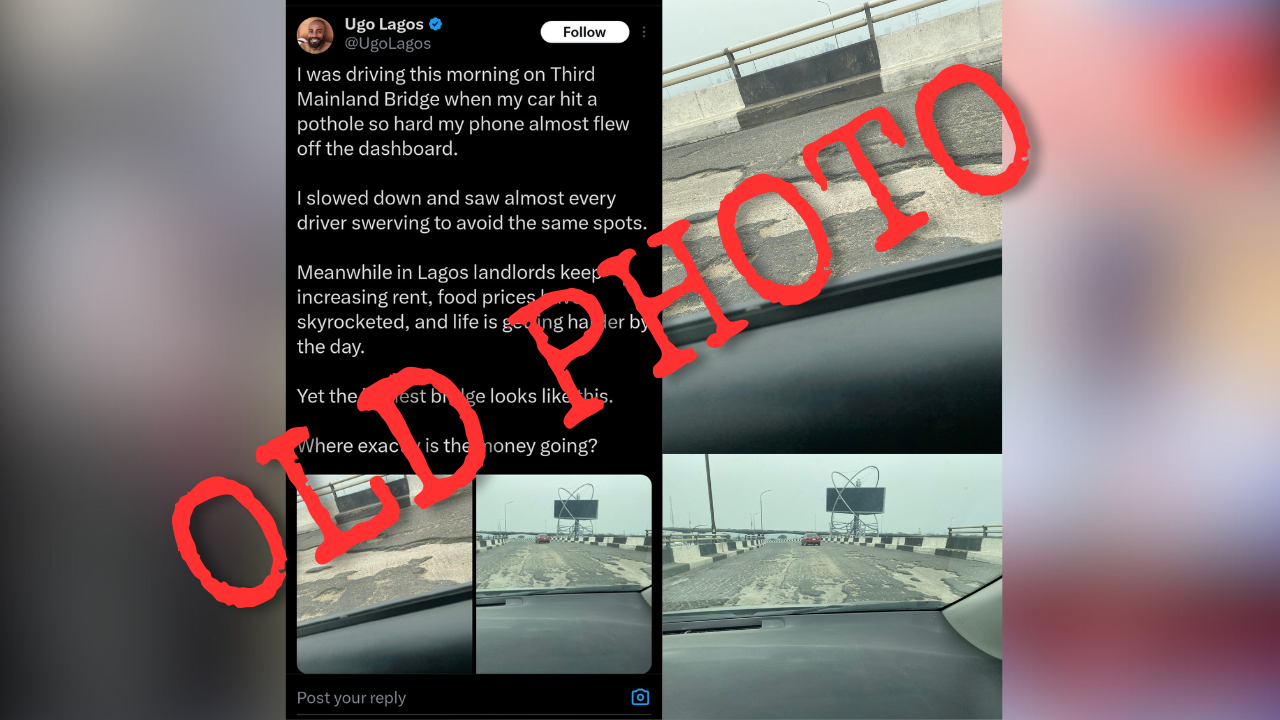
A social media controversy erupted this week when X user @UgoLagos shared two images purportedly showing dangerous potholes on Lagos’ Third Mainland Bridge, claiming the photos were taken on March 12, 2026. The post quickly gained traction as it touched on broader issues of infrastructure maintenance and cost of living in Nigeria’s largest city.
“I was driving this morning on Third Mainland Bridge when my car hit a pothole so hard my phone almost flew off the dashboard. I slowed down and saw almost every driver swerving to avoid the same spots,” the user claimed in his post.
He further connected the alleged road conditions to economic hardships facing Lagos residents: “Meanwhile in Lagos landlords keep increasing rent, food prices have skyrocketed, and life is getting harder by the day. Yet the busiest bridge looks like this. Where exactly is the money going?”
However, an investigation by CableCheck has revealed the images are not recent at all. Using Google Lens to analyze the photographs, fact-checkers discovered the same images appeared on Nairaland, a popular Nigerian online forum, on February 27, 2021 – more than five years earlier.
Further research confirmed the original source was X user @Ms_Ogunz, who posted the pictures on February 27, 2021, with the caption: “6 months of closure and this??? O ma ga o!!!” That original post had generated substantial engagement, including over 5,700 reposts, 940 quotes, and 10,000 likes.
The timing of the original post is significant. The images were shared on the same day the federal government announced the full reopening of the Third Mainland Bridge following a six-month rehabilitation project. The bridge had been partially closed for repairs beginning July 24, 2020.
For context, the Third Mainland Bridge is a crucial infrastructure component in Lagos, connecting the mainland to the island business district. At 11.8km, it’s the longest of the three bridges connecting Lagos Island to the mainland and serves as a critical transportation artery for the megacity’s estimated 20 million residents.
The portion of road depicted in the images is specifically the Adekunle exit point heading toward Iyana-Oworonshoki – one of the adjoining flyovers connecting to the main bridge structure. Since 2021, multiple rehabilitation projects have been carried out on both the Third Mainland Bridge and its connecting roadways.
When confronted by X users about sharing outdated images, @UgoLagos refused to delete the misleading post. Instead, he doubled down on his claims and attacked those who attempted to correct the record.
“Whether the photo is old or new, the fact remains: the Third Mainland Bridge still has potholes and safety issues. Pointing out problems isn’t misinformation, it’s holding the government accountable,” he responded to critics.
This incident highlights ongoing challenges with misinformation on social media platforms, particularly regarding infrastructure projects that directly impact citizens’ daily lives. The Third Mainland Bridge, given its significance to Lagos’ transportation network, frequently becomes a flashpoint for public discourse about government spending priorities and maintenance standards.
Infrastructure experts note that major bridges in high-traffic urban environments require regular maintenance cycles, with tropical coastal locations like Lagos facing additional challenges from corrosion and environmental factors. The federal and state governments have undertaken several rehabilitation efforts on the bridge in recent years, though public perception of these projects’ effectiveness remains mixed.
CableCheck’s verdict is clear: the images shared by @UgoLagos are from 2021, not March 2026, and do not represent the current condition of the Third Mainland Bridge.
Fact Checker
Verify the accuracy of this article using The Disinformation Commission analysis and real-time sources.

10 Comments
Maintaining public infrastructure is a constant challenge, especially in rapidly growing cities. I hope the authorities can address any legitimate concerns about the Third Mainland Bridge while also countering the spread of misinformation. Transparency and accountability are key.
It’s disappointing to see outdated images being used to misrepresent the current state of the Third Mainland Bridge. While infrastructure issues are certainly a concern, spreading misinformation is counterproductive. I hope the authorities provide accurate, up-to-date information to the public.
Fact-checking is important to ensure we have an accurate understanding of the situation. While the social media post may have been well-intentioned, using old photos is misleading. I hope the authorities take this opportunity to be transparent about the bridge’s condition and their maintenance plans.
Reliable information is crucial when it comes to public infrastructure. While the social media post may have been well-meaning, using outdated images is problematic. I encourage the authorities to provide regular updates on the bridge’s condition and their maintenance efforts.
It’s concerning to see the potential for misinformation to spread so quickly on social media. I appreciate the fact-checkers taking the time to investigate this issue and provide accurate information. Maintaining critical infrastructure is important for the safety and well-being of all residents.
This situation highlights the need for reliable, fact-based reporting on issues that impact the community. While the social media post may have been well-intentioned, using outdated information can be counterproductive. I encourage the authorities to engage with the public and provide regular updates on the bridge’s condition and maintenance efforts.
The public deserves accurate, up-to-date information about the state of important infrastructure like the Third Mainland Bridge. While social media can be a powerful tool for raising awareness, it’s crucial that claims are verified before they’re widely shared. I hope the authorities can address any legitimate concerns transparently.
This is concerning if true, but I’d like to see more evidence before jumping to conclusions. Maintaining critical infrastructure is crucial for a growing city like Lagos. I hope the authorities look into this and make necessary repairs promptly.
This is a complex issue with many factors at play. I appreciate the diligence of the fact-checkers in verifying the information. It’s important to have an objective, evidence-based discussion about infrastructure challenges and their impact on the community.
Maintaining critical infrastructure is a complex challenge, and it’s important to have an informed, evidence-based discussion about the issues. I appreciate the fact-checkers taking the time to verify the information and provide a more accurate picture. Transparency and accountability from the authorities are key to addressing these concerns.