


Listen to the article
Romanians Rally Against Controversial Anti-Extremism Law Amid Free Speech Concerns
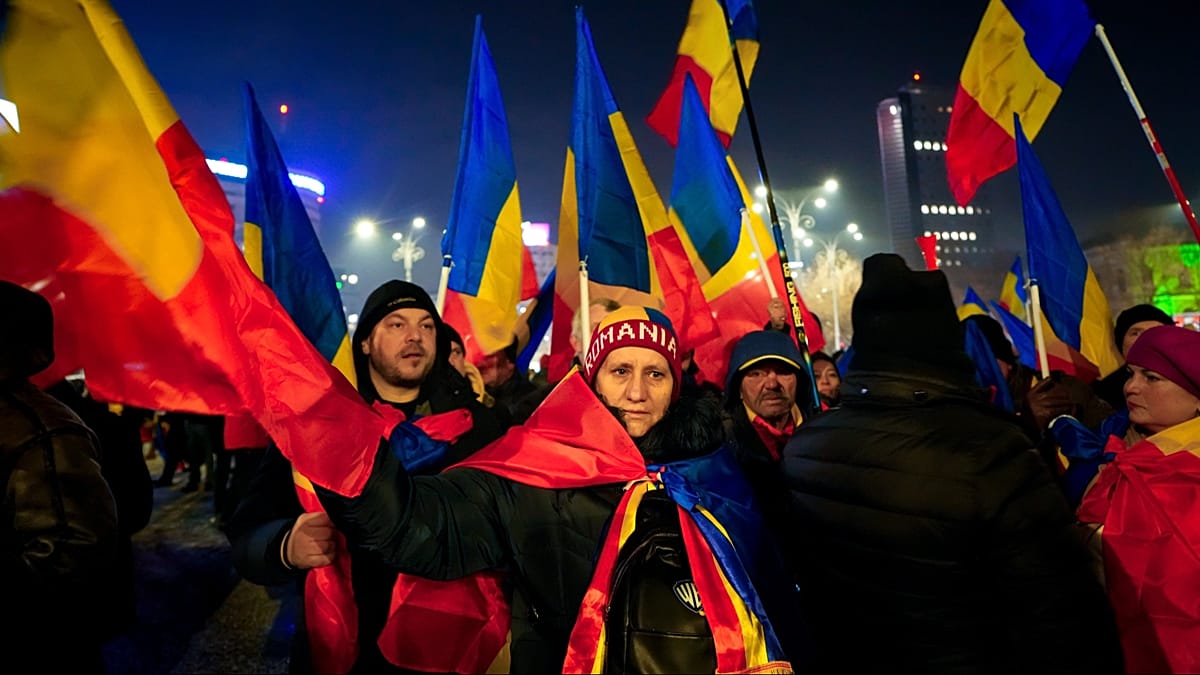
Thousands of protesters flooded central Bucharest last week, rallying against legislation they claim threatens Romania’s freedom of speech. Demonstrators, numbering just over 10,000, gathered to oppose what they’ve dubbed the “Vexler Law,” which they fear could criminalize opinions expressed online.
The demonstration, organized by far-right MEP Claudiu Târziu, founder of the newly established Conservative Action Party, called for the immediate repeal of the legislation, citing concerns about fundamental civil liberties. Addressing the crowd, Târziu described the law as “the most serious attack on the Romanian people in the past 35 years” and warned it would “erase from the collective memory the heroes, geniuses and saints of the Romanian nation.”
However, a closer examination of the legislation reveals a more nuanced reality. The law, proposed by MP Silviu Vexler, who also serves as president of the Federation of Jewish Communities in Romania, primarily targets extremist ideologies by prohibiting the public glorification of fascist figures and establishing criminal penalties for promoting antisemitism, racism, or xenophobia in both physical and digital spaces.
The legislation has followed a complex path through Romania’s political system. Initially adopted in June 2025, it was returned to parliament by President Nicușor Dan, who expressed concerns about the imprecise definitions of what constitutes fascist, legionary, racist, or xenophobic material. Despite these objections, parliament reaffirmed the bill, a decision later upheld by Romania’s Constitutional Court. The law was ultimately re-adopted in December, reigniting public debate over free speech boundaries in the country.
At the heart of protesters’ concerns is the potential impact on Romania’s cultural heritage and national identity. Demonstrators frequently cite Mihai Eminescu, Romania’s revered national poet, as an example of a historical figure whose works could potentially fall under scrutiny due to xenophobic and antisemitic elements in some of his journalism and poetry.
Experts, however, dispute this interpretation. Adina Marincea, a researcher at the Elie Wiesel National Institute for the Study of the Holocaust in Romania, told Euronews’ fact-checking team that the legislation “criminalises only specific extremist content, such as fascist, legionary, racist and xenophobic material” and emphasized that “there is absolutely nothing in the law that would lead to the national poet being banned.”
The law makes important distinctions between historical context and contemporary promotion of extremist ideologies. It requires that historical figures and their works be examined within their proper historical framework but does not prohibit academic discussion, artistic interpretation, or educational use of cultural material. Furthermore, it differentiates between artistic output and political activity, focusing its restrictions on public honors for war criminals or leaders of fascist organizations rather than banning their literary or artistic contributions outright.
This distinction has significant implications for Romania’s cultural landscape. For example, despite concerns raised by protesters, Eminescu’s writings remain firmly established in Romania’s national school curriculum.
Legal analysts characterize the legislation as an update to existing hate-speech regulations, addressing previously unregulated areas of concern. They note that since its implementation, there have been no documented cases of the law being used to suppress legitimate free speech—either under its original form or the updated version.
The protests highlight genuine public anxiety about government overreach into free expression, a sensitive issue in a country still wrestling with the legacy of communist-era censorship. However, legal experts maintain that claims about the law imposing broad restrictions on speech are not substantiated by the actual text of the legislation.
As Romania continues to navigate the balance between protecting vulnerable groups from hate speech and preserving freedom of expression, this controversy underscores the ongoing challenges of legislating in the digital age, where misinformation about laws can sometimes spread more rapidly than accurate information about their actual content and intent.
Fact Checker
Verify the accuracy of this article using The Disinformation Commission analysis and real-time sources.

11 Comments
This is a complex issue that touches on some of the core tensions between security and liberty. While the intent behind the law may be reasonable, the concerns about potential abuse are understandable. Robust safeguards and transparency will be key to ensuring a fair and effective outcome.
Well said. Balancing these competing priorities is always a delicate challenge, but it’s essential to get it right.
This is a sensitive issue that touches on fundamental rights and security concerns. While the intent behind the law may be reasonable, the concerns raised by protesters are understandable. Careful implementation and ongoing public scrutiny will be crucial to ensure a balanced and effective approach.
You make a good point. Balancing these competing priorities is never easy, but it’s essential to get it right to protect both individual freedoms and societal well-being.
This is a challenging issue with valid arguments on both sides. Protecting free speech is essential, but so is preventing the spread of dangerous ideologies. Striking the right balance will require nuanced policymaking and a willingness to engage in constructive public debate.
The proposed law seems to target specific forms of extremist speech, rather than broadly restricting free expression. However, the concerns about potential overreach and misuse are understandable. Ongoing public dialogue and oversight will be crucial to ensure the right balance is struck.
That’s a fair assessment. It’s important to monitor the implementation closely to ensure the law is applied judiciously and does not infringe on legitimate speech.
The Romanian protests highlight the importance of finding the right approach to addressing extremism without undermining fundamental freedoms. Careful legislative drafting and ongoing public scrutiny will be crucial to ensure this law achieves its intended purpose without overstepping boundaries.
Interesting to see the debate around this Romanian law. While freedom of speech is crucial, we must also be vigilant against the spread of extremist ideologies that can threaten social cohesion. A balanced approach is needed to protect fundamental rights while addressing legitimate security concerns.
You raise a good point. It’s a complex issue that requires careful consideration of all perspectives to find the right solution.
The debate over this Romanian law highlights the broader challenge of how to address the spread of extremist ideologies while upholding democratic values and civil liberties. There are valid arguments on both sides, and the ultimate solution will require nuanced policymaking and ongoing public dialogue.