


Listen to the article
Viral videos purporting to show U.S. soldiers breaking down in tears over Iranian missile attacks have been debunked as sophisticated AI-generated fakes, according to a recent investigation by Tempo.
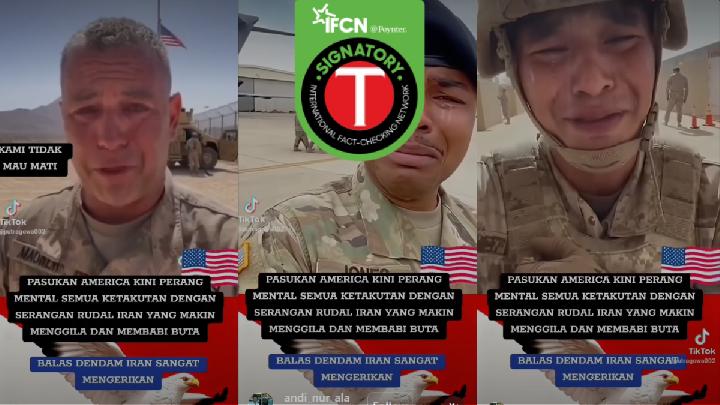
The manipulated footage, which has spread widely across social media platforms including Instagram, Facebook, TikTok, YouTube, and X, depicts three men in military uniforms crying and allegedly begging to return home amid what the fabricated narrative describes as “increasingly intense and out of control” Iranian missile attacks.
Digital forensics experts at Tempo conducted a comprehensive analysis of the three video clips and identified numerous visual inconsistencies that revealed their artificial nature. In the first clip, investigators noted that the tactical vehicle’s door appeared unnaturally fused with its front wheels, while the soldier’s name tag was deliberately rendered unreadable – both common indicators of AI-generated content.
AI detection tools confirmed these suspicions. The Hive Moderation system flagged the content as AI-generated with 99.9 percent confidence, while the Zhuque AI Detection Assistant independently corroborated this assessment with a 98.35 percent probability score.
The second clip contained similar telltale signs of manipulation, particularly regarding military insignia details. Analysts pointed out that the beret insignia displayed in the video differed significantly from official U.S. military specifications. Further, this clip showed an unusual five-person casket-bearing party with notably blurred visual elements – another technical error commonly found in AI-generated media.
In the third segment, lighting inconsistencies on soldiers’ faces, improbable physical positioning against walls, and disproportionate traffic cones revealed further evidence of digital fabrication. Well-respected fact-checking organizations Misbar and Teyit have also independently confirmed that all three clips are AI-generated rather than authentic footage.
While the videos themselves are fraudulent, they emerge against a backdrop of genuine military tension between the United States and Iran. As of mid-March 2026, the U.S. has recorded 13 soldier fatalities and approximately 200 wounded personnel since launching operations against Iran in late February.
The Center on Conscience & War, a nonprofit supporting conscientious objectors, has reported receiving numerous calls from military personnel expressing reluctance to deploy to the region. Meanwhile, the strategic Strait of Hormuz has become a flashpoint in the conflict after Iranian forces deliberately blocked this critical international shipping route.
President Donald Trump has responded by deploying 2,500 marines to break the blockade and has sought military support from allied nations and China to reopen the vital shipping lane. British Prime Minister Keir Starmer has taken a more restrained approach, focusing solely on evacuating British citizens from conflict zones rather than engaging directly in military operations.
The circulation of these sophisticated fake videos highlights the escalating challenge of disinformation in modern warfare. As AI technology becomes increasingly accessible and convincing, distinguishing between authentic and manipulated media grows more difficult for the average social media user. This development underscores the critical importance of professional fact-checking and digital forensics in navigating contemporary information environments, particularly during sensitive geopolitical conflicts.
Tempo’s comprehensive verification conclusively determined that the viral videos showing American soldiers crying and begging to return home from Iran are entirely fabricated.
Fact Checker
Verify the accuracy of this article using The Disinformation Commission analysis and real-time sources.

10 Comments
While the viral videos were disturbing, I’m glad the investigation revealed them to be AI-generated fakes. It’s a good example of how we must be cautious about unverified content online, even when it appears compelling. Fact-checking is crucial to combat the spread of misinformation.
I agree, the proliferation of AI-generated content is a real challenge. Kudos to the team for their diligence in exposing this particular case of misinformation.
Excellent work by the Tempo team in debunking these AI-generated fakes. It’s crucial that we don’t blindly accept viral videos, especially around topics like military operations. Fact-checking and verifying the authenticity of online content is more important than ever.
Absolutely. The spread of misinformation is a real challenge, and we must stay vigilant to combat it. Kudos to the investigators for their diligence.
This serves as a reminder of the need for rigorous fact-checking, especially around sensitive military and geopolitical events. The use of AI to generate fake footage is a concerning trend that will likely continue. We must stay vigilant and rely on authoritative sources.
This is a sobering reminder of the sophistication of modern misinformation campaigns. The use of AI to fabricate footage is a concerning development that will likely continue. We must remain vigilant and rely on authoritative sources when it comes to sensitive military and geopolitical issues.
It’s concerning to see the spread of such sophisticated AI fakes. Glad the Tempo team was able to identify the visual inconsistencies and use AI detection tools to confirm the content’s artificial nature. We need to remain cautious about taking social media videos at face value.
Absolutely. The ease with which misinformation can spread online is alarming. Kudos to the fact-checkers for their diligence in debunking this particular case.
Interesting to see this debunking of the viral videos. Kudos to the digital forensics experts for uncovering the AI-generated nature of the content. It’s important to stay vigilant about misinformation, especially when it comes to sensitive military matters.
I agree, verifying the authenticity of online content is crucial these days. Good to see the investigation got to the bottom of this case.