


Listen to the article
Togo’s President Did Not Indicate Plans to Join AES, Despite Social Media Claims
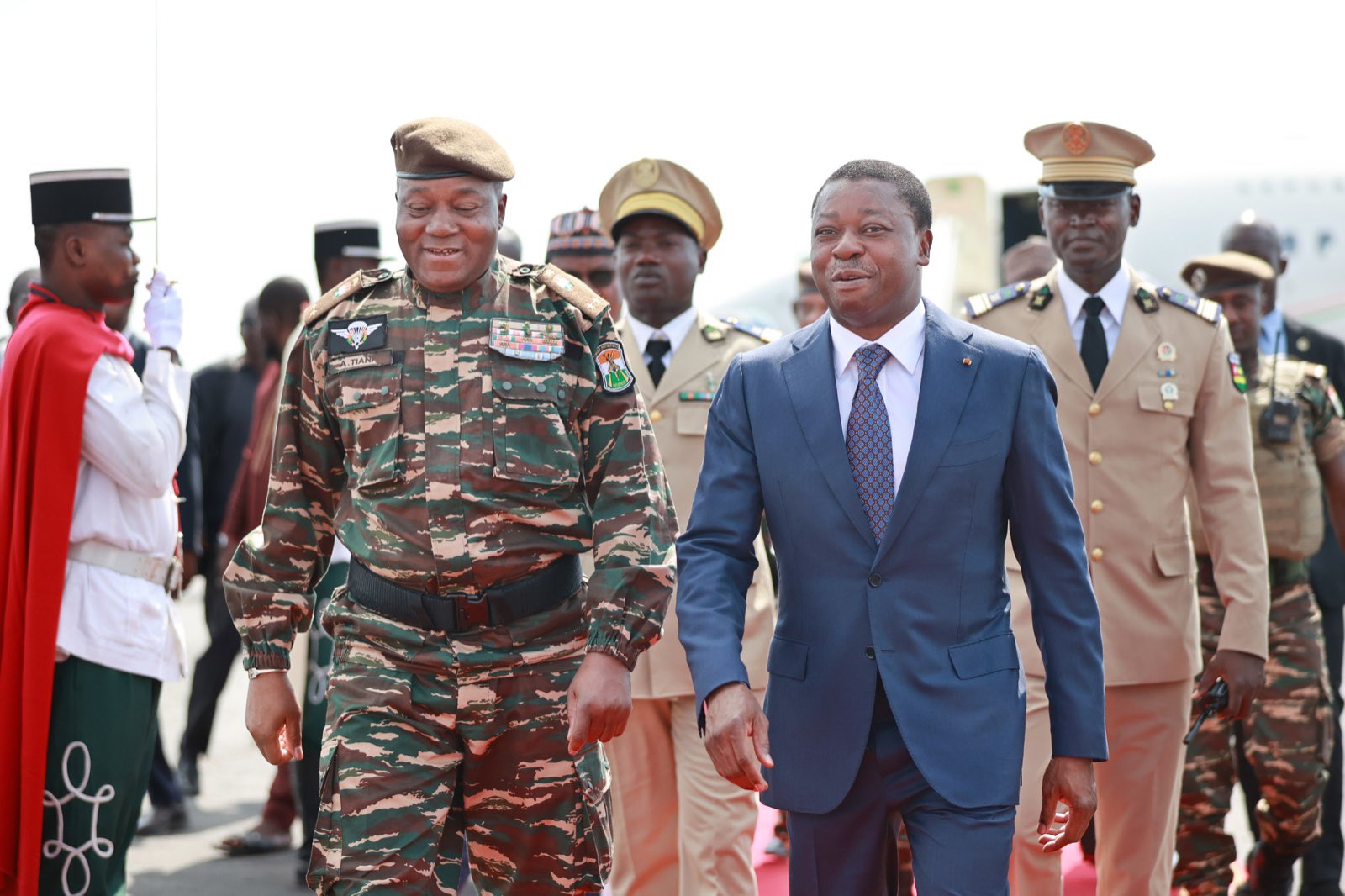
Viral social media posts claiming Togolese President Faure Gnassingbé suggested his country would soon join the Alliance of Sahel States (AES) have been debunked as false information by fact-checkers.
The misleading claim originated on December 15, 2025, when an X (formerly Twitter) account called “Sahel Revolutionary Soldier” shared video footage of President Gnassingbé with a caption claiming: “Togo’s president concede before a packed auditorium of African dignitaries that it is not a question of if Togo would join AES but when.” The post further stated: “The AES mentality is spreading. Will Togo join the AES? For me, yes, it’s only a matter of time.”
The post quickly gained traction, accumulating over 73,600 views, 362 reposts, and 1,200 likes. Part of the caption appears to have been borrowed from another X account, “AES Alerte,” which had posted similar wording earlier the same day.
An investigation by GhanaFact traced the original video to President Gnassingbé’s speech at the 9th Pan-African Congress co-organized by the African Union in Lomé from December 8-12, 2025. The video clip represented only a portion of the president’s 14-minute address delivered on the opening day of the event.
Translation of the president’s actual statement reveals no mention of the AES whatsoever. Instead, Gnassingbé spoke broadly about pan-Africanism as an imperative strategy for sovereignty in a changing global order.
“As the world is changing, the international order is being reshaped, and new centres of power are emerging… Pan-Africanism is therefore no longer just an idea; it is an imperative, a strategy for sovereignty,” the president stated in his address.
The Alliance of Sahel States, formed in September 2023, currently comprises three military-led nations: Burkina Faso, Mali, and Niger. The alliance emerged following a series of coups in the region, with the countries seeking closer military and economic cooperation after facing sanctions from regional bloc ECOWAS.
Togo’s potential inclusion in the AES would represent a significant geopolitical shift in West Africa. Under President Gnassingbé’s leadership since 2005, Togo has generally maintained stable diplomatic relationships with Western powers while also working to strengthen regional African partnerships.
False claims about new countries joining the alliance have circulated regularly on social media platforms since its formation, often as part of information campaigns seeking to portray the AES as gaining momentum and influence across the continent.
Media analysts note that such misleading claims can impact regional stability and diplomatic relationships. False information about governmental intentions regarding military or economic alliances can create uncertainty in financial markets and potentially harm international relations.
The false attribution to President Gnassingbé comes at a time when the Sahel region continues to face significant security challenges, including terrorism and political instability, making accurate reporting on diplomatic and military alliances particularly important.
Fact-checking organizations like GhanaFact continue to monitor and verify claims about regional alliances and diplomatic shifts across West Africa, especially as social media platforms facilitate the rapid spread of unverified information regarding geopolitical developments.
Fact Checker
Verify the accuracy of this article using The Disinformation Commission analysis and real-time sources.

10 Comments
This fact-check serves as a valuable lesson on the need for nuance and context when analyzing political and economic news, especially in regions with complex geopolitical dynamics. Jumping to conclusions based on limited information can lead to the spread of misinformation.
While the reports of the Togolese president joining the AES alliance were unfounded, it’s still worth keeping an eye on developments in the region. Geopolitical shifts can have significant impacts on the mining and energy sectors.
This highlights the need for careful fact-checking, especially on social media where misinformation can spread rapidly. I’m glad the original claims were debunked through a thorough investigation.
Agreed. Verifying information from reliable sources is crucial to avoid the spread of false narratives, which can have real consequences.
This fact-check serves as a good reminder to be skeptical of sensational claims, especially those related to political or economic events in Africa. Careful analysis of primary sources is key to understanding the truth.
Well said. Maintaining a critical eye and cross-checking information is essential, particularly when it comes to important regional developments that could affect industries like mining and energy.
The debunking of these claims highlights the importance of responsible journalism and fact-based reporting. It’s encouraging to see diligent investigations being conducted to separate truth from fiction.
Interesting fact-check on the reports of the Togolese president joining the AES alliance. It’s important to verify claims like these before they spread further. The video clip seems to have been taken out of context.
While the reports of the Togolese president joining the AES alliance proved to be false, it’s still worth monitoring the situation in the Sahel region. Shifts in regional alliances can have ripple effects on the mining and energy sectors.
Absolutely. Maintaining a close eye on developments in this region is crucial, as they can have significant implications for global commodity markets and supply chains.