


Listen to the article
Vatican Provides Prayer Space for Muslim Scholars Conducting Research
Reports circulating throughout media outlets this month about a Muslim prayer room at the Vatican have caused a stir among Catholics and observers worldwide, though a closer examination reveals a more nuanced reality than many headlines suggest.
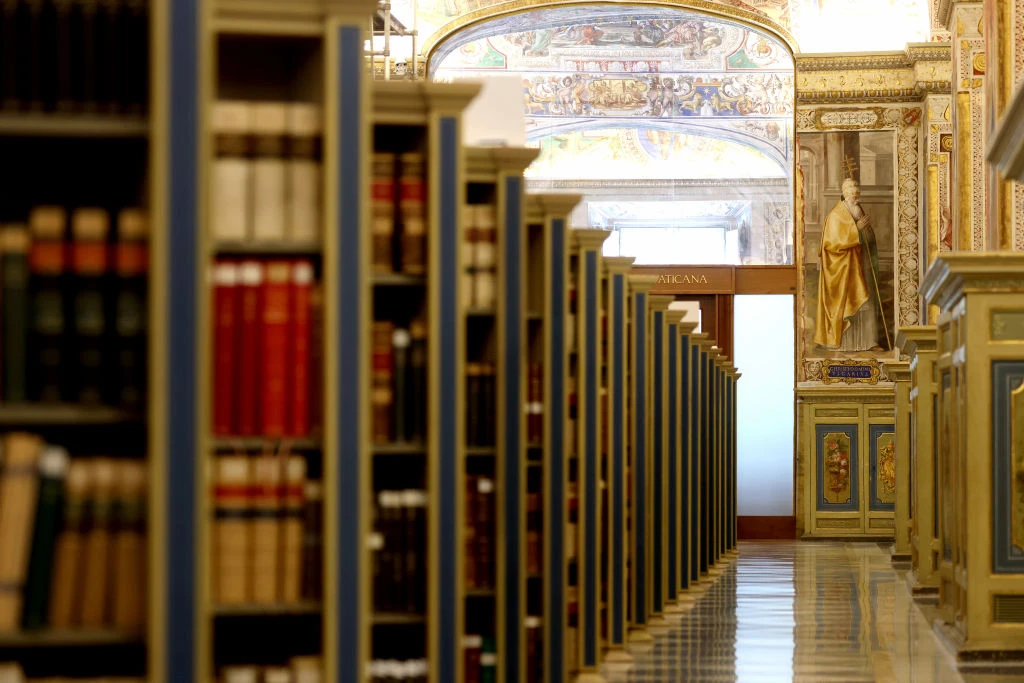
The Vatican Apostolic Library does indeed provide Muslim scholars with a designated room for prayer while they conduct research at the historic institution. However, this accommodation appears to be far more limited in scope than some reports have indicated.
The existence of this prayer space became widely known after an October 8 interview with Father Don Giacomo Cardinali, vice prefect of the Vatican Apostolic Library, published in the Italian newspaper La Repubblica. In the interview, Father Cardinali described the library as a “universal institution” and “the most secular of the entire Holy See.”
“Our interlocutors are research centers, public universities, the Louvre, the Metropolitan, NASA,” Father Cardinali explained. “They don’t really know what a priest is, much less how to distinguish him from a bishop or a cardinal.”
When asked whether scholars of other religions visit the library, the priest confirmed they do. “Some Muslim scholars asked us for a room with a carpet to pray, [so] we gave it to them: We have incredible ancient Korans,” he said.
Father Cardinali emphasized the global nature of the library’s collections, noting, “We are a universal library. There are Arabic, Jewish, Ethiopian collections, unique Chinese pieces. Years ago we discovered that we have the oldest medieval Japanese archive that exists outside the Rising Sun.”
Following the interview’s publication, several media outlets published headlines suggesting the Vatican had proactively established a Muslim prayer room as a permanent fixture. Headlines like “Vatican allows designated Muslim prayer room” and “Vatican sets up dedicated Muslim prayer room at heart of pope’s 500-year-old library” implied a significant policy shift rather than an accommodation made for visiting scholars.
These reports sparked passionate criticism online, with one deacon claiming the prayer room constitutes “a total betrayal of Our Lord Jesus Christ.” Catholic news outlet Zenit noted the policy had sparked a “quiet storm” in response.
However, the reality appears more straightforward than the controversy suggests. The room is not a generally accessible Islamic prayer space but rather a simple accommodation for Muslim researchers working with the library’s extensive collection of Islamic texts, including what Father Cardinali described as “incredible ancient Korans.”
The Vatican Apostolic Library, with its mission to preserve knowledge and facilitate scholarly research, regularly hosts academics from various religious backgrounds who come to study its vast holdings. The library’s collections span numerous cultures, religions, and languages, making it a natural destination for Islamic scholars studying historical religious texts.
This practice of academic accommodation aligns with the Vatican’s broader approach to interfaith dialogue under Pope Francis, who has emphasized respectful engagement with other religious traditions while maintaining the Church’s distinct identity and teachings.
As Britain’s Daily Mail more accurately reported: “The Vatican has granted Muslim scholars’ request for a prayer room.” The space itself is described by the library’s vice prefect as simply “a room with a carpet” – a basic accommodation for visiting researchers rather than a permanent Islamic prayer facility open to the general public.
While the provision of such a space may seem surprising to some Catholics, it reflects the Vatican Library’s role as an international research institution that serves scholars of diverse backgrounds while preserving important historical and religious documents from many traditions.
Fact Checker
Verify the accuracy of this article using The Disinformation Commission analysis and real-time sources.

18 Comments
Providing dedicated prayer space for Muslim researchers at the Vatican Library is a reasonable and inclusive practice. It reflects the institution’s role as a center of academic inquiry serving a global community of scholars.
The Vatican’s approach aligns with principles of religious tolerance and academic freedom that should guide major research institutions.
The Vatican Library is indeed a ‘universal institution’ as described, serving a wide range of scholars and researchers. Allowing designated prayer space for Muslim visitors aligns with its mission as a scholarly institution.
It’s good to see the Vatican taking steps to be inclusive and supportive of researchers from different religious backgrounds.
The Vatican’s policy of providing a dedicated prayer space for Muslim researchers at its library reflects a commendable effort to be inclusive and accommodating. As a global center of scholarship, this type of approach is important.
Kudos to the Vatican for taking practical steps to support the needs of diverse researchers at its historic institution.
The Vatican Library’s policy of providing prayer space for Muslim scholars is an interesting example of how major institutions can foster inclusivity and support diversity in academic research. Kudos to them for taking this pragmatic approach.
Reasonable accommodation for researchers of different faiths seems like the right thing to do for a library of the Vatican’s stature and global reach.
While the reports may have been sensationalized, the Vatican’s provision of prayer space for Muslim scholars seems like a pragmatic and inclusive measure. As a leading global library, accommodating the needs of diverse researchers is important.
The Vatican’s actions demonstrate a commitment to maintaining an open and welcoming environment for scholars of all faiths and backgrounds.
This is a good example of how religious institutions can find ways to be welcoming and inclusive to scholars of diverse backgrounds. The Vatican Library’s approach appears measured and in keeping with its mission as a center of learning.
The Vatican’s policy reflects an understanding that academic institutions should serve a broad range of researchers, regardless of their religious affiliations.
The Vatican’s accommodation for Muslim scholars conducting research at its library seems like a thoughtful and pragmatic policy. Maintaining an inclusive environment for diverse researchers is important for an institution of its stature.
While the reports may have been exaggerated, the Vatican’s actions demonstrate a commitment to fostering an open and welcoming academic environment.
While the reports of a ‘Muslim prayer room’ may have been exaggerated, the Vatican’s practice of providing a dedicated space for Muslim scholars seems reasonable and in keeping with its role as a leading academic library. Maintaining an open and welcoming environment is important.
Nuance and context are important here. The Vatican appears to be simply accommodating the needs of researchers, not making any broader religious or political statements.
Interesting to learn about the Vatican’s accommodation for Muslim scholars conducting research at the library. Providing a designated prayer space seems like a reasonable and inclusive practice for a major academic institution.
I appreciate the Vatican’s effort to be welcoming and accommodating to researchers of diverse faiths and backgrounds.