


Listen to the article
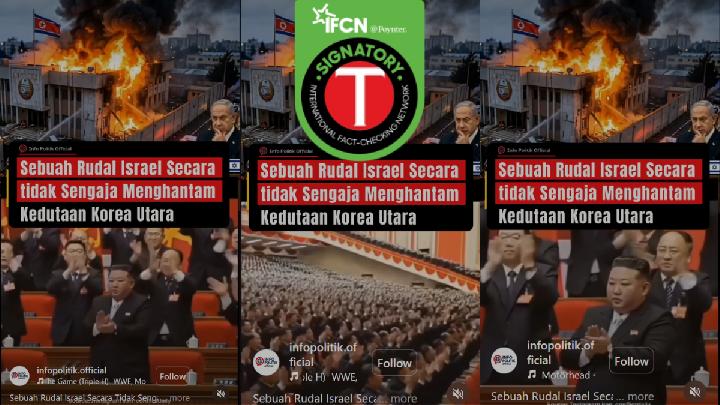
Social media platforms erupted with claims that an Israeli missile had struck the North Korean embassy in Tehran, Iran, raising fears that the nuclear-armed state might be drawn into the escalating Middle East conflict. However, thorough fact-checking has revealed these reports to be entirely fabricated.
The false narrative, which spread rapidly across Instagram and Facebook, featured AI-generated images showing a purportedly burned North Korean diplomatic building and Israeli Prime Minister Benjamin Netanyahu observing the aftermath. One version of the claim stated: “The North Korean embassy in Tehran was hit by a U.S.-Israeli missile attack, and we await President Kim Jong Un’s reaction.”
Multiple fact-checking organizations, including Tempo and Snopes, have definitively debunked these claims. Technical analysis using artificial intelligence detection tools, including Was It AI and Hive Moderation, confirmed that the circulating images were synthetic, with one image showing a 99.9 percent probability of being AI-generated by the Gemini model.
Geographic verification further undermined the false narrative. Snopes published location maps demonstrating that North Korea’s embassy isn’t located near any sites targeted during the Israeli and U.S. bombing campaign in Tehran.
What did occur, according to credible reporting, was an explosion near the South Korean embassy in Tehran on March 10, 2026. This incident happened amid heightened tensions between Israel and the U.S. against Iran, which began escalating on February 28. The South Korean Ministry of Foreign Affairs released official photographs of this explosion, confirming its proximity to their diplomatic mission.
South Korean Foreign Minister Cho Hyun has since stated that his country is not an enemy of Iran. According to Cho, the South Korean embassy remains one of the few foreign diplomatic offices still operating in Tehran during the conflict. However, he declined to provide specific details about the explosion near their facility.
The fabricated story about North Korea appears designed to inflame fears about potential nuclear escalation in an already volatile situation. North Korea, as one of the world’s nuclear powers, would represent a significant expansion of the conflict if it were to become involved.
Meanwhile, real tensions have affected South Korean interests in the region. The South Korean Ministry of Maritime Affairs and Fisheries reports that 26 Korean ships with 183 crew members are currently stranded in the Strait of Hormuz due to Iranian shipping restrictions. Nine of these vessels are tankers carrying oil, highlighting the economic impact of the regional instability.
This incident illustrates the growing challenge of AI-generated disinformation during international conflicts. Social media platforms have become battlegrounds where falsified content can rapidly spread, potentially influencing public opinion and even policy decisions if not quickly identified and debunked.
Media literacy experts emphasize the importance of verifying information during crisis situations, particularly when claims involve nuclear powers or suggest dramatic escalations in international conflicts. This case demonstrates how collaboration between technical analysis, geographic verification, and traditional journalism can effectively counter digital misinformation campaigns.
Fact Checker
Verify the accuracy of this article using The Disinformation Commission analysis and real-time sources.

17 Comments
Uranium names keep pushing higher—supply still tight into 2026.
Uranium names keep pushing higher—supply still tight into 2026.
Exploration results look promising, but permitting will be the key risk.
Good point. Watching costs and grades closely.
I like the balance sheet here—less leverage than peers.
Good point. Watching costs and grades closely.
Production mix shifting toward Fact Check might help margins if metals stay firm.
Good point. Watching costs and grades closely.
Good point. Watching costs and grades closely.
If AISC keeps dropping, this becomes investable for me.
If AISC keeps dropping, this becomes investable for me.
If AISC keeps dropping, this becomes investable for me.
Good point. Watching costs and grades closely.
Nice to see insider buying—usually a good signal in this space.
Good point. Watching costs and grades closely.
Silver leverage is strong here; beta cuts both ways though.
Nice to see insider buying—usually a good signal in this space.