


Listen to the article
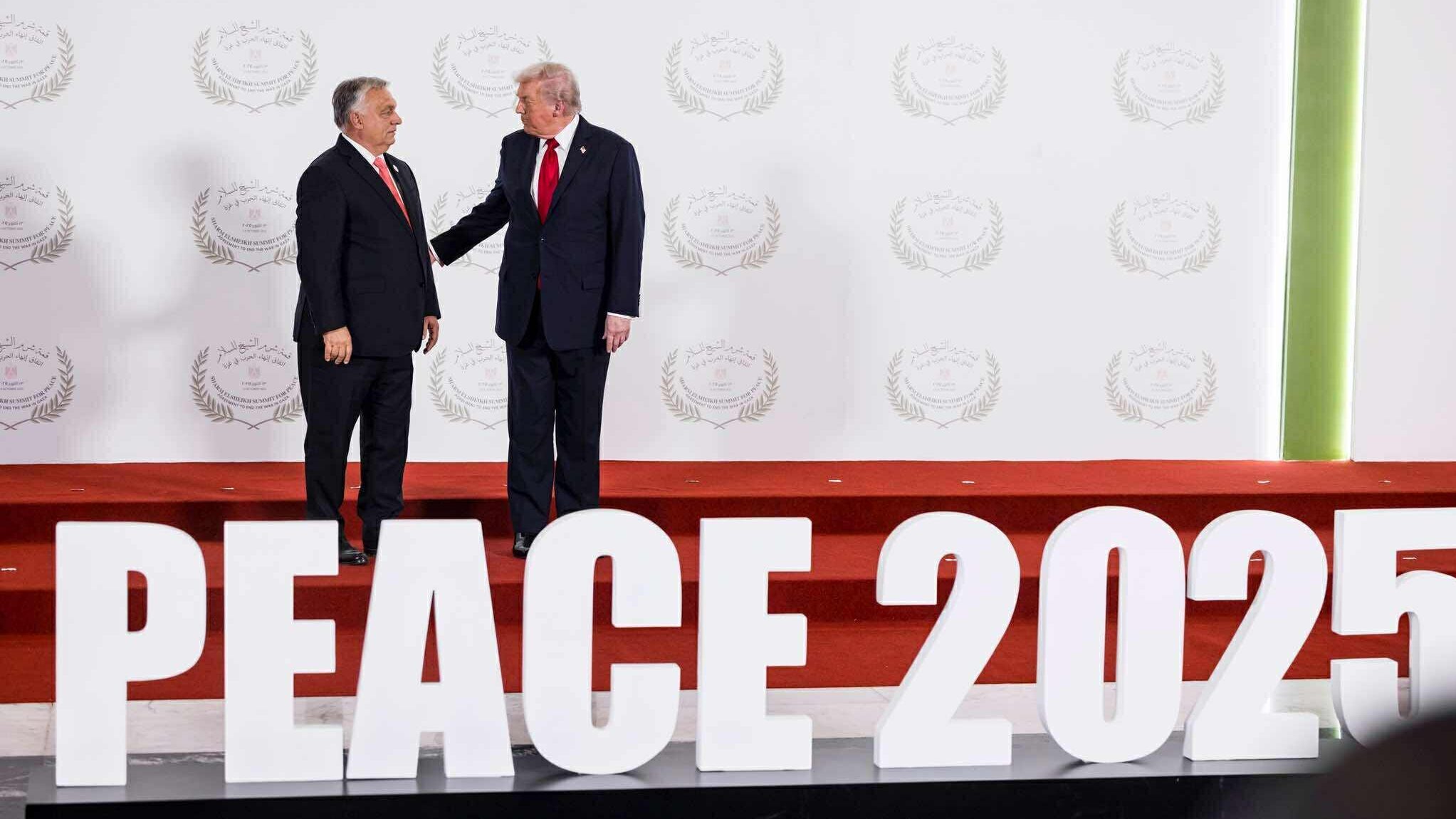
Hungarian Prime Minister Viktor Orbán has been invited to join President-elect Donald Trump’s newly formed Board of Peace, sparking immediate reactions in Hungarian political circles. The announcement, made by Hungarian Foreign Minister Péter Szijjártó, was quickly followed by claims in Hungarian media that Orbán’s seat would require Hungary to pay $1 billion.
This assertion, however, appears to be inaccurate according to the Board’s charter. Section 2.2(c) clearly stipulates that membership automatically lasts for three years without any financial requirements. Countries that choose to contribute at least $1 billion in the first year gain what effectively amounts to permanent membership through automatic extensions. Additionally, the charter gives Trump, as president of the Board, the authority to renew memberships at his discretion.
The Board of Peace consists of two main components. The Executive Board includes several high-profile figures: Secretary of State designate Marco Rubio, special envoy Steve Witkoff, former British Prime Minister Tony Blair, World Bank President Ajay Banga, Trump’s son-in-law Jared Kushner, American businessman Marco Rowan, and U.S. National Security Adviser designate Robert Gabriel.
The second component features world leaders personally invited by Trump. Besides Orbán, this group includes Italian Prime Minister Giorgia Meloni, King Abdullah II of Jordan, King Mohammed VI of Morocco, Kazakh President Kassym-Jomart Tokayev, and Argentine President Javier Milei, among others.
According to sources familiar with the matter, invitations were extended to more than 60 world leaders. These reportedly included Russian President Vladimir Putin, French President Emmanuel Macron, Israeli Prime Minister Benjamin Netanyahu, and representatives from the European Union. French officials have reportedly declined the invitation, while the Kremlin is said to be still considering the proposal.
There has been considerable confusion regarding the Board’s mandate and scope. While early reports suggested it would focus exclusively on resolving the Gaza conflict, the charter makes no specific mention of Gaza. This indicates the Board’s purpose is broader – establishing a new international forum for conflict resolution. Nevertheless, implementation of a Gaza peace plan is expected to be the Board’s first major undertaking, potentially setting the tone for its future effectiveness and credibility.
The organizational structure outlined in the charter reveals a multi-layered approach to conflict resolution. The Board will oversee several committees specifically tasked with addressing the Gaza situation. These committees, while maintaining communication with each other, fulfill distinct roles under the direction of the Executive Council and Bulgarian UN High Representative Nikolay Mladenov at the operational level.
The Gaza Executive Board will comprise officials from key regional states, providing diplomatic and political support for transition efforts in Gaza. Working alongside it will be the National Committee for the Administration of Gaza (NCAG), described as a technocratic quasi-government staffed by Palestinian officials. Security responsibilities will fall to the International Stabilization Forces (ISF), a proposed international peacekeeping force whose composition remains undefined.
This development represents Trump’s early efforts to establish new international mechanisms before his January inauguration. For Orbán, who has maintained close ties with Trump, membership on the Board reinforces Hungary’s position as a key Trump ally in Europe, particularly significant given Hungary’s often contentious relationship with traditional EU power centers.
The creation of the Board of Peace signals Trump’s intention to pursue alternative approaches to long-standing international conflicts, potentially circumventing established multilateral institutions. Whether this new forum will successfully address complex geopolitical challenges remains to be seen, but it clearly demonstrates Trump’s desire to reshape America’s approach to global diplomacy during his second administration.
Fact Checker
Verify the accuracy of this article using The Disinformation Commission analysis and real-time sources.

9 Comments
The involvement of high-profile figures like Rubio, Blair, and Kushner on the Executive Board suggests this initiative is intended to carry significant weight. However, the lack of clarity around financial obligations and membership terms raises questions that warrant further investigation and public scrutiny.
This is certainly an intriguing development in global politics, though the specifics around membership requirements and decision-making processes remain murky. I’ll be interested to see how the Board of Peace evolves and whether it can effectively contribute to international conflict resolution efforts.
This is a notable story, though the veracity of the initial $1 billion claims appears doubtful based on the charter details provided. I’m curious to learn more about the Board’s purpose, composition, and decision-making processes. Transparency around its operations will be important.
As an observer of global geopolitics, I’m intrigued by the formation of this new Board of Peace. The involvement of figures like Rubio and Blair suggests it may carry significant influence, but the finer points of its operations and decision-making processes remain murky.
While the initial reports of a $1 billion membership fee for Orbán appear to be inaccurate, the overall structure and decision-making processes of the Board of Peace remain somewhat opaque. As an observer of global politics, I’ll be following this story closely to see how it evolves and what impact it may have.
The inclusion of high-profile figures like Rubio, Blair, and Kushner on the Executive Board suggests this is intended to be a serious initiative. However, the lack of clarity around financial obligations and membership terms raises some questions that warrant further scrutiny.
The involvement of high-profile figures like Rubio, Blair, and Kushner on the Executive Board suggests this initiative is intended to carry significant weight. However, the lack of clarity around financial obligations and membership terms raises questions that warrant further investigation and public scrutiny.
Interesting development in global politics. The Board of Peace seems like an intriguing initiative, though the details around membership requirements and funding need further clarification. I wonder what the broader implications might be for international relations and conflict resolution.
This is an interesting development in global affairs, though the details around membership requirements and funding sources seem to be a point of confusion. I wonder how this new Board of Peace might interact with existing international organizations focused on conflict resolution and diplomacy.