


Listen to the article
Fact Check: Melania Trump Image with Epstein and Maxwell Identified as Digitally Altered
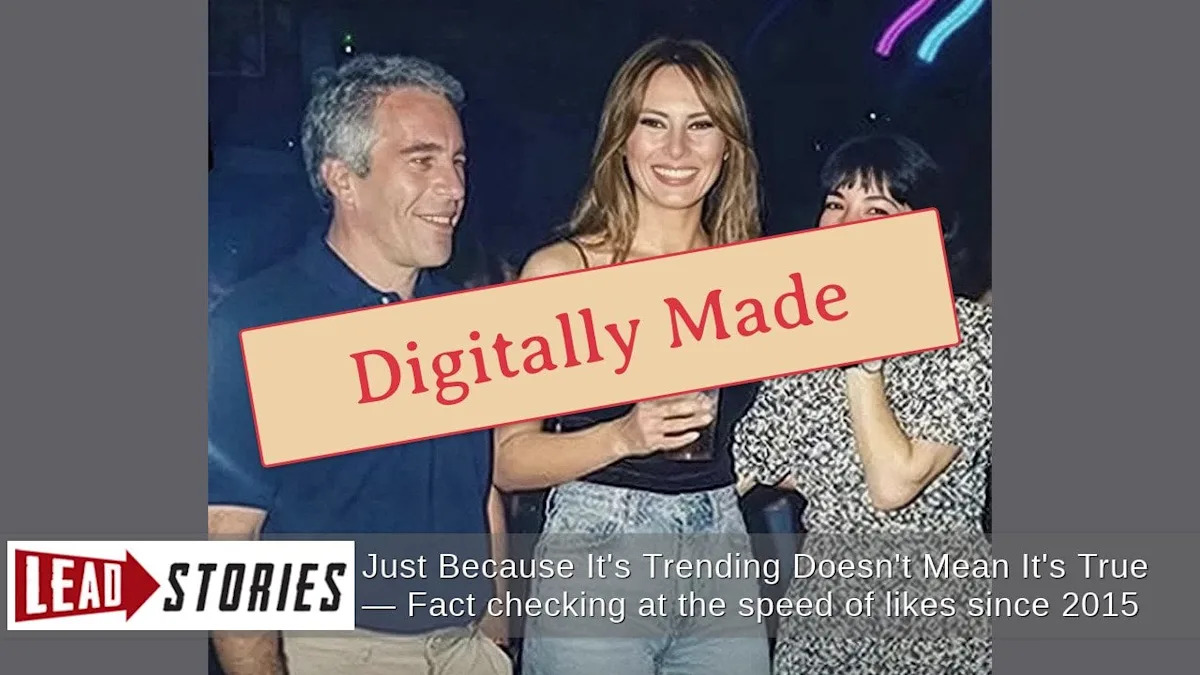
A viral social media post claiming to show former First Lady Melania Trump smiling alongside convicted sex offender Jeffrey Epstein and Ghislaine Maxwell has been identified as likely fabricated, according to multiple digital forensic analyses.
The image, shared on April 10, 2026, by X user @JohnEzeakolam, was accompanied by text stating: “The U.S. First Lady said she has no relationship with Jeffrey Epstein, but her picture with Epstein pops up from time to time.” The post appears designed to suggest an undisclosed relationship between Melania Trump and Epstein, who died in prison in 2019 while awaiting trial on sex trafficking charges.
This isn’t the first instance of manipulated images attempting to establish a connection between the former First Lady and Epstein. Previous fact checks have debunked similar fabricated photos circulating on social media platforms.
When subjected to scrutiny through multiple AI detection tools, the image showed strong indicators of digital manipulation. SightEngine, a leading digital image analysis platform, flagged the photo as 93 percent likely to be a “Deepfake,” detecting a 35 percent probability of AI generation and a 93 percent likelihood of face manipulation.
Even more definitively, ZeroGPT’s analysis determined the image was 97 percent likely to have been digitally edited, while AI or Not rated it as 80 percent likely to be AI-generated. Only Hive Moderation’s analysis diverged from the consensus, suggesting the image might be authentic—highlighting the still-evolving nature of digital forensic technologies.
Digital forensics experts caution that while AI detection tools provide valuable insights, they should not be considered infallible. The technology continues to evolve alongside the sophisticated methods used to create misleading imagery.
Attempts to verify the image’s authenticity through reverse image searches on Google Images and TinEye yielded only other social media posts featuring the same photograph, with no credible source material confirming its authenticity. This pattern is typical of fabricated images that originate and circulate exclusively within social media ecosystems.
The circulation of digitally altered images featuring public figures alongside controversial individuals has become increasingly common in today’s polarized media environment. Such images can quickly spread misinformation and contribute to conspiracy theories, particularly around high-profile figures connected to Epstein.
Jeffrey Epstein’s associations with numerous powerful and influential people have been the subject of legitimate investigative journalism. His relationship with Ghislaine Maxwell, who was convicted in 2021 for her role in facilitating Epstein’s abuse of minors, has been extensively documented through verified photographs, court records, and testimony.
However, the creation and distribution of fabricated images undermines legitimate reporting on these connections and complicates public understanding of actual relationships between Epstein and various public figures.
Social media platforms continue to grapple with the challenge of identifying and flagging potentially misleading content, particularly as AI-generated and digitally manipulated media becomes increasingly sophisticated and difficult to distinguish from authentic material.
Media literacy experts recommend that consumers approach viral images with skepticism, particularly those showing unexpected or provocative scenarios involving public figures, and seek verification from multiple credible sources before accepting their authenticity.
Fact Checker
Verify the accuracy of this article using The Disinformation Commission analysis and real-time sources.

18 Comments
This is a good example of why we should be skeptical of unverified claims and images, especially when they involve prominent individuals. Fact-checking is crucial to maintaining integrity.
Agreed. It’s concerning to see the proliferation of manipulated content online, and we all have a responsibility to be discerning consumers of information.
While the public’s interest in the connections of public figures is understandable, it’s important that we rely on verified information from credible sources. Fabricated images only serve to erode trust.
Absolutely. Fact-checking should be the standard, especially when it comes to sensitive topics and high-profile individuals. Spreading unverified content is counterproductive.
While I understand the interest in uncovering potential connections, spreading fabricated images is counterproductive and only serves to erode trust. Fact-based reporting is essential.
I agree, we need to be extremely careful about the information we consume and share, especially on sensitive topics. Fact-checking should be the priority.
It’s concerning to see these types of manipulated images gaining traction online. We must be vigilant in separating truth from fiction, especially around high-profile individuals.
Exactly, the proliferation of misinformation is a serious issue that undermines our ability to have informed discussions. Fact-checking is crucial.
While the public has a right to be curious about the connections of public figures, it’s important that we rely on verified information from credible sources. Fabricated images only undermine trust.
You’re right, we need to be very careful about the sources we trust and the information we spread, especially on sensitive topics. Fact-checking is essential.
What a shame that these kinds of fabricated images keep circulating online. It’s important to rely on reputable sources and fact-checking when it comes to sensitive political matters like this.
Absolutely, spreading disinformation is never helpful. Proper verification of media is crucial, especially around high-profile figures.
I’m glad this fabricated image has been identified and debunked. It’s crucial that we remain vigilant against the spread of misinformation, especially on sensitive political topics.
Absolutely. Fact-checking and relying on reputable sources should be the standard when it comes to high-profile figures and allegations.
This is a good reminder of the importance of verifying claims and images before sharing them, especially when they involve public figures. Spreading unverified content can be damaging.
Couldn’t agree more. We all have a responsibility to be discerning consumers of information and to avoid contributing to the spread of disinformation.
This highlights the need for greater digital literacy and critical thinking when evaluating online content. It’s troubling that these manipulated images can still gain traction.
You’re right, we should all be more vigilant about verifying claims and images before sharing them, especially around politically charged topics.