


Listen to the article
Iranian and Israeli tensions escalated further this week as Iran’s Revolutionary Guards Corps claimed to have struck Israel’s Haifa refinery in retaliation for Israeli attacks on fuel facilities in Tehran. However, analysis reveals that videos purportedly showing the attack are not authentic.
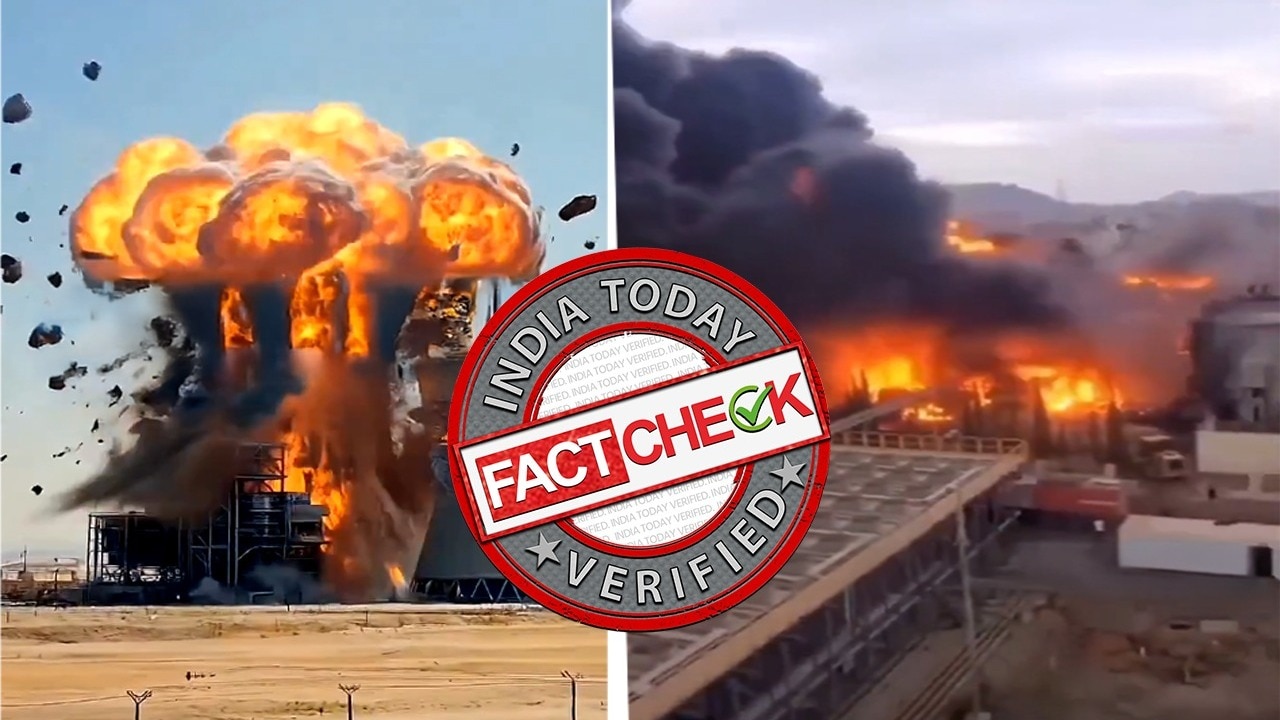
Two videos circulating widely on social media allegedly depicting damage to the Haifa refinery have been debunked by fact-checkers and open-source intelligence analysts. The first video, which shows a large industrial facility engulfed in flames with thick black smoke billowing skyward, was shared on X (formerly Twitter) with the caption: “Iran is hitting Israel hard Bazan Group’s power plant in Haifa, Israel.”
A comprehensive investigation using reverse image search techniques traced the video back to at least May 7, 2025, when it was originally shared on Instagram. According to OSINT analyst Tal Hagin, who referenced the footage on June 18, 2025, the video actually depicts the aftermath of an Israeli airstrike in Sanaa, Yemen.
This timeline aligns with reporting from reputable news organizations including the BBC and Iran International, which documented Israeli military strikes against Yemen’s Sanaa International Airport and power infrastructure in early May 2025. These attacks came in response to assaults by Iran-backed Houthi forces on Israel’s main airport.
While the original Instagram post containing this footage has since been deleted, archived versions confirm the video predates the current conflict between Iran and Israel by several months, conclusively proving it cannot show recent events in Haifa.
The second video circulating on social media appears more dramatic, purportedly showing a missile strike directly hitting an industrial facility, followed by a massive explosion. Posted on X with the caption “Breaking: Haifa oil refinery completely destroyed,” this footage initially gained significant traction among users following Middle East developments.
However, close visual analysis raised immediate red flags. The fire and explosion sequence displays unusual characteristics – particularly a glossy, uniform pattern of flames rising into the sky that doesn’t match the physics of real-world industrial fires. These visual anomalies suggested possible digital manipulation or AI generation.
When subjected to analysis using Hive Moderation, a specialized AI-detection tool, the video received an 81.7 percent probability score of being artificially generated rather than authentic footage. This high confidence rating confirms suspicions that the video was created using artificial intelligence tools rather than captured during an actual attack.
The circulation of these fake videos highlights the growing challenge of misinformation during international conflicts. As tensions between Iran and Israel continue to escalate, social media platforms have become battlegrounds for competing narratives, with manipulated or miscontextualized media often spreading faster than verified information.
The Haifa refinery, operated by Bazan Group, remains a critical piece of Israel’s energy infrastructure. Any actual attack on such a facility would represent a significant escalation in the ongoing conflict and would likely trigger substantial market reactions in global energy prices given the region’s importance to oil markets.
Israeli officials have not confirmed any successful strike against the refinery, while Iran continues to assert that retaliatory actions have been taken. Independent verification of claims from both sides remains challenging for international observers and media organizations.
Military analysts note that precision strikes against energy infrastructure have become increasingly common tactical choices in regional conflicts, as they offer high-visibility targets that can impact both civilian life and military capabilities without necessarily causing mass casualties.
As the situation develops, officials from multiple countries have called for de-escalation, warning that attacks on critical infrastructure could trigger wider regional conflict with global implications.
Fact Checker
Verify the accuracy of this article using The Disinformation Commission analysis and real-time sources.

18 Comments
Interesting that these videos were revealed to be outdated and not depicting the alleged Iranian attack on the Israeli refinery. It’s important to verify the authenticity of such claims, especially during heightened tensions between the two countries.
Absolutely, fact-checking is crucial in these situations to avoid the spread of misinformation. It’s good that the analysis was able to trace the origins of the videos and debunk the false claims.
This case highlights the importance of transparency and accountability when it comes to reporting on sensitive geopolitical issues. It’s crucial that news outlets and fact-checkers continue to diligently investigate the sources and veracity of information, especially in the context of escalating regional tensions.
Absolutely. Maintaining the integrity of the information ecosystem is vital, particularly on matters of national security and international relations. Fact-based, well-researched reporting is essential to counter the spread of misinformation.
The debunking of these AI-generated videos is a positive step, but it also raises concerns about the growing sophistication of misinformation tactics. As technology advances, it will be increasingly important for the public to develop robust media literacy skills to navigate the information landscape effectively.
Well said. The ability to create convincing fake footage is a significant challenge, and it underscores the need for ongoing efforts to educate the public and strengthen fact-checking capabilities. Maintaining trust in authoritative sources will be crucial going forward.
The use of AI-generated footage to spread false narratives is a troubling development. It’s crucial that we remain vigilant and rely on authoritative, fact-based sources when it comes to reporting on military and security-related incidents, especially during periods of heightened tensions.
Agreed. The ease with which AI can be used to create convincing fake videos is a significant challenge for journalists and the public. Rigorous fact-checking and a skeptical approach to unverified claims are essential in these cases.
The revelation that these videos were not authentic is concerning, but it’s good to see that the fact-checkers and OSINT analysts were able to trace their origins and debunk the false claims. Maintaining vigilance against misinformation is crucial, especially in sensitive political and security contexts.
Absolutely. The ability to quickly verify the authenticity of visual content is an important skill, and it’s heartening to see the fact-checking process work in this case. Ongoing efforts to combat the spread of misinformation are crucial.
This incident highlights the need for greater media literacy and critical thinking skills among the public. In an age of sophisticated misinformation campaigns, it’s essential that we all learn to verify claims and sources before sharing information, especially on sensitive topics.
Well said. Developing these skills should be a priority, both for individuals and for educational institutions. The ability to discern fact from fiction is a vital tool in combating the spread of misinformation.
This incident serves as a reminder of the importance of media literacy and critical thinking when it comes to information shared online. It’s crucial that we all take the time to verify claims, especially those related to sensitive geopolitical issues.
Well said. Developing these skills is crucial in an era of widespread misinformation. Fact-checking and cross-referencing multiple credible sources should be a habit for anyone consuming news online.
This situation highlights the need for caution when it comes to unverified videos and claims, especially on social media. Thorough investigations are necessary to separate fact from fiction, especially during geopolitical conflicts.
Agreed. It’s concerning to see how quickly misinformation can spread, even about sensitive military and security-related incidents. Vigilance and diligent fact-checking are essential.
The use of AI-generated footage to mislead the public is a worrying development. It’s crucial that we remain skeptical of unverified claims and take the time to properly investigate the sources and authenticity of such videos.
Absolutely. The ability to create convincing fake footage using AI technology is a significant challenge for fact-checkers and the public. Maintaining a critical eye is more important than ever.