


Listen to the article
European Parliament Vote Does Not Make Digital ID Mandatory, Despite Claims
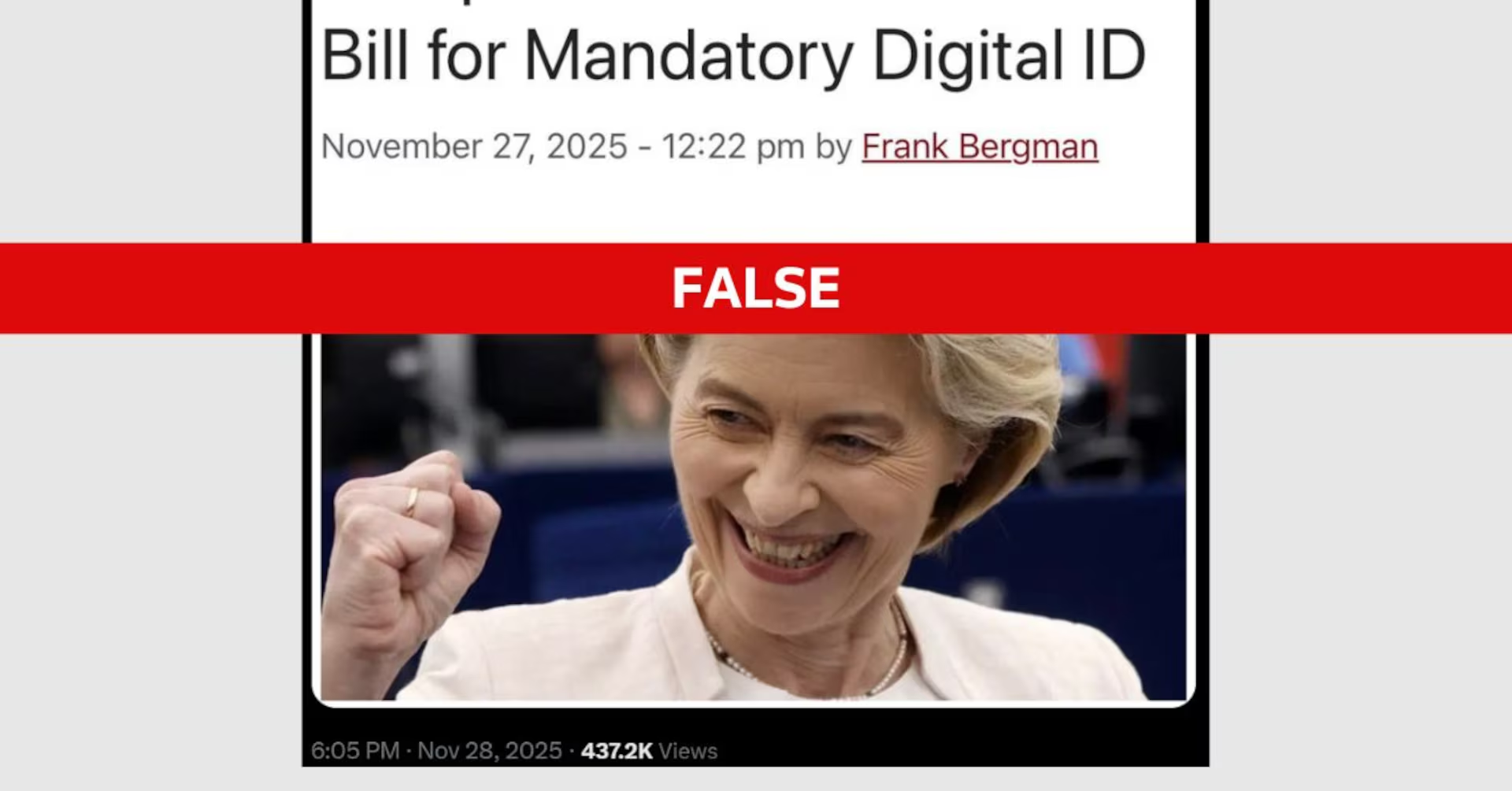
Social media posts claiming that the European Parliament passed legislation mandating digital identification for EU citizens are false, Reuters fact-checkers have confirmed. The misleading claims, which garnered hundreds of thousands of views online, stemmed from a misinterpretation of a November 26 parliamentary vote.
The vote in question was not legislation at all, but rather a non-binding resolution primarily focused on protecting children from online risks. While the resolution did mention digital identity tools, it did not create any new legal requirements for EU citizens.
According to the European Parliament press service, which responded to Reuters’ inquiries, the vote merely expressed support for ongoing European Commission initiatives, including the development of an EU age-verification application and the European digital identity wallet.
The European digital identity wallet is part of a broader EU regulation that came into force in April 2024, but its use remains entirely voluntary for citizens. Under this regulation, all EU member states must make digital wallets available by the end of 2026, but individuals are not required to use them.
“It will give full control to users in choosing what to share and keeping track of it,” a European Commission spokesperson told Reuters. “It will enable users to access online and offline public and private services, store and share digital documents, and create binding signatures.”
The digital wallet initiative reflects the EU’s broader efforts to modernize digital infrastructure while maintaining citizen privacy. The system is designed to give users control over their personal data, allowing them to selectively share verified information with service providers without disclosing unnecessary details.
This approach differs significantly from some other digital ID implementations around the world. For instance, Britain is introducing mandatory digital IDs for workers by 2029, representing a more comprehensive approach to digital identification requirements.
Several European countries, including Spain and Estonia, do require citizens to have national identification cards, but even in these cases, digital versions of these documents remain optional. This highlights the varying approaches to digital identity across Europe, with the EU-wide approach emphasizing voluntary adoption.
The confusion surrounding the parliamentary vote illustrates the challenges of communicating complex policy issues in the digital age. Misleading headlines and social media posts can quickly spread misconceptions about government initiatives, particularly when they involve technology and personal data.
Digital identity systems continue to spark debate globally, with advocates pointing to benefits like streamlined services, reduced fraud, and enhanced security. Critics, however, often raise concerns about privacy, surveillance, and the potential for excluding those without digital access or skills.
As the 2026 implementation deadline approaches, EU officials will likely increase public communication efforts to clarify the voluntary nature of the digital wallet and address misconceptions about its purpose and requirements.
The European Parliament’s actual focus in its November resolution was primarily on protecting children online, addressing risks related to mental health, physical wellbeing, and exposure to inappropriate content. The digital identity elements mentioned in the resolution were presented as potential tools to help verify age and protect privacy in online environments, rather than as mandatory requirements for all citizens.
Fact Checker
Verify the accuracy of this article using The Disinformation Commission analysis and real-time sources.

17 Comments
While digital identity is an important area, it’s critical that any initiatives remain voluntary and not mandated. Good to see that nuance.
Agreed, preserving individual choice is crucial when it comes to emerging digital identity technologies.
Informative to see the details on the EU’s approach to digital identity. Balanced reporting is key on these complex topics.
This fact check provides a helpful reality check on the digital ID claims. Glad to see the truth being laid out clearly.
Interesting to see the details on the voluntary nature of the EU digital identity wallet. Good to know the facts.
Absolutely, transparency around the optional nature of these digital identity tools is key for public trust.
So the EU resolution was just expressing support, not creating any new legal obligations. That helps clarify the situation.
Yes, the distinction between a non-binding resolution and actual legislation is an important one to understand here.
The distinction between a non-binding resolution and actual legislation is an important one. Appreciate the clarification.
Yes, getting the facts straight is crucial, especially on sensitive issues like digital identity requirements.
This is a complex issue with a lot of nuance. Glad to see the report diving into the details and providing a balanced perspective.
Agreed, these kinds of fact checks are valuable in cutting through the noise and getting to the truth of the matter.
Digital identity is an important but sensitive topic. Good to see the EU taking a measured approach and not rushing into any mandatory requirements.
Nice to see a detailed, well-researched fact check on this topic. Helps cut through the noise and misinformation.
Appreciate the effort to correct the misleading claims around this issue. Responsible reporting is crucial on topics like this.
Interesting to see the facts around this digital ID claim. Seems like there’s a lot of misinformation going around, good to have a factual clarification.
Yes, it’s important to separate fact from fiction, especially on important topics like digital identity. Appreciate the thorough debunking.