


Listen to the article
Reports of Ugandan President’s Threats Against U.S. Found to be Misleading
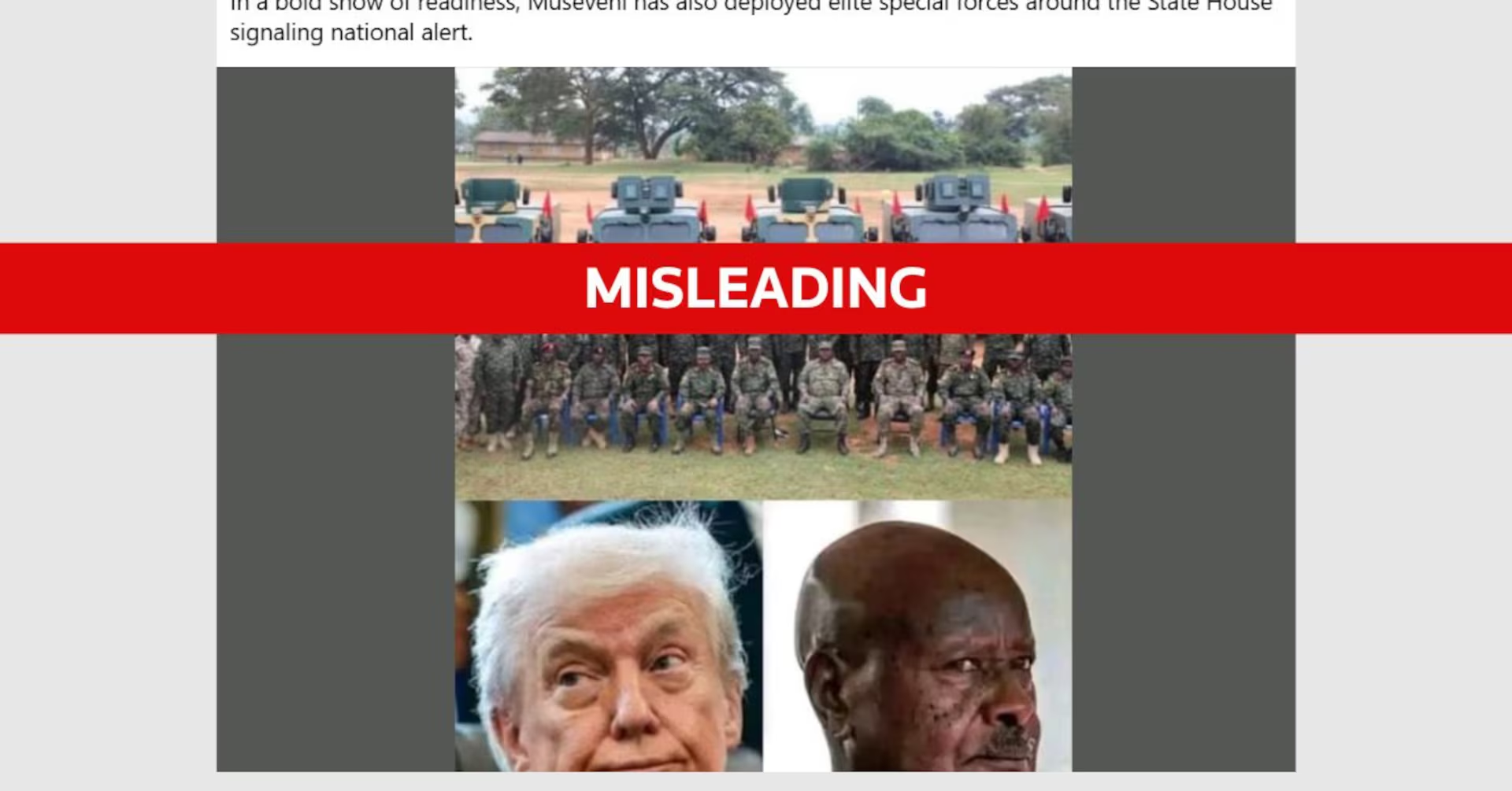
Claims circulating on social media that Ugandan President Yoweri Museveni threatened to shoot down American aircraft have been debunked by a Reuters fact-check investigation. The allegations, which spread across Facebook on January 4, suggested Museveni had issued explicit warnings to the United States following its military operation in Venezuela.
These social media posts claimed the Ugandan leader had stated that any U.S. military aircraft entering Ugandan airspace without proper clearance would be shot down. They further alleged Museveni warned that Uganda was “fully capable of inflicting serious damage in a ground war if provoked.” These statements were purportedly made in reaction to U.S. troops capturing Venezuelan President Nicolas Maduro in a raid on Caracas.
However, a thorough investigation by Reuters found no public record of Museveni making such explicit threats against the United States on either January 3 or 4. The claims appear to misrepresent comments the Ugandan president actually made during a youth event on January 4.
During this livestreamed event, Museveni was asked by audience members about what could be learned from the U.S. operation in Venezuela. In response, he stated that he was “still studying” the situation. Rather than issuing threats, Museveni’s actual comments focused on general discussions about strategic security in Africa and comparing military capabilities.
The Ugandan president did analyze what he perceived as gaps in Venezuela’s defenses compared to the multidimensional capabilities of the United States, which operates effectively at sea, in the air, and in space. He observed that countries with diverse military capabilities have advantages over those with only land-based forces.
While discussing military operations, Museveni did make a general statement that land operations are “very risky, also for the Americans,” adding, “Because even me, who has got a short range, I can harm you.” However, this statement was part of a broader strategic analysis rather than a specific threat directed at the United States.
Museveni also expressed interest in developing air, sea, and space capabilities through East African alliances, reflecting his ambition to strengthen Uganda’s strategic position in the region.
When contacted by Reuters, Uganda’s State House did not provide any response to inquiries about the social media claims. The U.S. Embassy in Kampala, however, confirmed via email that it had “received no official communication from the government of Uganda on this matter,” further undermining the credibility of the claims.
The misrepresentation of Museveni’s comments comes at a time of heightened international tensions following the U.S. military operation in Venezuela. The incident demonstrates how political statements can be taken out of context and amplified through social media, potentially exacerbating diplomatic sensitivities between nations.
This case highlights the importance of verifying information before sharing it, particularly when it involves statements attributed to world leaders that could impact international relations. Reuters’ fact-checking team regularly investigates such claims to ensure accurate reporting on global affairs.
The misleading nature of these social media posts underscores broader concerns about the spread of misinformation in international politics, where false narratives about diplomatic threats can potentially escalate tensions or create misunderstandings between nations.
Fact Checker
Verify the accuracy of this article using The Disinformation Commission analysis and real-time sources.

8 Comments
While the president’s actual comments may have been more nuanced, the exaggerated social media posts still raise concerns about the relationship between Uganda and the U.S. I wonder what the underlying tensions are there.
That’s a good point. Even if the specific threat was fabricated, there are likely some real diplomatic tensions at play that are worth exploring further.
It’s disappointing to see these kinds of inflammatory claims gaining traction online, but I’m glad the facts were able to be verified. Responsible reporting and fact-checking are so important these days.
While the Ugandan president’s actual comments may have been more nuanced, the exaggerated social media posts still raise interesting questions about the relationship between Uganda and the U.S. Worth digging deeper into the underlying dynamics there.
Agreed, the broader geopolitical context is likely more complex than the misleading social media claims suggest. Fact-checking is crucial, but understanding the bigger picture is also important.
This seems like another case of misinformation spreading quickly on social media. Fact-checking is crucial to counter these false narratives, even around geopolitical issues. Good on Reuters for investigating the claims thoroughly.
Interesting fact check. Glad to see the claims about Uganda’s president threatening the U.S. were found to be misleading. It’s important to verify such sensitive political statements before spreading them.
This highlights the need for caution when it comes to politically-charged social media posts, especially around international affairs. Good on Reuters for taking the time to investigate the details.