


Listen to the article
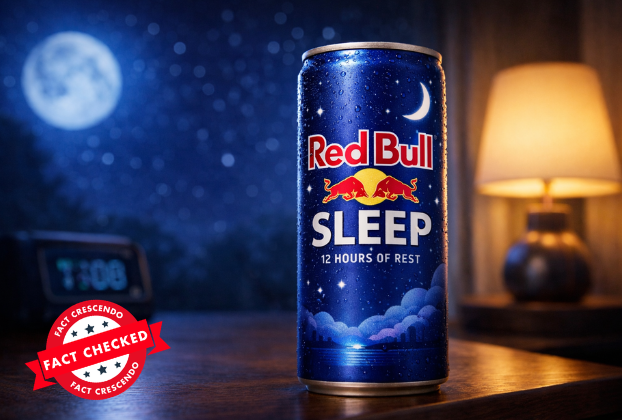
The social media rumor mill has been buzzing with claims that energy drink giant Red Bull is pivoting in a surprising new direction – developing a sleep aid promising 12 hours of uninterrupted rest. But an investigation reveals this viral story appears to be nothing more than an elaborate hoax.
The claim gained significant traction through Instagram and Facebook posts featuring realistic-looking product mockups labeled “Red Bull Sleep.” These posts, which have been shared thousands of times, suggest the energy drink manufacturer is developing a formula that would “guarantee” 12 hours of continuous sleep – a complete departure from the brand’s core identity as a caffeine-based energy stimulant.
Despite the attention these claims have received, Red Bull has made no official announcement about any sleep-focused beverages on its corporate website, social media channels, or through press releases. When contacted for clarification, the company did not respond to requests for comment by publication time.
Industry analysts note that such a dramatic product pivot would represent a fundamental shift in Red Bull’s brand positioning. The Austrian company, which sold 11.6 billion cans worldwide last year, has built its entire marketing strategy around providing energy and “giving wings” to consumers.
“This would be like McDonald’s suddenly announcing they’re going vegan,” explained consumer products analyst Maria Donovan. “While product diversification happens, completely contradicting your core brand proposition without significant strategic preparation would be highly unusual in the beverage industry.”
Beyond brand considerations, the scientific claims embedded in the viral posts raise significant red flags. Sleep science doesn’t support the notion of perfectly uninterrupted 12-hour sleep blocks, which aren’t typical even in clinical settings. Most sleep research indicates that healthy adults naturally sleep between 7-9 hours with normal brief awakenings throughout the night.
Regulatory constraints also make such claims problematic. In the European Union, health claims are strictly regulated under EU No 432/2012, with permitted sleep-related statements limited to specific ingredients like melatonin at precise dosages. Even then, approved claims focus narrowly on “reduction in time taken to fall asleep” rather than guaranteed sleep duration.
Similarly, FDA regulations in the United States typically only permit general “structure/function” statements such as “supports sleep” and would likely prohibit specific outcome guarantees like “12 hours of uninterrupted sleep” without substantial clinical evidence.
The beverage sleep aid market has grown considerably in recent years, with products like Som Sleep, Neuro Sleep, and Driftwell (PepsiCo’s sleep-focused drink) gaining traction. However, even these established products make relatively modest claims about their sleep-supporting properties.
Some confusion may stem from actual developments adjacent to Red Bull. Hans Vriens, a former Red Bull executive, independently launched a herbal sleep drink called “Snoooze” in 2019 containing ingredients like passion flower and lemon balm. This product, however, has no connection to Red Bull’s corporate operations or product pipeline.
Red Bull’s current product portfolio remains firmly anchored in its energy-focused offerings, with innovations primarily limited to sugar-free variants, flavored editions, and organic soft drinks – all still aligned with the company’s core energy positioning.
Social media hoaxes concerning major brands are increasingly common, with fabricated product announcements often spreading rapidly before fact-checking can catch up. In recent years, similar false claims have circulated about other major brands supposedly launching products contradicting their core offerings.
Until verified information appears through Red Bull’s official channels, consumers should treat this “sleep drink” claim with skepticism. For those genuinely seeking sleep support, consulting healthcare providers about evidence-based options remains the most reliable approach.
Fact Checker
Verify the accuracy of this article using The Disinformation Commission analysis and real-time sources.

5 Comments
Interesting idea, but I doubt Red Bull is really developing a sleep-inducing beverage. That would be a huge departure from their core business and brand identity. Without official confirmation from the company, I’m not convinced this story is accurate.
If Red Bull did come out with a sleep aid, that would be a surprising move. Their whole identity is centered around providing an energy boost, not helping people sleep. I wonder what the business rationale would be behind such a major brand pivot?
This story about a supposed Red Bull sleep drink sounds like an elaborate hoax to me. The company hasn’t made any announcements, and it just doesn’t align with their brand and product offerings. Probably best to take this with a big grain of salt until we see real evidence.
Interesting, but I’m skeptical of these claims about a sleep-inducing Red Bull product. That seems completely out of character for the brand and their core focus on energy drinks. I’d need to see official confirmation from the company before believing this.
Hmm, I’m skeptical of the claims around a Red Bull sleep aid. That seems highly unlikely given their focus on energy drinks. Unless the company confirms this directly, I’m inclined to think this is just an internet rumor that lacks credibility.