


Listen to the article
False Claims of “Operation Iron North” Cartel Arrests Circulate Online, Highlighting Growing AI Misinformation Problem
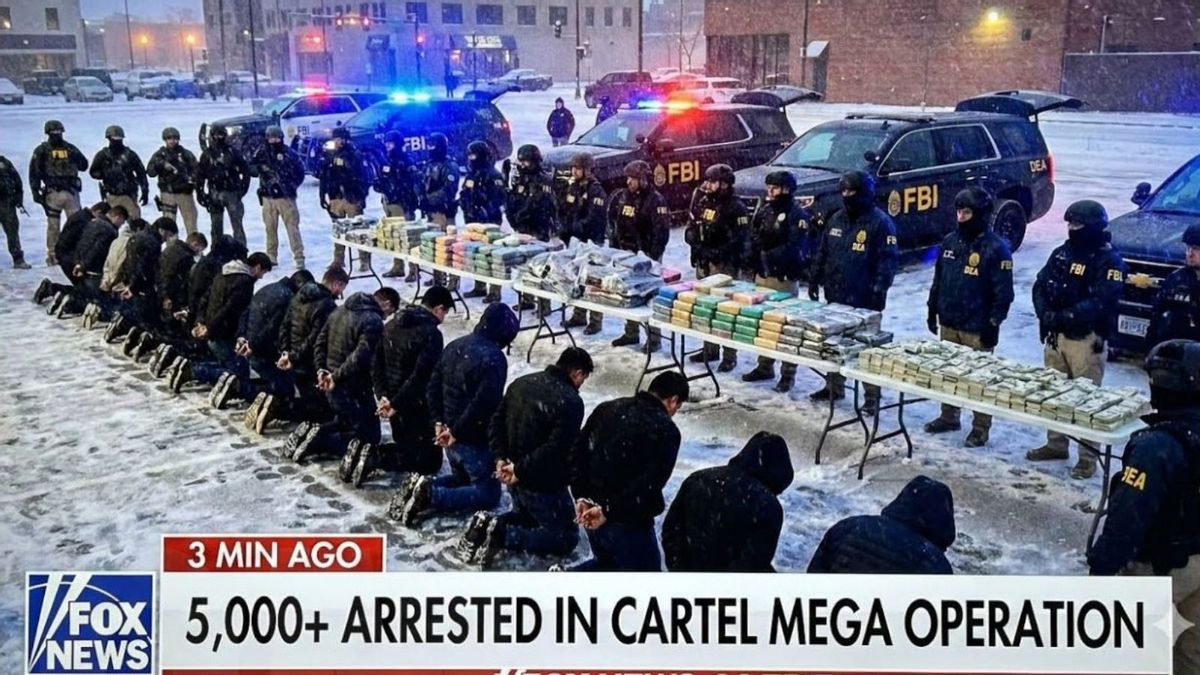
Claims that federal authorities arrested more than 5,000 cartel members in Minneapolis as part of an operation called “Operation Iron North” have been debunked as completely fabricated. The viral misinformation, which spread across social media platforms in January 2026, falsely stated that Immigration and Customs Enforcement (ICE), the Drug Enforcement Administration (DEA), and the FBI had conducted a massive coordinated operation targeting cartel members in the Minnesota city.
Extensive searches across major search engines including Google, Bing, Yahoo, and DuckDuckGo revealed no credible news outlets reporting such an operation. No press releases or statements from the cited federal agencies mentioned any such campaign, further confirming the fictional nature of the claims.
Digital misinformation experts identified the content as a sophisticated example of what has become commonly known as “AI slop” – artificially generated content designed to appear credible while containing completely fabricated information. This growing category of online misinformation is typically created using AI tools that can generate realistic-sounding but entirely fictional narratives.
The false narrative appears to have originated from a YouTube video posted on January 12, though the post was incomplete in the original report. Analysis of the content using multiple AI detection tools including Copyleaks, ZeroGPT, and Google’s SynthID Detector indicated a high probability that artificial intelligence was used to generate the fictitious operation details.
Law enforcement and cybersecurity specialists have expressed growing concern about the proliferation of such fabricated content, which often targets highly charged political topics like immigration and drug enforcement. These false narratives can spread rapidly through social media channels before fact-checking organizations have time to respond.
“This type of misinformation is particularly dangerous because it undermines public trust in legitimate law enforcement operations,” said a cybersecurity researcher who specializes in digital misinformation. “When real operations do occur, the public may question their legitimacy due to the prevalence of these fabricated stories.”
The timing of this false narrative coincides with several genuine high-profile cases involving drug cartels in the United States. In late July 2024, one of drug kingpin Joaquín “El Chapo” Guzmán’s sons pleaded not guilty to drug trafficking charges in Chicago, according to legitimate reports from The Associated Press. Experts suggest creators of misinformation often piggyback on real news events to lend credibility to their fabricated stories.
The financial motivation behind such content is often straightforward: driving web traffic to generate advertising revenue. Sites that publish sensational, albeit false, claims can attract significant numbers of visitors, translating directly into profit regardless of the content’s veracity.
Social media platforms and search engines have implemented various measures to combat the spread of AI-generated misinformation, but the technology to create convincing fake content continues to advance rapidly, often outpacing detection capabilities.
Digital literacy experts recommend that consumers verify information through multiple credible sources before sharing content about major events, particularly those with political implications. Red flags include stories that appear only on obscure websites, lack specific details about the people involved, or cannot be verified by established news organizations.
The “Operation Iron North” hoax serves as a reminder of the growing challenge posed by AI-generated misinformation in the digital media landscape and highlights the importance of critical media consumption in an era where artificial intelligence can be weaponized to spread false information for financial or political gain.
Fact Checker
Verify the accuracy of this article using The Disinformation Commission analysis and real-time sources.

14 Comments
It’s unfortunate to see such blatantly false information spreading, especially around sensitive law enforcement matters. We should be extremely cautious about claims that lack credible evidence from official sources. Fact-checking is essential to combat the growing challenge of online misinformation.
I agree completely. In the digital age, we all have a responsibility to be discerning consumers of information. Spreading unverified claims, even inadvertently, can do real harm. Maintaining a healthy skepticism and relying on authoritative sources is crucial.
Disappointing to see such blatantly false claims gaining traction online. It’s a stark reminder of the importance of critical thinking and fact-checking, especially when it comes to sensitive issues like law enforcement operations. We must all do our part to combat the spread of misinformation.
It’s concerning to see how easily misinformation can spread, especially around sensitive topics like law enforcement operations. We must all be more diligent in verifying claims before sharing them, to avoid perpetuating falsehoods that can undermine public trust.
Completely fabricated claims like these highlight the importance of critical thinking and fact-checking in the age of social media. It’s disturbing to see how easily misinformation can spread, undermining public trust. We must all be more vigilant in verifying information before sharing it.
This is a sobering reminder of the growing problem of online misinformation. Fabricated claims like these can have real-world consequences, sowing confusion and eroding trust in institutions. We must all be more vigilant in fact-checking and relying on authoritative sources.
I agree completely. In the digital age, we have a collective responsibility to be discerning consumers of information. Spreading unverified claims, even inadvertently, can do real harm. Maintaining a healthy skepticism and prioritizing accurate, verified information is crucial.
This is a good reminder of the dangers of uncritically sharing information online. Fabricated claims like these can have real-world consequences, sowing confusion and eroding trust in institutions. We must all be more vigilant in verifying the accuracy of content before amplifying it.
Disappointing, but not surprising, to see such blatantly false claims gaining traction online. Combating the spread of misinformation is an ongoing challenge, and we all have a role to play in promoting the dissemination of accurate, verified information.
Absolutely. Fact-checking and reliance on authoritative sources are essential in this digital era, where false narratives can gain momentum quickly. We must remain vigilant and resist the urge to share unsubstantiated claims, no matter how compelling they may seem.
It’s concerning to see how easily disinformation can spread, especially around sensitive topics like law enforcement operations. We should be wary of unverified claims, no matter how convincing they may seem. Fact-checking is crucial to combat the growing problem of online misinformation.
Absolutely. In the age of social media, it’s more important than ever to critically evaluate information before accepting it as true. Diligent fact-checking and reliance on authoritative sources are essential to maintaining an informed and discerning public.
Disappointing to see such fabricated claims spreading online. It’s important to rely on official sources and verified information, especially when it comes to law enforcement actions. Misinformation like this can sow confusion and undermine public trust.
Agreed. With the rise of AI-generated content, we all need to be more vigilant about fact-checking claims before sharing them. Spreading false information, even unintentionally, can have serious consequences.