


Listen to the article
Pentagon Announcement on Qatari Air Force Facility in Idaho Sparks Confusion and Political Backlash
A Pentagon announcement regarding a Qatari military presence in Idaho has ignited a political firestorm and widespread confusion across party lines. During a joint press conference on Friday, U.S. Secretary of Defense Pete Hegseth stated that the U.S. had signed “a letter of acceptance to build a Qatari Emiri Air Force Facility at the Mountain Home Air Base in Idaho.”
The announcement, also confirmed by Qatari Minister of Defense Sheikh Saoud bin Abdulrahman Al Thani, immediately triggered bipartisan reactions. Democrats accused the Trump administration of hypocrisy, while Republicans appeared divided – some defending the decision while others expressed alarm over what they characterized as a Muslim nation establishing a foothold on American soil.
Hours after the initial announcement, Hegseth walked back his statement on social media, writing, “To be clear, Qatar will not have their own base in the United States – nor anything like a base.” The clarification, however, left many questions unanswered about who would fund the construction of hangars, training facilities, maintenance infrastructure, and housing at Mountain Home.
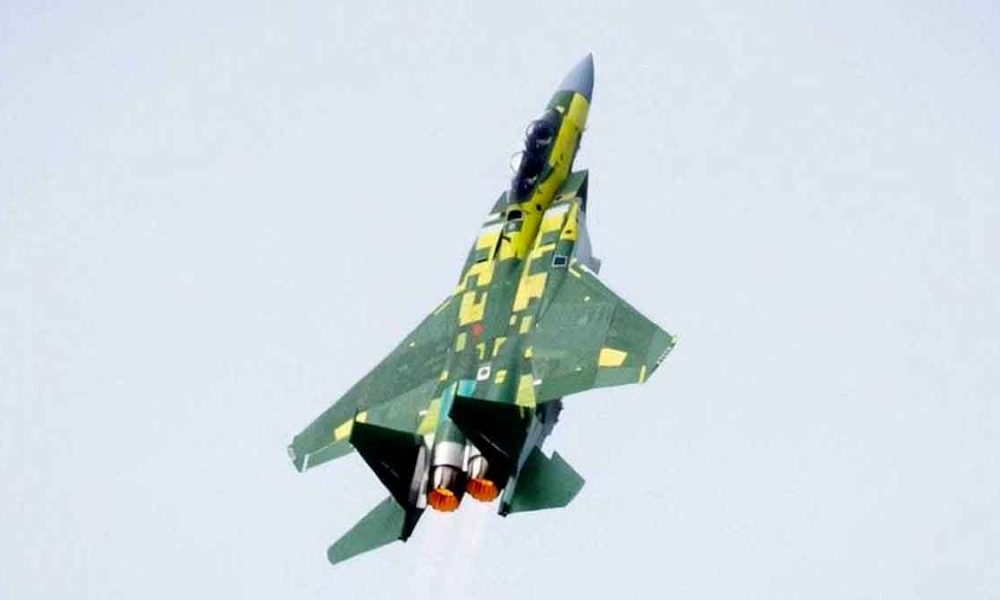
The arrangement is intended to support training for Qatari pilots operating F-15QA Eagle multirole strike fighters. Qatar committed to purchasing 36 of these aircraft in 2017, with options for 36 more.
Foreign military training on U.S. soil is not unprecedented. For decades, the United States has hosted numerous foreign military contingents for training purposes. Singapore, Germany, and the United Kingdom maintain semi-permanent presences for pilot training and joint operations. More recently, Ukrainian forces have trained on Patriot air defense systems in Oklahoma and F-16 aircraft in Texas and Arizona.
Singapore’s presence at Mountain Home Air Force Base became a focal point in the debate. Since 2009, Singapore’s 428th Fighter Squadron has operated from the Idaho base, primarily because the small nation lacks sufficient airspace for training exercises. However, misinformation quickly spread regarding how Singapore’s facilities were funded.
Some social media users claimed that Qatar’s arrangement mirrored Singapore’s, suggesting Qatar would either fund its own facilities or use existing infrastructure. Public records contradict these claims. Singapore’s presence at Mountain Home followed military cooperation agreements dating back to 1988. In 2007, the Department of Defense authorized a $60 million contract to construct facilities for Singapore’s F-15s, not the Singapore government itself.
The plan for Qatar’s training facility isn’t new. It was initially announced in 2017 as part of a $12 billion arms deal that included the F-15 purchase. Construction was originally scheduled to begin in 2022 but faced delays due to the COVID-19 pandemic. Further attempts to begin construction in 2023 stalled when Congress refused to allocate the necessary funding in the National Defense Authorization Act.
The U.S.-Qatar relationship is multifaceted and complex. Al Udeid Air Base in Qatar hosts approximately 8,000 U.S. service members and serves as the forward headquarters for U.S. Central Command in the Middle East. Qatar has played a crucial diplomatic role in various Middle Eastern negotiations, as well as in talks between the U.S. and Afghanistan, and Russia and Ukraine.
However, Qatar has also faced criticism for providing safe haven to Hamas leadership and allegations of funding the Muslim Brotherhood and Taliban, which has complicated the bilateral relationship.
Recent connections between Qatar and the Trump administration have drawn additional scrutiny. In July, Qatar donated a $400 million Boeing 747-200 reportedly destined to serve as Air Force One. Current U.S. Attorney General Pam Bondi previously worked as a registered lobbyist for Qatar, earning $115,000 monthly in 2020. FBI Director Kash Patel’s former consulting firm listed the Qatari government among its clients. Additionally, the Trump family business signed a deal in April to develop a $5.5 billion luxury golf resort in Qatar with Qatari Diar, a state-owned enterprise.
As details continue to emerge, the controversy highlights both the complex nature of U.S. military partnerships abroad and the charged political environment surrounding foreign policy decisions in the current administration.
Fact Checker
Verify the accuracy of this article using The Disinformation Commission analysis and real-time sources.

16 Comments
This story underscores the importance of verifying information, particularly on sensitive national security matters. The initial announcement caused significant confusion, and the subsequent clarification by the Pentagon highlights the need for caution and clear communication.
Well said. Misinformation and knee-jerk reactions can quickly escalate, especially on geopolitical issues. Fact-checking and nuanced analysis are essential to ensure an informed public dialogue on these complex topics.
This story highlights the importance of verifying information, especially when it comes to national security and defense matters. The initial announcement clearly caused significant confusion, and the Pentagon’s subsequent clarification shows the need for caution and careful communication.
Well said. Misinformation and knee-jerk reactions can quickly spiral out of control, especially on sensitive geopolitical issues. Fact-checking and nuanced analysis are crucial in these situations.
As someone with an interest in uranium and other critical minerals, I’ll be watching this story closely. Any military cooperation or infrastructure investments related to Qatar could have implications for the US domestic supply of strategic resources. The details matter.
Good point. The potential national security and economic impacts of this arrangement extend beyond just the military aspects. The mining and energy sectors could be affected, so transparency around the full scope of the plans is essential.
As a mining and energy investor, I’m curious to see if this potential Qatari presence could impact the local economy or industries in Idaho. Any infrastructure investments or military cooperation could have ripple effects on the region’s extractive sectors.
That’s an interesting angle. The economic implications are worth exploring, beyond just the national security concerns. The local business community may have insights on how this could affect mining, energy, and related industries in Idaho.
This issue seems to have triggered a partisan backlash, which is unfortunate. I hope politicians on both sides can take a step back and focus on the facts rather than playing political games. The national security implications deserve a measured, bipartisan discussion.
Well said. Knee-jerk political reactions often obscure the nuances of these types of arrangements. Objective analysis from security experts would be helpful to understand the potential risks and benefits.
Interesting news about the potential Qatari military presence in Idaho. While the initial announcement caused confusion, it’s good to see the Pentagon clarifying that there won’t be a full-fledged Qatari base. The logistics and financing behind any joint facilities will be worth tracking.
Agreed, the details around this arrangement need to be more transparent. Establishing a foreign military presence on US soil, even in a limited capacity, raises some valid concerns that should be addressed.
While the initial announcement was confusing, I’m glad the Pentagon has clarified that there won’t be a full Qatari military base in Idaho. However, the details around any joint facilities and financing still need to be made public. Maintaining trust and accountability should be the top priority.
Agreed. Transparency and open dialogue are key, especially when it comes to military cooperation with foreign nations on US soil. The public deserves a clear and comprehensive understanding of the plans and their potential implications.
While the initial announcement was confusing, I’m glad the Pentagon clarified that there won’t be a full Qatari base. However, the details around the joint facilities and financing still need to be made transparent. Oversight and public scrutiny will be important.
Absolutely. Transparency and accountability should be the top priorities here. Any agreements with foreign militaries on US soil deserve rigorous review and public discussion, regardless of political affiliations.