


Listen to the article
In a digital evolution that began with catching virtual creatures, Pokémon Go is now contributing to the development of sophisticated mapping technologies with real-world applications in robotics and autonomous delivery systems.
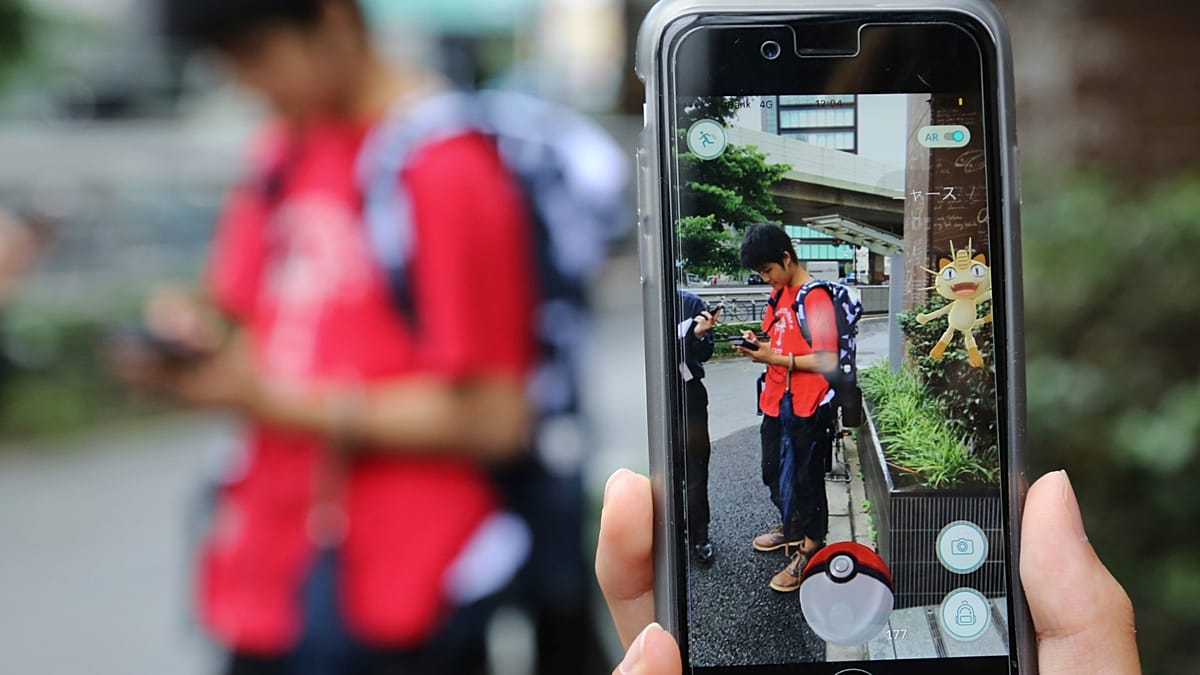
Since its 2016 launch, Pokémon Go transformed urban environments across Europe and globally into augmented reality playgrounds where millions hunted virtual Pokémon like Pikachu and Dragonite. The game maintains impressive popularity today, with over 100 million active players in 2024, according to Scopely, the parent company of game developer Niantic.
Recent reports from MIT Technology Review revealed that Niantic’s AI division, Niantic Spatial, has been using images collected through gameplay to train systems designed to create detailed 3D maps of real-world environments. This disclosure sparked concern on social media, with some posts generating millions of views claiming players unwittingly capture visual data during casual gameplay that would later power delivery robot navigation systems.
However, investigation reveals the data collection process is more transparent and deliberate than these viral claims suggest.
Contrary to allegations of covert data collection, Pokémon Go’s augmented reality mapping features were introduced in 2020, four years after the game’s initial release. The feature is neither automatic nor available to casual players. Users must reach level 20 in the game to unlock AR mapping capabilities, and even then, they must actively choose to engage with the scanning function.
When using this feature, players receive explicit notifications about data sharing. The Cube, Euronews’ fact-checking team, tested the application and confirmed that when pointing a smartphone camera at landmarks like statues in Brussels’ Parc du Cinquantenaire, users receive clear messages explaining that they are contributing to augmented reality mapping technology and that their data will be shared with third-party services.
Niantic told The Cube that player participation in these mapping activities is “entirely optional,” requiring deliberate selection and scanning of specific landmarks. The company’s Terms of Service explicitly outline this process under “Rights Granted by You – AR Content,” stating that by choosing to use the AR scanning feature, users grant Niantic non-exclusive rights to utilize collected images to enhance its services.
The scale of Niantic’s data collection is substantial. The company reports having trained more than 50 million neural networks based on approximately 30 billion images. This massive dataset has enabled the development of a Visual Positioning System (VPS) that delivers “precise, vision-based positioning and orientation anywhere in the world, including places where GPS is unavailable or unreliable.”
Niantic Spatial doesn’t rely exclusively on Pokémon Go data. The company also incorporates spatial information from diverse sources, including robots, drones, and satellites, to build its comprehensive 3D world model.
The gaming company’s mapping technology is now finding practical applications beyond entertainment. In March 2024, Niantic announced a partnership with Coco Robotics, an urban robot delivery platform operating in cities including Los Angeles, Chicago, Jersey City, Miami, and Helsinki. Since 2018, Coco has partnered with DashMart to deliver groceries, electronics, and prepared meals.
The collaboration aims to overcome traditional limitations of GPS-based navigation in dense urban environments. By integrating Niantic’s spatial mapping and VPS into autonomous delivery robots, Coco Robotics expects to navigate complex city landscapes with greater precision when delivering items directly to customers.
This evolution from gaming application to serious technological infrastructure highlights how consumer entertainment platforms can generate valuable data for advancing emerging technologies, provided appropriate consent mechanisms are in place.
Fact Checker
Verify the accuracy of this article using The Disinformation Commission analysis and real-time sources.

10 Comments
This is a complex issue with valid concerns around data privacy, but the article seems to indicate the process is more transparent than the viral claims suggest. I’ll have to read more to form a full opinion.
Agreed, it’s important to look at the facts rather than jumping to conclusions. Responsible data usage in emerging tech is an important topic to follow.
This is a good example of how consumer technology can enable unexpected technological advancements. I’m curious to learn more about the specific data collection and usage practices involved.
Agreed, the potential applications are fascinating. Transparency from the company on the data usage will be key to addressing any privacy concerns.
As someone interested in AI and emerging tech, I find this intersection of mobile gaming and real-world mapping quite intriguing. The article provides a helpful perspective on the realities versus the viral claims.
Pokémon GO has been a cultural phenomenon, and it’s interesting to see how the gameplay data could be leveraged for technological advancements. The article raises important points about transparency and responsible data practices.
Exactly. While the potential applications are exciting, protecting user privacy should be a top priority. Careful oversight and clear communication will be crucial.
Interesting, I wasn’t aware of the connection between Pokémon GO and AI mapping tech. It makes sense that the game’s visual data could have real-world applications, though transparency around data usage is important.
You raise a good point. As long as users are clearly informed about how their gameplay data may be utilized, it’s less concerning. Responsible data practices are key.
It’s interesting to see how mobile gaming data could have real-world applications in areas like robotics and mapping. While privacy is a valid concern, the article suggests the process is more deliberate than some reports imply.