


Listen to the article
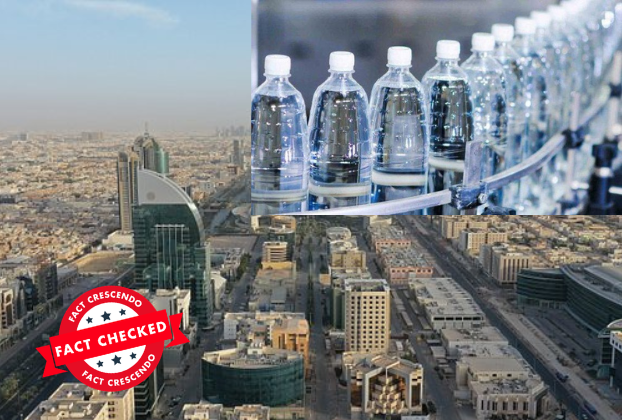
Recent claims suggesting that Sri Lanka is preparing to export water to Saudi Arabia amid a supposed water crisis have been debunked following a comprehensive investigation by fact-checkers.
The rumors, which gained traction across social media platforms, asserted that Saudi Arabia faced severe water shortages and was looking to Sri Lanka’s Sinharaja and Nakkalasa regions as potential water sources. One widely shared post claimed, “Everything is ready to export clean water from Sri Lanka to Saudi Arabia…a monthly income of $25 million for our country.”
These claims emerged against the backdrop of regional tensions in the Middle East. Since March 28, Iran has launched missile and drone attacks targeting energy infrastructure, military installations, and civilian areas in Saudi Arabia and neighboring Gulf countries. While international media reported concerns about potential water crises in the region due to these hostilities, particularly regarding the vulnerability of desalination plants to attack, there have been no confirmed direct strikes on Saudi Arabian water treatment facilities.
There have been attacks affecting desalination plants in other parts of the region, however. On March 7 and 8, facilities in Iran and Bahrain were targeted, with Iranian Foreign Minister Abbas Araghchi accusing the United States of attacking an Iranian desalination plant. Bahrain reported that an Iranian drone struck one of its power plants, disrupting water supply to approximately thirty villages. Kuwait and the United Arab Emirates also experienced missile-related damage to their desalination infrastructure during recent conflicts.
When investigating the claims about Sri Lanka’s purported water export plans, fact-checkers found no corroborating reports in mainstream media outlets in Sri Lanka, Saudi Arabia, or international publications. Officials from relevant Sri Lankan government bodies also denied any such arrangements.
S.N.M. Sakif, media secretary to Foreign Affairs Minister Vijitha Herath, explicitly stated that the Ministry of Foreign Affairs would not be involved in such a project. Similarly, the Export Development Board’s Director of Export Agriculture, Janak Sanjeewa, confirmed that while some Sri Lankan companies had previously exported food and beverages to the Gulf region, there were no plans to implement a special water export project to Saudi Arabia in response to the current military situation.
The claims also contradict Saudi Arabia’s established water management strategy. The kingdom is one of the world’s largest producers of desalinated water, with the Saudi Ministry of Environment, Water and Agriculture working toward meeting 90% of the country’s total water demand through desalination by 2030. The remaining 10% is planned to come from groundwater and surface water resources.
This strategic approach aligns with broader trends throughout the Gulf region, where dependence on desalinated water is projected to increase in the coming years. Saudi Arabia reportedly plans to invest approximately $80 billion in building additional desalination plants to meet future water needs.
The Presidential Media Division of Sri Lanka has subsequently confirmed that there is currently no plan to export water to Saudi Arabia, reinforcing the findings of this fact-check investigation.
The spread of these false claims highlights the importance of verifying information, particularly during times of regional conflict when misinformation can proliferate rapidly across social media platforms.
Fact Checker
Verify the accuracy of this article using The Disinformation Commission analysis and real-time sources.

11 Comments
Given the complex geopolitical situation in the region, it’s not surprising that rumors like this would emerge. But it’s reassuring to see a thorough investigation debunking the claims around a water export plan from Sri Lanka. Fact-checking is crucial.
Interesting fact check on the alleged water export plans from Sri Lanka to Saudi Arabia. Seems the rumors were unfounded, with no evidence of such an arrangement. Good to see the claims were investigated and debunked.
Yes, it’s important to verify these types of claims, especially when they involve sensitive geopolitical and resource issues. Fact-checking is crucial to prevent the spread of misinformation.
This fact check is a good example of the importance of verifying information, especially when it involves sensitive geopolitical and economic issues. Unsubstantiated claims can quickly gain traction, so it’s crucial that journalists and fact-checkers investigate thoroughly.
This highlights the need to be cautious about unsubstantiated claims, especially those that seem to have political or economic motivations. Fact-checkers play a vital role in separating truth from fiction in the age of social media.
Agreed. While water scarcity is a serious concern in the Middle East, we should rely on authoritative and verified sources when it comes to reporting on potential solutions or deals. Misinformation can do more harm than good.
This report serves as a good reminder to be wary of claims that seem too good to be true, especially when they involve lucrative commercial deals. Rigorous fact-checking is necessary to separate fact from fiction in today’s information landscape.
Absolutely. Unverified claims about major commercial arrangements should always be met with a healthy dose of skepticism until they can be corroborated by credible sources.
While water scarcity is a legitimate concern in the Middle East, this report suggests the claims about a Sri Lanka-Saudi Arabia water export deal were unfounded. Fact-checking is crucial to maintain transparency and prevent the spread of misinformation.
Agreed. It’s important to rely on authoritative and verified sources when discussing complex issues like regional water management and international trade agreements.
It’s concerning to see how quickly misinformation can spread, even on important topics like regional water security. This fact check underscores the value of investigative journalism and fact-checking to combat the proliferation of false narratives.