


Listen to the article
Debunked: Social Media Claims About Wayfair Purchase in Epstein Files
Recent social media claims suggesting that a Wayfair receipt found in Jeffrey Epstein’s case files confirms child trafficking connections have been thoroughly debunked by investigators and the company itself.
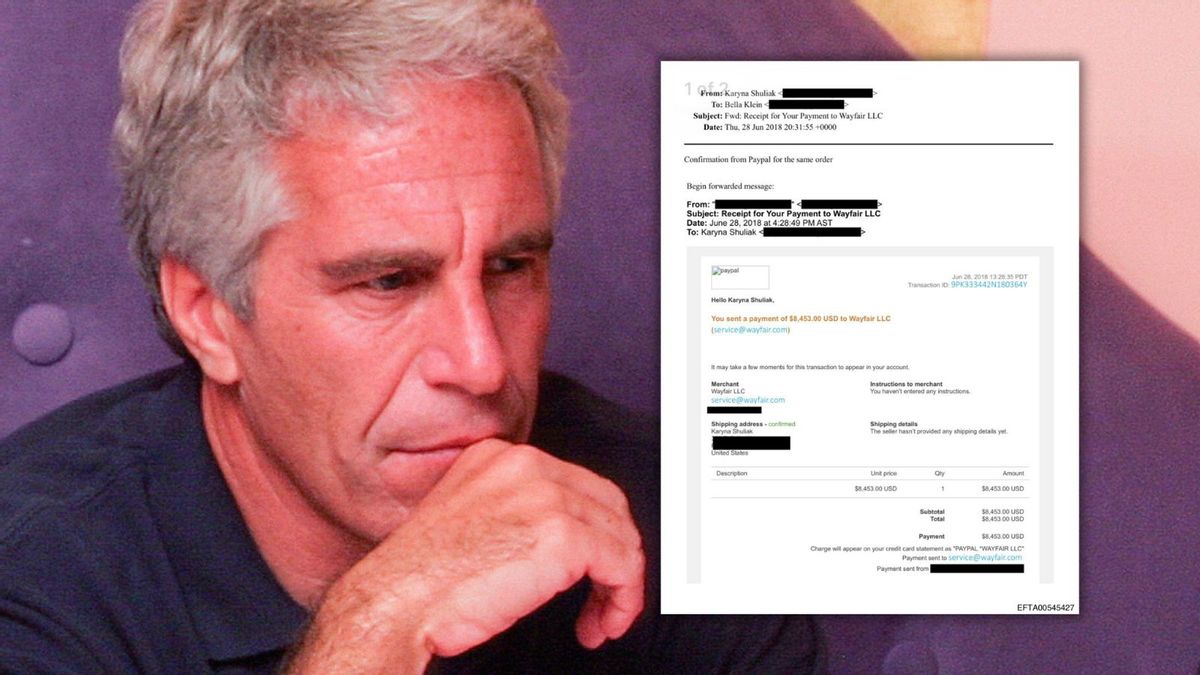
In early February 2026, numerous posts across platforms including X (formerly Twitter), Facebook, Instagram, Reddit and Bluesky circulated a screenshot of a PayPal email receipt dated June 28, 2018. The receipt showed an $8,453 purchase forwarded by Karyna Shuliak, described as Epstein’s final girlfriend.
Social media users claimed this receipt proved the online retailer’s involvement in child trafficking, reviving a conspiracy theory that first emerged in July 2020. Some posts specifically alleged the large sum represented payment for a “single, unlabeled” item, suggesting something sinister.
However, a comprehensive review of additional emails from the same case files directly contradicts these claims. The purchase in question was actually for 25 individual household items spread across four different product categories: outdoor lighting, bathroom fixtures, and medicine cabinets.
Specifically, the order included 14 “Alume 1-Light Outdoor Flush Mount by LumenArt” fixtures at $222.99 each, eight “Polar 9-Light Bath Bar by Modern Forms” at $499 each, one “Verdera 20″ x 30″ Aluminum Medicine Cabinet by Kohler” at $247.16, and two “Kneeland 2-Light Bath Sconce by Zipcode Design” at $83.99 each. These items totaled $7,529, with shipping ($396.97) and taxes ($527.03) bringing the final cost to $8,453.
Further emails in the case files detail order confirmation numbers, cancellation attempts, payment processing issues, and shipping logistics. One email specifically mentioned that the outdoor lighting fixtures were destined for “LSJ” – shorthand for Little Saint James, Epstein’s private Caribbean island.
Wayfair has categorically denied any connection to Epstein or human trafficking. Company spokesperson Tara Lambropoulos stated: “Wayfair unequivocally rejects the false claims linking the company to Jeffrey Epstein or human trafficking of any kind, over any time period. There is no evidence supporting these allegations, which are rooted in long-debunked conspiracy theories.”
The conspiracy theory surrounding Wayfair first gained traction in 2020, with unfounded claims that the retailer was naming expensive items after missing children as a code for trafficking. These allegations were investigated and found to be baseless at the time.
This latest round of misinformation appeared shortly after the U.S. Department of Justice released a new tranche of Epstein case files in January 2026. The release, part of ongoing transparency efforts surrounding the Epstein case, comprises approximately 3 million pages of documents.
Karyna Shuliak, the Belarusian dentist who forwarded the receipt in question, was identified by British newspaper The Times as the primary beneficiary of Epstein’s trust. According to reports, Epstein signed this trust document on August 8, 2019, just two days before his death in a New York jail cell, which was ruled a suicide by hanging according to the medical examiner.
The mischaracterization of routine furniture and fixture purchases as evidence of trafficking represents a concerning pattern of conspiracy theories that continue to emerge around the Epstein case, despite lacking factual support. These claims often take advantage of limited context to create misleading narratives.
The emails documenting this purchase represent nothing more unusual than typical online shopping complications – order confirmations, attempted cancellations, credit card limit issues, and shipping logistics for delivering products to a remote Caribbean island.
As investigations into Epstein’s crimes continue, authorities have not indicated any connection between Wayfair and illegal activities related to the disgraced financier.
Fact Checker
Verify the accuracy of this article using The Disinformation Commission analysis and real-time sources.

6 Comments
Good to see the facts laid out clearly here. It’s worrying how quickly unsubstantiated theories can spread, especially on social media. Fact-checking is essential to maintaining public trust.
Interesting fact check. It’s good to see claims thoroughly investigated and debunked, especially when they involve serious allegations. We should be careful about spreading unsubstantiated rumors, even on social media.
Thanks for the level-headed reporting. It’s important to maintain perspective and not jump to conclusions without strong evidence. Fact-checking is crucial to counter the spread of misinformation.
I agree, this is a good example of responsible journalism cutting through the noise. It’s a helpful reminder to be critical consumers of information, especially on sensitive topics.
Appreciate the thorough investigation into this claim. It’s a good lesson in the importance of verifying information before jumping to conclusions, even about high-profile individuals. Responsible reporting is key.
This seems like a reasonable debunking of the Wayfair conspiracy theory. The details around the purchase receipt help provide much-needed context. Sensational claims often require careful scrutiny.