


Listen to the article
Fact Check: Debunking the Coconut Water-Lime Juice Aphrodisiac Myth
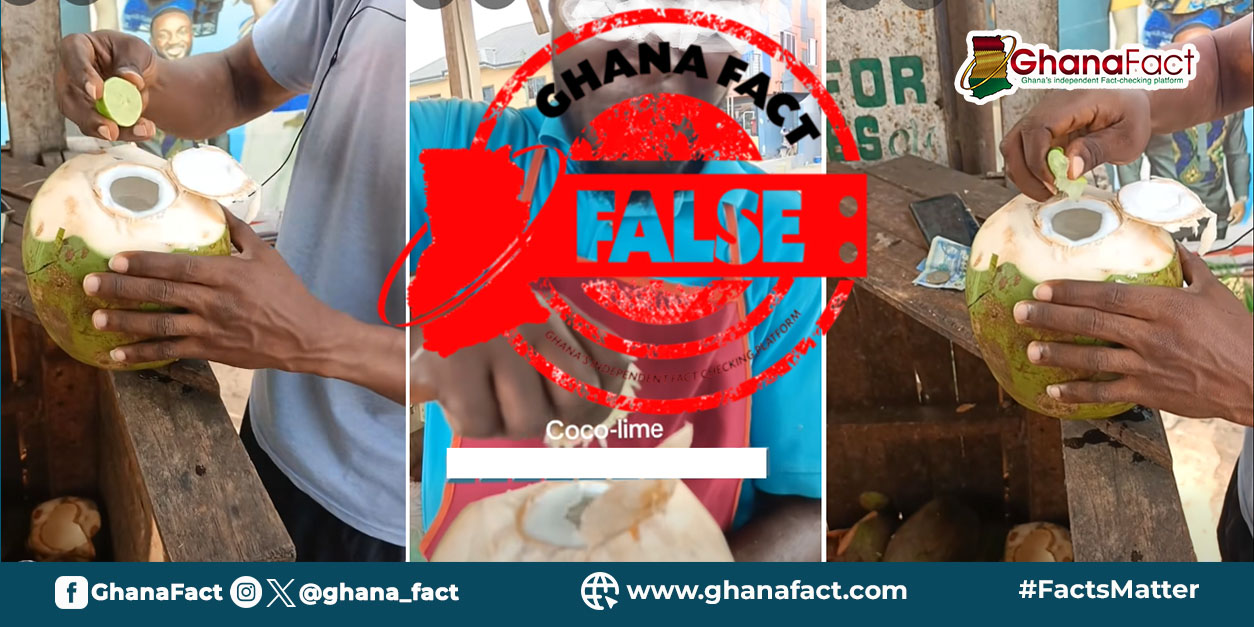
A recent social media trend showing vendors adding lime juice to coconut water has gone viral in Ghana, with proponents claiming the mixture significantly enhances male sexual performance. After thorough investigation, health experts have conclusively debunked these claims.
The trend gained momentum across Facebook, TikTok, and other platforms when several influencers began promoting the concoction as a natural alternative to energy drinks and sexual enhancement supplements. In one widely circulated video, a man identifying himself as “Sir Money” endorsed the mixture while visiting a coconut vendor in Koforidua House, Dome Pillar 2.
“When I am going on a long journey or when I get tired after a long day’s work, I take coconut water and lime. No energy drink can be compared to this,” he stated in Twi, a Ghanaian language.
The coconut seller in the same video added to the claims, suggesting the mixture should be consumed “early morning on an empty stomach,” promising vague but significant health benefits. Another promoter on Facebook went further, claiming wealthy individuals had contacted him to express gratitude for sharing the “recipe” that supposedly enhances sexual performance dramatically.
The viral nature of these unsubstantiated health claims prompted GhanaFact, a fact-checking organization, to investigate the veracity of the assertions. Their research traced the trend back to a September 2024 Facebook post by a self-proclaimed doctor on “Secret of Health TV” who specifically marketed the mixture as a remedy for poor sexual performance.
To establish the scientific facts, GhanaFact consulted Zona Billey, a Nutrition Officer at the Korley Klottey Municipal Health Directorate. Her assessment was unequivocal: the mixture is not an aphrodisiac.
“Coconut water has a lot of benefits, as we all know. It keeps us hydrated and has many electrolytes,” Billey explained. “This helps maintain fluid balance and energy levels, and it also improves blood volume. So this can make you have a little bit more energy than you would on a usual day to do whatever activity you want to do, including sex, but it’s not an aphrodisiac.”
She added that while lime juice provides vitamin C, an antioxidant that naturally increases blood flow, this general health benefit does not translate to specific sexual enhancement effects. “All these things work together to give you generally better energy, make you feel better on a normal day, for any activity, but this is not an aphrodisiac either. So combining them is not an aphrodisiac,” Billey emphasized.
Addressing safety concerns about the mixture, Billey noted that the acidic lime juice and alkaline coconut water would largely neutralize each other before consumption. She pointed out that the acidity in the human digestive system is stronger than that found in lime juice, making the combination generally safe for most individuals. However, she cautioned that people with ulcers or related digestive conditions might experience discomfort due to the acidity of lime.
Food and beverage trends frequently gain traction on social media platforms, particularly when accompanied by claims of natural health benefits or performance enhancement. Public health experts continually stress the importance of verifying such claims through credible medical sources rather than social media testimonials.
While both coconut water and lime juice offer legitimate nutritional benefits individually—including hydration, electrolyte balance, and vitamin C—their combination creates no synergistic effect that would enhance sexual performance as claimed in the viral videos.
The verdict remains clear: though coconut water and lime juice each have health benefits, the mixture is not an aphrodisiac, and claims suggesting otherwise are false.
Fact Checker
Verify the accuracy of this article using The Disinformation Commission analysis and real-time sources.

12 Comments
The detailed investigation and expert analysis in this article are commendable. It’s crucial that misleading health claims like this are addressed and corrected, especially when they start to gain traction online.
While the coconut water-lime ‘aphrodisiac’ trend may have seemed plausible to some, I’m glad the article took the time to thoroughly examine the evidence and reach a definitive conclusion. Fact-checking is so important.
Absolutely. Debunking misinformation with reliable, well-researched information is key to preventing the spread of potentially harmful claims.
I’m glad the article took the time to look into the background and claims behind this trend. It’s concerning when unproven ‘health remedies’ get hyped up and spread widely online without proper evidence.
It’s concerning to see influencers and vendors promoting unproven ‘remedies’ like this. Glad the article took the time to thoroughly investigate and debunk the coconut water-lime aphrodisiac myth.
Agreed. Spreading misinformation, even inadvertently, can have real consequences for people’s health and well-being.
This is an important myth to bust, especially with the viral promotion of this ‘concoction’ across social media. Appreciate the thorough investigation and clear conclusions from the health experts.
This fact-check seems well-researched and impartial. I appreciate the balanced approach in examining the claims and reaching a clear conclusion based on the available evidence.
Interesting fact-check article. It’s good to see health experts debunking the claims around this supposed coconut water and lime ‘aphrodisiac’ trend. Seems like more social media hype than actual science behind it.
This article is a good example of the importance of fact-checking, especially when it comes to health and wellness claims. Kudos to the researchers for their diligent work in investigating this trend.
The article highlights an interesting example of how misinformation can spread quickly on social media. It’s a good reminder to be critical of viral health claims, especially those making bold promises.
Absolutely. Fact-checking and expert analysis are crucial to counter such misleading trends online.