


Listen to the article
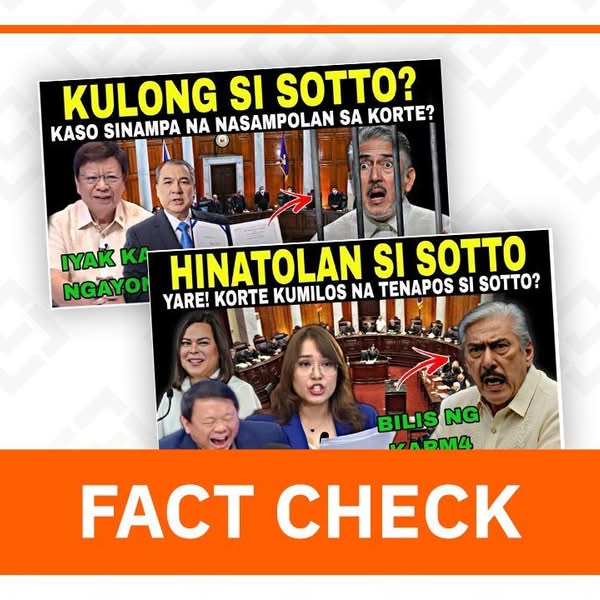
Senate President Vicente “Tito” Sotto III has not been ordered arrested by the Supreme Court, contrary to claims circulating on social media platforms in recent days.
The confusion stems from an indirect contempt petition filed against Sotto on February 13, but the Supreme Court has not yet issued any decision on this matter, let alone an arrest warrant.
Legal experts familiar with the case clarified that the filing of a petition does not automatically result in a court order. “There’s a substantial difference between a petition being filed and a court actually ruling on it,” explained Attorney Maria Santos, a constitutional law specialist who has been monitoring the case.
The petition in question relates to statements Sotto allegedly made regarding an ongoing Supreme Court deliberation, which the petitioners claim constitutes interference with judicial proceedings. Under Philippine law, indirect contempt charges can be filed when an individual is accused of actions that may obstruct, degrade, or impede court proceedings.
The Supreme Court’s spokesperson, Attorney Jose Midas Marquez, confirmed in a statement yesterday that “no decision has been rendered regarding the petition against Senate President Sotto. The Court follows strict procedural rules, and any claims suggesting otherwise are premature and misleading.”
The false information appears to have originated from a social media account with a history of publishing unverified political content. The post gained significant traction, accumulating over 5,000 shares before fact-checkers intervened.
This incident occurs against the backdrop of heightened political tensions in the Philippines, where misinformation has become increasingly prevalent on digital platforms. According to a recent study by the University of the Philippines’ Department of Communication Research, politically-motivated false information increases by approximately 40 percent during pre-election periods.
Sotto, who has served as Senate President since 2018, is currently involved in several high-profile legislative initiatives, including comprehensive tax reform and amendments to the constitution’s economic provisions. Political analysts suggest the timing of the false information may be related to these controversial legislative moves.
“This is a textbook example of how misinformation can spread rapidly in our current media environment,” noted Dr. Paolo Mendoza, a political science professor at Ateneo de Manila University. “When it targets public officials, it can undermine legitimate democratic processes and public trust in institutions.”
The Senate Public Relations Bureau has issued a statement calling for responsible sharing of information, particularly when it concerns government officials. “We urge the public to verify information from official sources before sharing content that could mislead others,” the statement read.
Social media platforms have implemented fact-checking partnerships with Filipino news organizations under the #FactsFirstPH initiative, aimed at combating the spread of false information. This coalition includes major news outlets and academic institutions committed to promoting information integrity.
Legal consequences for spreading false information about court proceedings can be serious under Philippine law. The Cybercrime Prevention Act of 2012 includes provisions against the spread of false information online, with penalties ranging from fines to imprisonment.
For citizens seeking to verify judicial information, the Supreme Court maintains an official website and social media accounts where legitimate court orders and decisions are published. Legal experts recommend consulting these official channels rather than relying on unverified social media posts.
As the Philippines approaches another election cycle, media literacy advocates emphasize the importance of critical evaluation of online content, especially when it involves claims about legal proceedings or high-ranking government officials.
Fact Checker
Verify the accuracy of this article using The Disinformation Commission analysis and real-time sources.

8 Comments
Interesting that this contempt petition relates to alleged statements by the Senate President regarding an ongoing Supreme Court deliberation. I wonder what the specifics of those statements were and how the court will evaluate them.
Allegations of interfering with judicial proceedings are serious, so I hope the Supreme Court thoroughly examines the evidence and reaches a fair conclusion.
This case highlights the delicate balance between free speech and the integrity of judicial processes. I’m curious to see how the Supreme Court navigates this complex issue.
Ultimately, the rule of law must be upheld, but it’s important that this is done in a fair and impartial manner.
Given the high-profile nature of this case, it’s good to see the Supreme Court spokesperson clarifying that no arrest order has been issued yet. Maintaining transparency is crucial for public trust in the legal system.
While the allegations against the Senate President are serious, I’m glad to see the legal experts emphasizing the importance of due process and avoiding premature conclusions. The Supreme Court’s decision will be closely watched.
This seems like a complex legal case with nuance around contempt proceedings. I’m glad to see clarification from legal experts that no arrest order has been issued yet, as the Supreme Court deliberation is still ongoing.
It’s important to have a clear understanding of the legal process here and not jump to conclusions before the final decision is made.