


Listen to the article
The United States has significantly reduced the number of diseases for which it universally recommends childhood vaccinations, cutting the list from 17 to 11. However, social media claims suggesting this means children will only receive 11 shots instead of 72 misinterpret the announcement, conflating diseases with actual injections.
On January 5, the Centers for Disease Control and Prevention (CDC) announced that vaccines for rotavirus, influenza, meningococcal disease, and hepatitis A would no longer be universally recommended for all children. Instead, these vaccines will now be reserved for high-risk groups or administered based on joint decisions between parents and healthcare providers.
President Donald Trump highlighted the change, stating: “Effective today, America will no longer require 72 ‘jabs’ for our beautiful, healthy children. We are moving to a far more reasonable schedule, where all children will only be recommended to receive vaccinations for 11 of the most serious and dangerous diseases.”
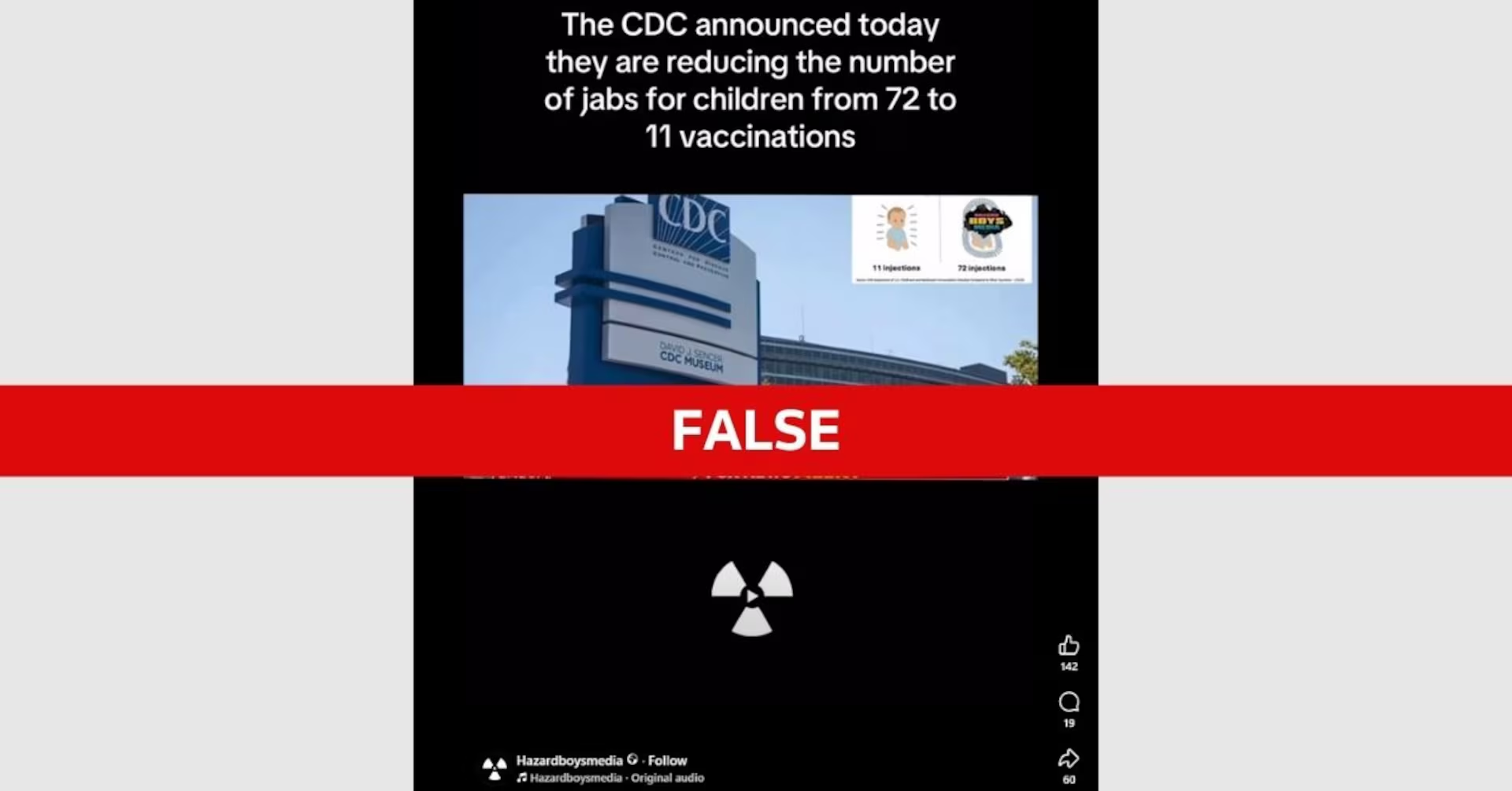
Following this announcement, social media posts began claiming that children would now receive only 11 injections instead of 72. One January 6 Instagram post declared: “The CDC announced today they are reducing the number of jabs for children from 72 to 11 vaccinations.”
These claims, however, misrepresent the reality of the new guidelines. According to the updated recommended schedule, children will still receive 22 or 23 vaccine doses to protect against those 11 diseases, depending on whether they receive three or four doses against Haemophilus influenzae type b.
The previous vaccine schedule would have included between 57 and 71 separate immunizations during childhood to protect against 17 diseases, including annual flu and COVID-19 shots and multiple oral rotavirus vaccine doses. That number would reach 72 if a child also required a shot for respiratory syncytial virus.
Among the changes in the new schedule is a reduction in human papilloma virus (HPV) vaccine doses given around age 12, from two or three doses to just one. This departure from the Food and Drug Administration’s approval, which is based on a two-dose regimen, has raised concerns among vaccine and pediatric experts.
The American Academy of Pediatrics has expressed strong opposition to these changes. In an online statement, the organization characterized the removal of numerous universal childhood vaccine recommendations as “dangerous and unnecessary.”
“At a time when parents, pediatricians and the public are looking for clear guidance and accurate information, this ill-considered decision will sow further chaos and confusion and erode confidence in immunizations,” said Academy President Andrew Racine. “This is no way to make our country healthier.”
The decision comes amid ongoing debates about vaccination policies in the United States, where immunization rates have become increasingly polarized. Public health experts worry that reducing recommended vaccines could lead to increased outbreaks of preventable diseases, particularly in vulnerable populations.
Meanwhile, advocates for the changes argue they provide families with more flexibility and control over healthcare decisions. The modification represents one of the most significant shifts in U.S. vaccination policy in decades.
The CDC and the Department of Health and Human Services did not respond to requests for comment on the rationale behind these changes or their potential public health implications.
The distinction between reducing recommended diseases versus actual injections remains critical for public understanding. While the list of universally recommended diseases has indeed been reduced, children following the new guidelines will still receive approximately two dozen vaccinations through their developmental years, not the 11 claimed in viral social media posts.
Fact Checker
Verify the accuracy of this article using The Disinformation Commission analysis and real-time sources.

32 Comments
If AISC keeps dropping, this becomes investable for me.
Good point. Watching costs and grades closely.
I like the balance sheet here—less leverage than peers.
Good point. Watching costs and grades closely.
Good point. Watching costs and grades closely.
Interesting update on Fact Check: New US Childhood Vaccine Schedule Reduces Shots to About 23, Not 11. Curious how the grades will trend next quarter.
Good point. Watching costs and grades closely.
Good point. Watching costs and grades closely.
The cost guidance is better than expected. If they deliver, the stock could rerate.
Good point. Watching costs and grades closely.
Good point. Watching costs and grades closely.
Uranium names keep pushing higher—supply still tight into 2026.
Good point. Watching costs and grades closely.
The cost guidance is better than expected. If they deliver, the stock could rerate.
Good point. Watching costs and grades closely.
I like the balance sheet here—less leverage than peers.
Good point. Watching costs and grades closely.
Good point. Watching costs and grades closely.
The cost guidance is better than expected. If they deliver, the stock could rerate.
Good point. Watching costs and grades closely.
Uranium names keep pushing higher—supply still tight into 2026.
Good point. Watching costs and grades closely.
Production mix shifting toward Fact Check might help margins if metals stay firm.
Good point. Watching costs and grades closely.
Good point. Watching costs and grades closely.
Nice to see insider buying—usually a good signal in this space.
Good point. Watching costs and grades closely.
If AISC keeps dropping, this becomes investable for me.
Good point. Watching costs and grades closely.
Good point. Watching costs and grades closely.
The cost guidance is better than expected. If they deliver, the stock could rerate.
Good point. Watching costs and grades closely.