


Listen to the article
Fact Check: Viral Muhammad Yunus Quote About Mother’s Assault During Bangladesh Liberation War is False
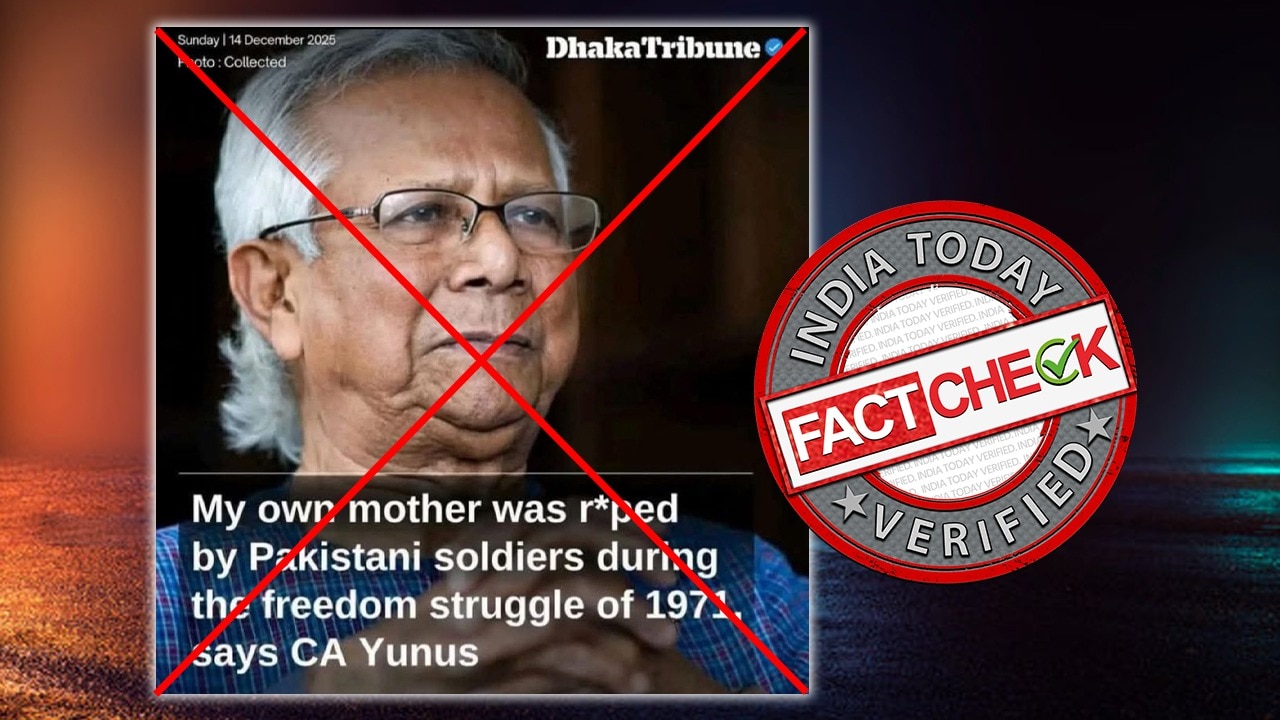
A fabricated statement attributed to Bangladesh’s interim leader Muhammad Yunus has been circulating on social media, falsely claiming he said his mother was sexually assaulted by Pakistani soldiers during Bangladesh’s 1971 independence struggle.
The manipulated image, designed to mimic a news graphic from the respected Dhaka Tribune, features a photo of Yunus alongside the purported quote. Several social media users have shared this doctored content, with one Facebook user adding the inflammatory caption, “And then this man was born.”
An investigation by India Today’s Fact Check team has conclusively determined that this statement is entirely fabricated. Muhammad Yunus never made such remarks about his mother, Sofia Khatun.
Through reverse image search techniques, fact-checkers identified the original Dhaka Tribune post from December 14, which used the same photo and design layout. However, the authentic post’s text read, “CA Yunus mourns the casualties of Bangladeshi peacekeepers in drone attack in Sudan,” and featured a different font style than the manipulated version.
The investigation found no credible news reports or verified statements from Yunus making any such claim about his mother. To further verify this conclusion, fact-checkers contacted Nayem Ali, Assistant Press Secretary to Muhammad Yunus, who explicitly confirmed that the interim leader had made no such statement.
Biographical information about Muhammad Yunus indicates that his mother, Sofia Khatun, was indeed influential in his formative years, but there is no historical record or statement from Yunus suggesting she experienced such trauma during the liberation struggle.
This fabricated quote emerges amid ongoing political transitions in Bangladesh. Yunus, a Nobel Peace Prize laureate and founder of Grameen Bank, was appointed to lead Bangladesh’s interim government following the resignation of former Prime Minister Sheikh Hasina in August after widespread protests.
The circulation of such inflammatory false information highlights the challenges facing Bangladesh’s new administration as it attempts to navigate a complex political landscape following months of unrest. Social media platforms have become battlegrounds for competing narratives about the country’s past and present leadership.
Digital misinformation experts note that the fabrication of quotes from public figures is a common tactic used to inflame tensions during political transitions. Such manipulated content is particularly dangerous as it exploits genuine historical trauma from Bangladesh’s independence struggle to create divisive narratives.
The 1971 Bangladesh Liberation War remains a sensitive historical period in South Asian history, with documented atrocities committed by Pakistani forces. Fabricated statements that exploit this trauma for political purposes can reopen historical wounds and potentially damage regional relationships.
Media literacy advocates emphasize the importance of verifying information from official sources, particularly during periods of political change when misinformation tends to proliferate. This incident serves as a reminder of how easily digital media can be manipulated to create false impressions about public figures.
As Bangladesh continues its transition under the interim government, distinguishing between authentic and manipulated information remains crucial for citizens attempting to understand the complex political developments in their country.
Fact Checker
Verify the accuracy of this article using The Disinformation Commission analysis and real-time sources.

7 Comments
I’m glad the fact-checkers were able to identify the original Dhaka Tribune post and expose the manipulated content. It’s important we remain vigilant against the spread of misinformation, especially on social media.
It’s good that the media investigated this fabricated statement. Spreading false information, especially about sensitive historical events, can sow discord. Responsible reporting is crucial to counter disinformation.
I’m glad the Dhaka Tribune’s original post was identified. Fabricated content can be damaging, so it’s important to correct the record and prevent the further spread of this false claim.
This case highlights the need for heightened media literacy. We should always verify claims, especially those that evoke strong emotions, before sharing them. Fact-checking helps counter the spread of misinformation.
This is an unfortunate case of misinformation. We should be cautious about spreading unverified claims, even if they align with our views. Fact-checking helps maintain trust in media and public discourse.
Fact-checking is an essential part of responsible journalism. I appreciate the thorough investigation that revealed this to be a completely fabricated statement. Upholding the truth is crucial, even on sensitive topics.
While the fabricated quote is inflammatory, we must be careful not to perpetuate it further. The best response is to amplify the factual reporting that debunks the claim. Maintaining integrity in media is vital.