


Listen to the article
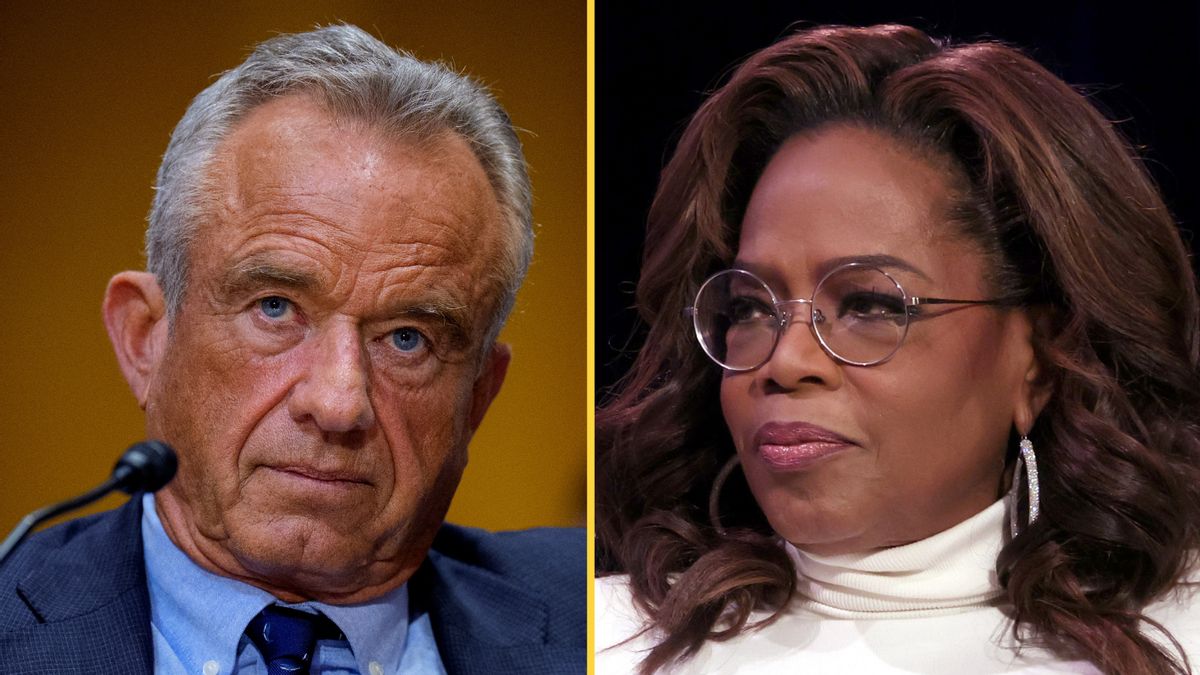
In a flurry of social media activity this week, users across X (formerly Twitter) have been sharing what appeared to be inflammatory comments from U.S. Secretary of Health and Human Services Robert F. Kennedy Jr. directed at media mogul Oprah Winfrey regarding her weight struggles. However, an investigation has revealed these posts were not actually made by Kennedy but rather by an unaffiliated parody account.
The viral post in question read: “Dear Oprah, yes, you were overeating! For years! And it wasn’t some mystical ‘obesity gene’ puppeteering your fork. It was your choices. Stop selling surrender as science. Our kids deserve the truth that real change starts with personal accountability, not excuses. MAHA.”
The post included the acronym “MAHA,” referencing Kennedy’s “Make America Healthy Again” HHS initiative slogan, which likely contributed to the confusion about its authenticity. However, the account responsible for the message clearly identifies itself as a “commentary account” with “no affiliation to the real RFKJR” in its biography.
A thorough search of Kennedy’s official HHS Secretary X account, his personal X account, and the official HHS account yielded no evidence of any posts criticizing Winfrey on this matter.
The falsely attributed comments came in response to Winfrey’s January 14 appearance on “The View,” where she discussed her long-standing struggles with weight and dieting. During the interview, Winfrey shared a perspective that represents a significant shift in how she views her relationship with food.
“All these years, I thought I was overeating. I was standing there with all the food noise — what I ate, what I should eat, how many calories was that, how long is it gonna take. I thought that that was because of me and my fault,” Winfrey said during the interview. “Now I understand that if you carry the obesity gene, if that is what you have, that is what makes you overeat. You don’t overeat and become obese. Obesity causes you to overeat.”
Winfrey also discussed her experience with GLP-1 medications, referring to drugs like Ozempic, which she began taking in 2023 according to a feature in People magazine. These medications work by targeting receptors in the brain that regulate appetite and have become increasingly popular for weight management in recent years.
“Obesity causes you to have all of that food noise. And what the GLP-1s have done for me, and I know a number of other people, is to quiet that noise,” Winfrey explained on “The View.”
Her comments reflect a growing body of medical research that frames obesity as a complex disease with biological underpinnings rather than simply a failure of willpower—a perspective that has gained traction in the medical community but remains controversial in public discourse.
This incident occurs against the backdrop of Winfrey’s recent departure from the board of Weight Watchers, a position she had held since 2015. The Associated Press reported in 2024 that Winfrey left the company and donated all her shares to the National Museum of African American History and Culture, stating during a March appearance on “Jimmy Kimmel Live” that she “did not want the appearance of any conflict of interest.”
The spread of this misattributed quote highlights the ongoing challenges of misinformation on social media platforms, particularly when it involves public figures and controversial health topics. It also underscores the polarized nature of discussions around obesity, weight management, and personal responsibility in public health discourse.
As GLP-1 medications continue to gain popularity for weight management, public conversations about obesity as a disease rather than a lifestyle choice are likely to intensify, with prominent voices like Winfrey’s playing a significant role in shaping these narratives.
Fact Checker
Verify the accuracy of this article using The Disinformation Commission analysis and real-time sources.

4 Comments
This seems like another example of how easily misleading content can be created and shared online. I’m glad the real origins of the post were uncovered, but it’s concerning to see how quickly it gained traction. Maintaining transparency and accountability around public figures is so important.
Interesting that someone would try to impersonate RFK Jr. on social media. While it’s important to call out misinformation, we should be careful about jumping to conclusions without verifying the facts first. I’m curious to learn more about the origins of this misleading post.
I appreciate the commission’s thorough investigation into this matter. Impersonating a government official is a serious issue that deserves attention. While the post may have seemed plausible, it’s crucial that we verify information before spreading it further. Fact-checking is the responsible path forward.
It’s good to see the disinformation commission investigating this and setting the record straight. Fact-checking is crucial in today’s media landscape, where false information can spread rapidly online. I wonder what other steps could be taken to prevent these kinds of impersonations in the future.