


Listen to the article
False Claims of Mark Wahlberg’s Criticism Against Bad Bunny Debunked
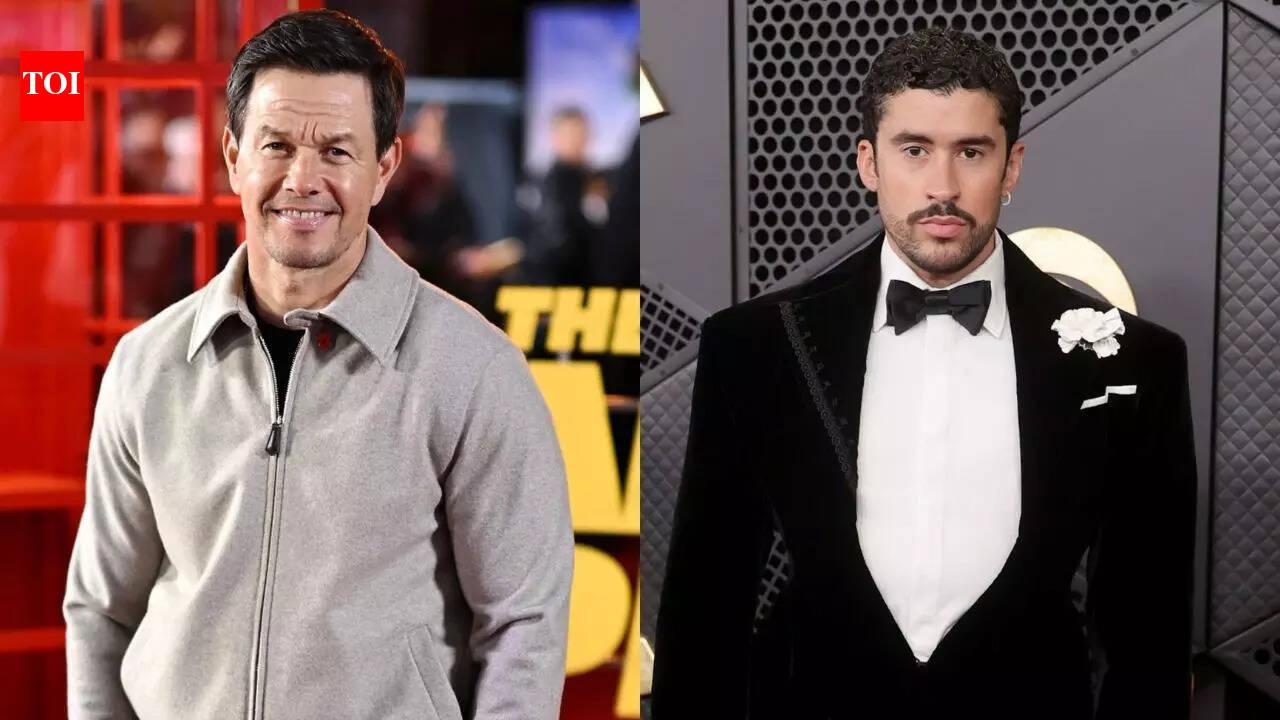
A fabricated controversy that rippled through social media last fall has been thoroughly debunked, revealing how quickly misinformation can spread when it intersects with cultural touchpoints like the Super Bowl. The false narrative claimed that actor Mark Wahlberg had made disparaging remarks toward Puerto Rican artist Bad Bunny regarding his selection as the Super Bowl LX halftime performer.
The controversy began when a brief Instagram video posted by an account called @kingtretainment went viral with an inflammatory claim. The video, complete with dramatic narration, alleged that Wahlberg had responded to Bad Bunny’s Saturday Night Live monologue by saying, “Maybe you should go back to Puerto Rico.” The clip concluded with the loaded question: “Is this just pride or something more dangerous?”
This supposed exchange came at a particularly sensitive moment. The NFL had just announced Bad Bunny as the halftime headliner, a decision that had already generated both celebration and criticism. During his SNL appearance, Bad Bunny had joked that Americans had “four months to learn Spanish” before his performance, a quip that sparked immediate backlash in some corners of social media.
The timing and content of the alleged comments made the story seem plausible to many viewers. The video spread rapidly across platforms, fueling heated discussions about language, cultural representation, and celebrity influence in American entertainment.
However, fact-checking efforts quickly revealed the story’s fabrication. No credible news outlets reported on such comments from Wahlberg. There was no verified footage of the actor making any statement about Bad Bunny or the halftime show. In the age of constant celebrity coverage, such a controversial statement from a high-profile actor would have generated immediate headlines across major media outlets – yet none existed.
Media literacy experts point to this incident as a classic example of how misinformation thrives in today’s digital landscape. The video relied on narration rather than evidence, leveraging existing cultural tensions and the credibility gap that often exists on social media platforms where content can be shared without verification.
Some commenters attempted to lend credence to the false narrative by referencing Wahlberg’s past controversies, particularly incidents from his youth that included assault charges, for which he later apologized and sought formal pardoning. However, these discussions only served to muddy the waters further, as they remained entirely unrelated to the fabricated Bad Bunny controversy.
The incident highlights the particular vulnerability of celebrity news to manipulation. High-profile figures often become unwitting characters in manufactured controversies designed to generate engagement through outrage. The combination of cultural flashpoints – in this case, language, identity, and the nation’s most-watched sporting event – created fertile ground for misinformation to flourish.
Media analysts note that such false narratives can have real consequences, both for the celebrities falsely portrayed and for public discourse more broadly. They reinforce existing divisions and contribute to an environment where fact and fiction become increasingly difficult to distinguish.
As Bad Bunny prepares for his actual halftime performance, this debunked controversy serves as a reminder for consumers to approach viral content with skepticism, especially when it plays into existing cultural tensions or seems designed specifically to provoke emotional reactions.
Fact Checker
Verify the accuracy of this article using The Disinformation Commission analysis and real-time sources.

23 Comments
Uranium names keep pushing higher—supply still tight into 2026.
Good point. Watching costs and grades closely.
Good point. Watching costs and grades closely.
Silver leverage is strong here; beta cuts both ways though.
Good point. Watching costs and grades closely.
If AISC keeps dropping, this becomes investable for me.
Good point. Watching costs and grades closely.
Good point. Watching costs and grades closely.
Silver leverage is strong here; beta cuts both ways though.
Good point. Watching costs and grades closely.
I like the balance sheet here—less leverage than peers.
Good point. Watching costs and grades closely.
Interesting update on Fact Check: Mark Wahlberg’s Alleged Criticism of Bad Bunny’s Super Bowl Performance. Curious how the grades will trend next quarter.
Silver leverage is strong here; beta cuts both ways though.
Good point. Watching costs and grades closely.
I like the balance sheet here—less leverage than peers.
Nice to see insider buying—usually a good signal in this space.
Good point. Watching costs and grades closely.
Exploration results look promising, but permitting will be the key risk.
Silver leverage is strong here; beta cuts both ways though.
Silver leverage is strong here; beta cuts both ways though.
Good point. Watching costs and grades closely.
Good point. Watching costs and grades closely.