


Listen to the article
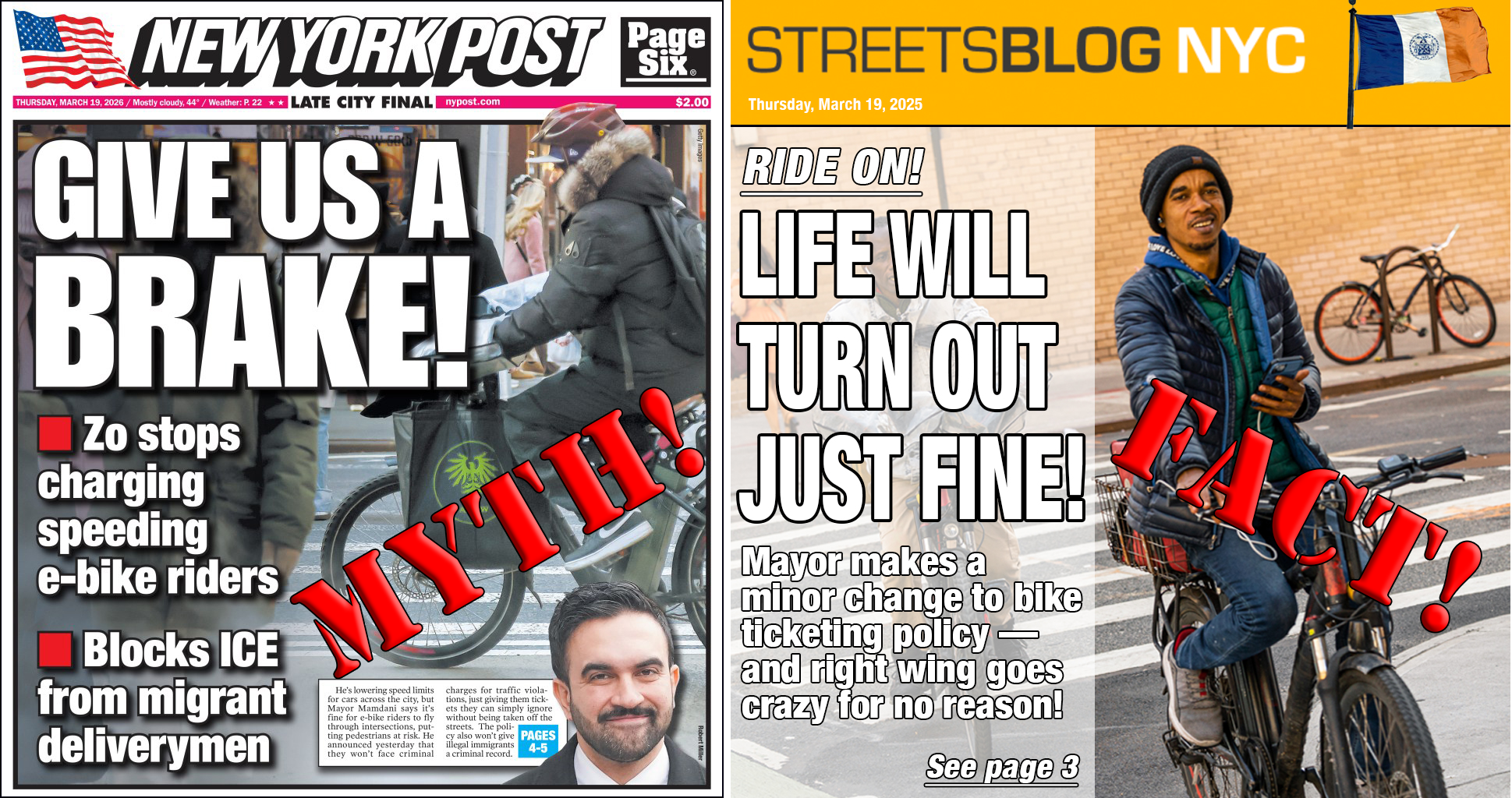
New York Mayor Mamdani announced Wednesday that the NYPD will end its controversial policy of issuing criminal summonses to cyclists for moving violations, a change that has sparked both support and significant pushback across the city.
The policy, implemented during the previous administration, had required cyclists who committed traffic infractions to appear in court rather than simply paying fines by mail as motorists do. Failure to appear could result in arrest warrants—creating particular concerns for immigrant delivery workers who risked potential ICE involvement.
Despite claims from critics, the change does not eliminate enforcement against cyclists who break traffic laws. Rather, it aligns the penalty structure with that used for motorists, allowing cyclists to pay civil fines for infractions without mandatory court appearances.
“This is about fairness and proportionality in our enforcement approach,” a spokesperson from the mayor’s office explained. “Cyclists will still be held accountable, but in a manner consistent with how we treat other road users.”
The City Council’s Common Sense Caucus has been vocal in opposition, claiming the decision “removes all accountability for reckless cyclists” and suggesting it will worsen street safety. The New York Post echoed these concerns with a front-page headline declaring “Zo stops charging speeding e-bike riders”—a characterization the mayor’s office disputes as misleading.
Under the revised policy, cyclists who run red lights will still face $190 fines—identical to the penalty for motorists. The 15 mph speed limit for e-bikes implemented by former Mayor Adams remains in effect, as does a similar limit for Central Park (though the latter is currently being challenged in court).
Critics’ assertions that the streets will become more dangerous appear to lack substantial evidence. NYPD Commissioner Jessica Tisch had previously defended the criminal summons policy as “data-driven,” but the department never provided statistics showing that cyclists weren’t paying civil violations. The only justification offered was based on “where we’re seeing complaints,” suggesting the enforcement strategy was more responsive to public perception than objective safety metrics.
Transportation safety data reveals that e-bikes account for a tiny fraction of pedestrian injuries—less than 0.04 percent in the first quarter of 2025, according to NYPD figures. Meanwhile, cars and trucks remain the overwhelming source of traffic-related injuries and fatalities in New York City.
The effectiveness of the criminal summons approach was questionable even before its repeal. Streetsblog reporters who observed court proceedings in February noted that Judge John Walsh dismissed or issued warnings for most of the approximately three dozen summonses he reviewed, often due to insufficient details or errors in the NYPD-issued tickets.
The policy change aligns with Mayor Mamdani’s campaign promises. He won both the primary and general elections on a platform that included ending criminal summonses for cyclists and holding delivery apps accountable for pressuring workers to make rapid deliveries that sometimes encourage unsafe riding.
“The mayor is implementing exactly what he was elected to do,” noted transportation policy analyst Sarah Jenkins. “New Yorkers consistently support measures that create more balanced street use and proportional enforcement.”
For delivery workers, many of whom are immigrants relying on cycling for their livelihood, the policy change represents significant relief. Worker advocacy groups had highlighted how the criminal summons approach disproportionately affected vulnerable populations and created barriers to employment.
The administration emphasized that enforcement against truly dangerous behavior will continue. Motorized two-wheeled vehicles that travel over 28 mph—classified as “e-motos” rather than e-bikes—remain illegal and subject to confiscation by NYPD.
As the new policy takes effect, transportation officials indicate they will monitor outcomes closely. “This is about right-sizing our enforcement approach while maintaining safety for all street users,” a Department of Transportation representative stated. “Our goal remains creating streets that work for everyone.”
Fact Checker
Verify the accuracy of this article using The Disinformation Commission analysis and real-time sources.

7 Comments
While I understand the fairness argument, I’m not sure this is the right approach. Cycling safety is a major concern, and cyclists who break laws should face meaningful penalties. Hopefully the city can find a balanced solution that upholds accountability.
Interesting change to align cyclist and motorist penalties. Proportionality in enforcement seems fair, though some may argue it reduces accountability. I’m curious to see how this impacts cycling safety and compliance with traffic laws in New York.
Good point about balancing fairness and accountability. It will be important to monitor the effects and make adjustments if needed to ensure safety on the roads.
This change appears aimed at reducing unfair burdens on cyclists, especially immigrant delivery workers. I appreciate the effort to treat all road users more consistently, though the Council’s concerns about accountability shouldn’t be dismissed.
Agreed, it’s a nuanced issue requiring a balanced approach. Consistency is good, but enforcement still needs to be effective at promoting safe behavior by all.
This seems like a pragmatic change to address unfair burdens on cyclists. Aligning penalties is sensible, but the Council’s worries about reduced accountability are valid. Overall, a nuanced issue that requires careful monitoring of impacts on safety.
Reasonable to align cyclist penalties with motorists, but I worry this sends the wrong message and reduces incentive for cyclists to follow traffic laws. Safety should be the top priority, so enforcement needs to maintain real consequences.