


Listen to the article
Russia Deploys Propaganda Machine to Influence Hungary’s Critical Election
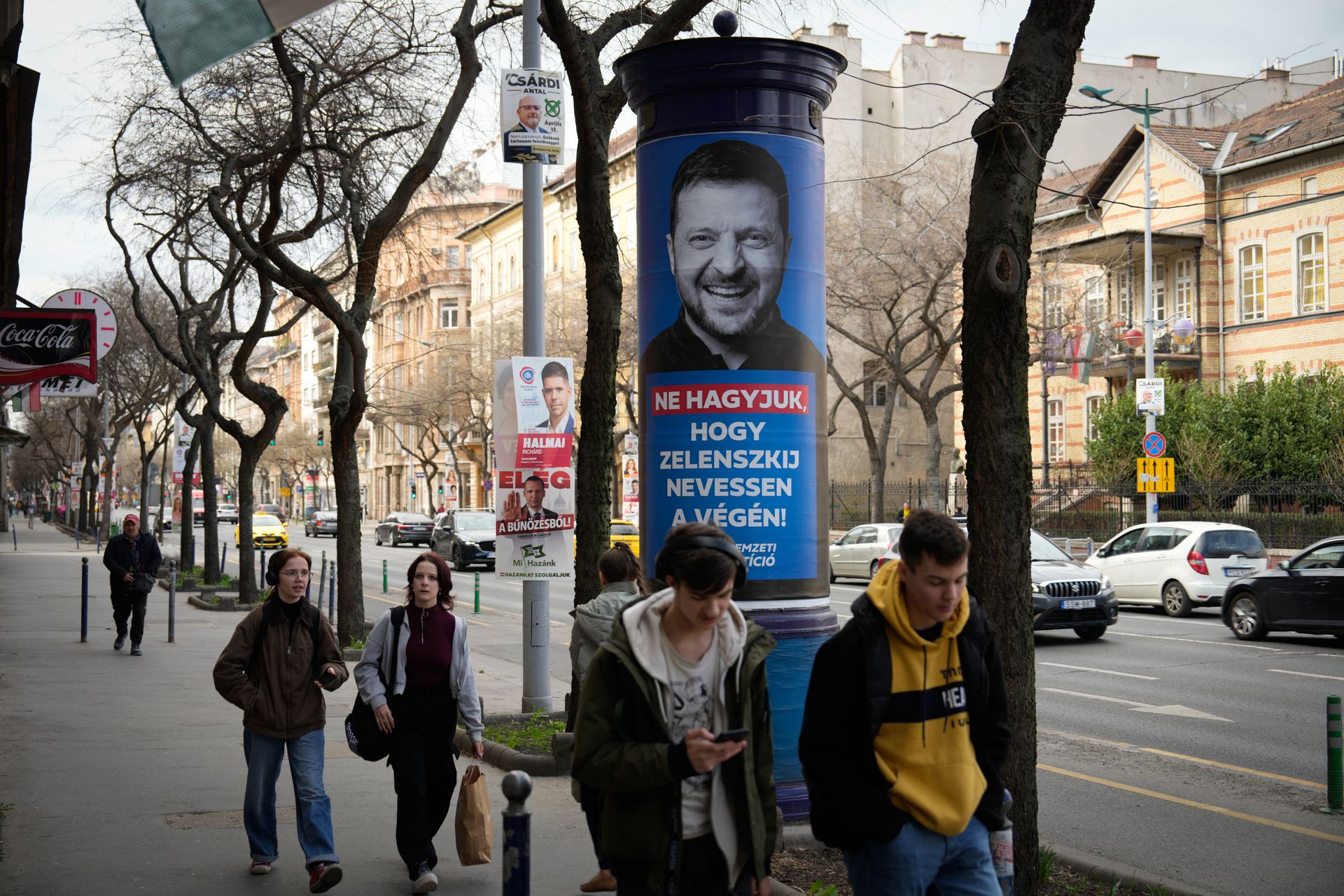
As Hungary approaches a pivotal election on April 12, Moscow has mobilized an extensive propaganda campaign to support Prime Minister Viktor Orban, whose 16-year grip on power faces its most serious challenge yet.
Russian state media outlets, propagandists, and coordinated bot networks have flooded social media platforms with disinformation narratives claiming that Ukraine and the European Union are plotting to interfere in Hungary’s democratic process—or even orchestrate a coup if Orban wins reelection.
“Everyone understands that Ukraine is preparing a Maidan in Hungary,” declared pro-Kremlin propagandist Vladimir Kornilov on his Telegram channel on March 23, in a post that garnered over 120,000 views. The message referenced Ukraine’s 2013-2014 EuroMaidan Revolution, which Russian propaganda has long characterized as a Western-backed coup rather than a popular uprising.
Similarly, Russian state media outlet RT speculated on March 25 whether an Orban victory might trigger a “Maidan on steroids”—deliberately distorting comments from U.S. journalist Michael Weiss about potential scenarios if Orban attempted to “steal” the election despite the opposition’s significant lead in polls.
These narratives serve a dual purpose: delegitimizing both Ukraine and Orban’s domestic opposition, particularly the Tisza party, which has emerged as a serious electoral threat to the incumbent prime minister.
“This narrative aims to discredit any potential protests and delegitimize Orban’s opposition,” tech firm LetsData told the Kyiv Independent, noting that similar messaging has been particularly widespread in neighboring Serbia.
The disinformation campaign comes amid heightened regional tensions. Belgrade and Budapest recently announced the discovery of explosives near a pipeline transporting Russian gas to Hungary through Serbian territory. While Budapest hinted at possible Ukrainian involvement—which Kyiv firmly denied—Hungary’s opposition suggested the incident might be a Russian-coordinated false flag operation designed to influence the election.
Sophisticated Bot Networks Deploy Fake Media Content
Amplifying these narratives is a coordinated bot campaign identified as “Matryoshka,” a Russian-linked disinformation network that has disseminated fake videos across multiple platforms about alleged Ukrainian interference and coup plots targeting Hungary.
According to Antibot4Navalny, a group monitoring Russian disinformation, the network has deployed sophisticated tactics including impersonating reputable media outlets to lend credibility to fabricated claims.
One false video bearing the Kyiv Independent’s logo claimed that Pascal Canfin, a French member of the European Parliament, stated Ukraine was preparing provocations against Hungary, including a possible coup. Another fake post, posing as a Kyiv Independent article on Instagram, alleged Ukraine’s Culture Ministry had “recognized” graffiti calling for the violent overthrow of Hungary’s government.
Researchers noted that on X (formerly Twitter), the videos were posted from abandoned and likely hacked accounts in what appeared to be a carefully timed sequence. However, the campaign’s effectiveness appears limited, with most videos gathering only around 100 organic views each on X—what researchers described as “negligible impact.”
“Most of the claims were reused from previous Matryoshka campaigns that either targeted other elections or exploited other ‘news of the day’ to the Kremlin’s benefit,” Antibot4Navalny reported, adding that narratives typically incite hatred toward Ukraine, its elected officials, citizens, and refugees.
A Template for Undermining Democratic Movements
The tactics employed in Hungary reflect Russia’s long-established playbook for framing protests and civil society activity as foreign interference, dating back to its response to the “Color revolutions” of the early 2000s in Georgia, Ukraine, and Kyrgyzstan.
“The ‘color revolutions’ narrative de-legitimizes democratic processes and reinforces the myth of Western hostility,” explains Alyona Hurkivska, a political scientist at Ukraine’s Kuras Institute of Political and Ethnic Studies. “The agency of democracies as such is denied through narratives of ‘external control,’ a typical marker of foreign disinformation.”
According to media reports, Moscow has deployed operatives to Budapest using disinformation and manipulation tactics previously tested in Moldova to help sway the election in Orban’s favor.
Interestingly, Hungary’s election represents an unusual alignment of interests. While Russia strongly backs Orban, the current U.S. administration under President Trump has also expressed support for the Hungarian leader—a reversal from previous American policy that Russian propagandists have eagerly highlighted.
“The U.S. has stripped back its regime-change machinery in Hungary, and has a keen interest in an Orban victory,” RT wrote, celebrating what it characterized as a Trump-led ideological reversal and dismantling of institutions that previously promoted democracy-building abroad.
As election day approaches, both Hungarian voters and international observers face the challenge of navigating an increasingly complex information landscape, where legitimate political discourse competes with coordinated disinformation campaigns designed to undermine democratic processes.
Fact Checker
Verify the accuracy of this article using The Disinformation Commission analysis and real-time sources.

11 Comments
Russia’s propaganda machine is working overtime to influence the Hungarian election. Voters should be vigilant and scrutinize claims from state-backed media outlets. Relying on nonpartisan election monitoring and reputable local news sources is crucial.
While not surprising, Russia’s attempts to interfere in Hungary’s election through disinformation are deeply concerning. Hungarians should be wary of claims from state-backed media outlets and instead seek out objective, nonpartisan information to make informed decisions.
Russia’s efforts to sway the Hungarian election through disinformation are troubling, but not unexpected. Voters in Hungary would be wise to critically evaluate information sources and focus on the real issues facing the country, rather than falling for Kremlin narratives.
Kremlin-backed propaganda campaigns targeting Hungary’s election are a serious concern. Voters must be vigilant in discerning fact from fiction and rely on reputable, independent sources of information. Safeguarding democratic processes is of the utmost importance.
This is concerning, but not surprising. Russia has a long history of using disinformation and propaganda to sow discord and influence elections abroad. It’s critical that Hungarians remain vigilant and rely on reputable, independent sources of information when assessing the election.
This is a concerning development, but not surprising given Russia’s history of interference in foreign elections. Hungarians should be on the lookout for propaganda and fact-check claims thoroughly before forming their views. Maintaining a healthy skepticism is essential.
This is a concerning development, as Russia has a long history of using propaganda and disinformation to sway elections abroad. Hungarians must remain vigilant and fact-check claims, particularly from state-backed media sources, to protect the integrity of their democratic process.
The Kremlin’s disinformation campaigns pose a serious threat to the integrity of Hungary’s election. Hungarians must remain alert and seek out objective information to make informed decisions at the ballot box. Protecting democratic institutions is vital.
Kremlin-backed media outlets spreading baseless claims about interference in Hungary’s election is a classic tactic to discredit legitimate political opposition. Voters should be wary of falling for these deceptive narratives and instead focus on the real issues facing the country.
Absolutely. Disinformation campaigns can be effective in sowing confusion, but it’s important for Hungarians to think critically and seek out objective information from reliable sources.
Predictable moves from the Kremlin playbook. Flooding social media with false narratives is a common strategy to undermine democratic processes. Hungarians would do well to fact-check claims and exercise caution when consuming information around the election.